Key takeaways
- Match voltage configuration to the cart’s existing wiring (36V, 48V, or a mixed-voltage controller) rather than assuming any replacement pack will work.
- Check physical case dimensions against the battery tray; GC2 and GC8 group sizes are common but not universal across cart brands.
- Confirm terminal style and polarity match the existing cable set, since some packs use post terminals and others use side terminals.
- Verify the charger is rated for the pack’s chemistry; flooded, AGM, and gel batteries each have different ideal charge profiles, and the wrong charger setting shortens battery life.
Golfers running a 36-volt or 48-volt cart get the longest range and lowest upfront cost from deep-cycle flooded lead-acid batteries built specifically for golf cart duty, while anyone who wants less maintenance should lean toward a sealed or AGM lead-acid pack instead of a standard flooded design. The right pick depends on how the cart is used, how much watering and charging discipline the owner is willing to commit to, and whether the cart sits outdoors in heat or cold for long stretches.
As an Amazon Associate, we earn from qualifying purchases made through links on this page.
What Actually Separates One Golf Cart Battery From Another
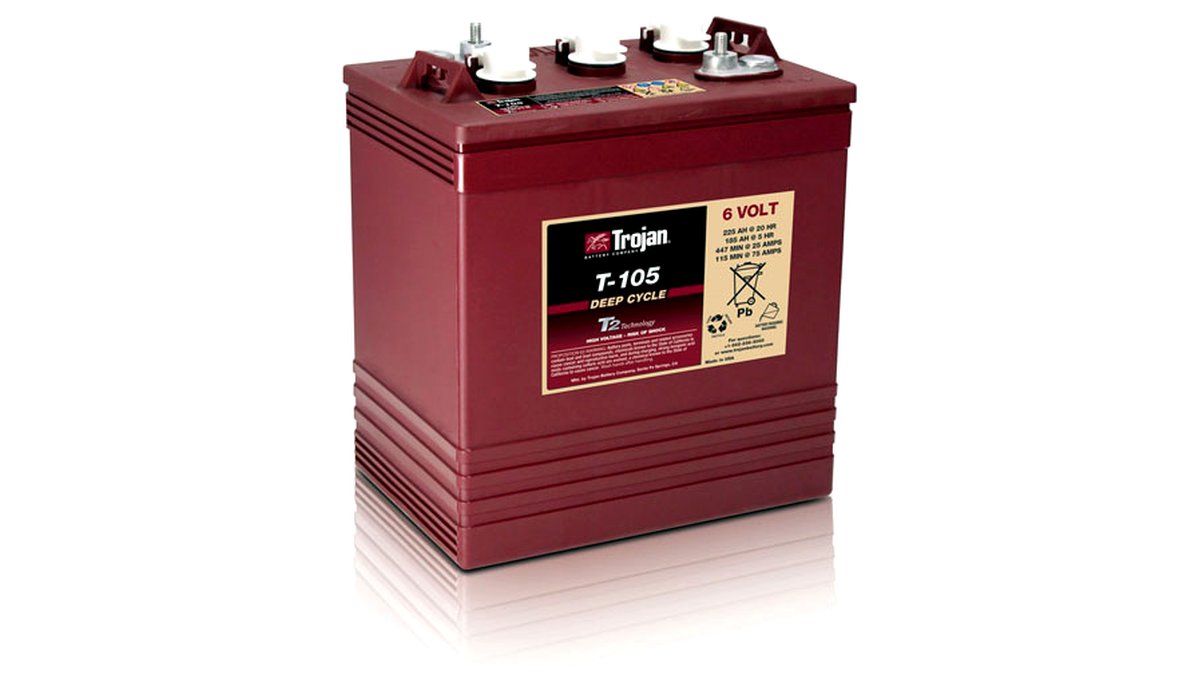
Golf cart batteries are deep-cycle, meaning they are built to be drained down repeatedly and recharged, unlike a car starting battery that delivers a short burst of power. The specification sheet that matters most is amp-hour (Ah) capacity, usually listed at the 20-hour rate, since that number determines how many holes or miles a cart can run between charges. A typical golf cart pack uses six 8-volt batteries wired in series for 48 volts, or six 6-volt batteries for 36 volts, though some carts still use 12-volt groups depending on the manufacturer’s original wiring.
Flooded lead-acid (FLA) batteries remain the standard choice for golf courses and rental fleets because they offer the best capacity per dollar and can be rebuilt with fresh electrolyte over their life. The tradeoff is that owners must check water levels every few weeks during active season and top off with distilled water, never tap water, to keep the lead plates covered. Skipping this step is the single most common reason golf cart batteries fail early.
Sealed deep-cycle lead-acid batteries, including gel and AGM (absorbed glass mat) types, trade some capacity and a higher purchase cost for zero watering and better tolerance of vibration and tilting. AGM packs in particular hold up well in carts used for hunting, farm work, or off-road duty where flooded batteries risk acid spills on rough terrain.
Capacity, Voltage Groups, and What They Mean for Range
Ah capacity scales with physical battery size, so the larger group sizes (commonly GC2, GC8, and the taller “golf cart” case styles) hold more charge but also weigh more and need a tray that fits the footprint. Reviewers who track real-world range report that a fresh, fully charged 48-volt flooded pack in the 150-170 Ah class typically supports 18-25 holes of golf or a comparable round of light hauling before needing a recharge, while higher-capacity packs rated near 200 Ah extend that further at the cost of added weight on the cart frame.
Range drops noticeably in cold weather because lead-acid chemistry loses usable capacity as temperature falls, and it drops over the battery’s life as internal resistance rises with age and partial-discharge cycling. Buyers replacing an aging set should expect somewhat shorter range on day one than the pack delivered when new, since battery capacity also depends on how deeply and how often the previous owner discharged it.
Fit and Compatibility Notes
- Match voltage configuration to the cart’s existing wiring (36V, 48V, or a mixed-voltage controller) rather than assuming any replacement pack will work.
- Check physical case dimensions against the battery tray; GC2 and GC8 group sizes are common but not universal across cart brands.
- Confirm terminal style and polarity match the existing cable set, since some packs use post terminals and others use side terminals.
- Verify the charger is rated for the pack’s chemistry; flooded, AGM, and gel batteries each have different ideal charge profiles, and the wrong charger setting shortens battery life.
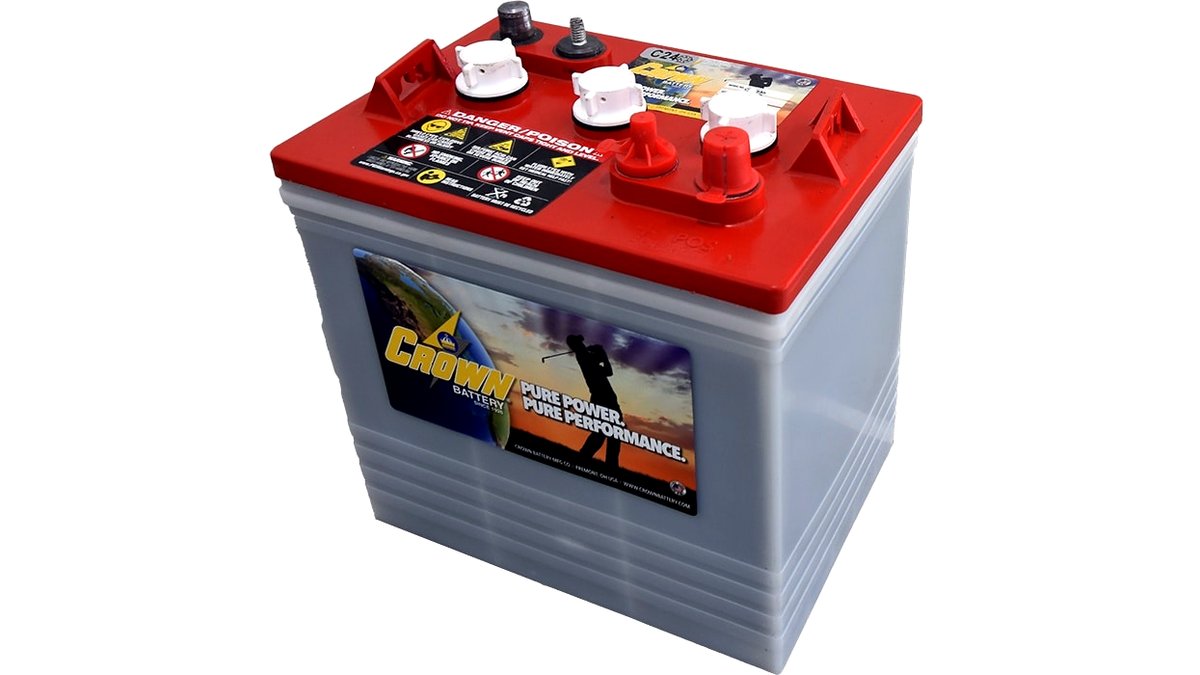
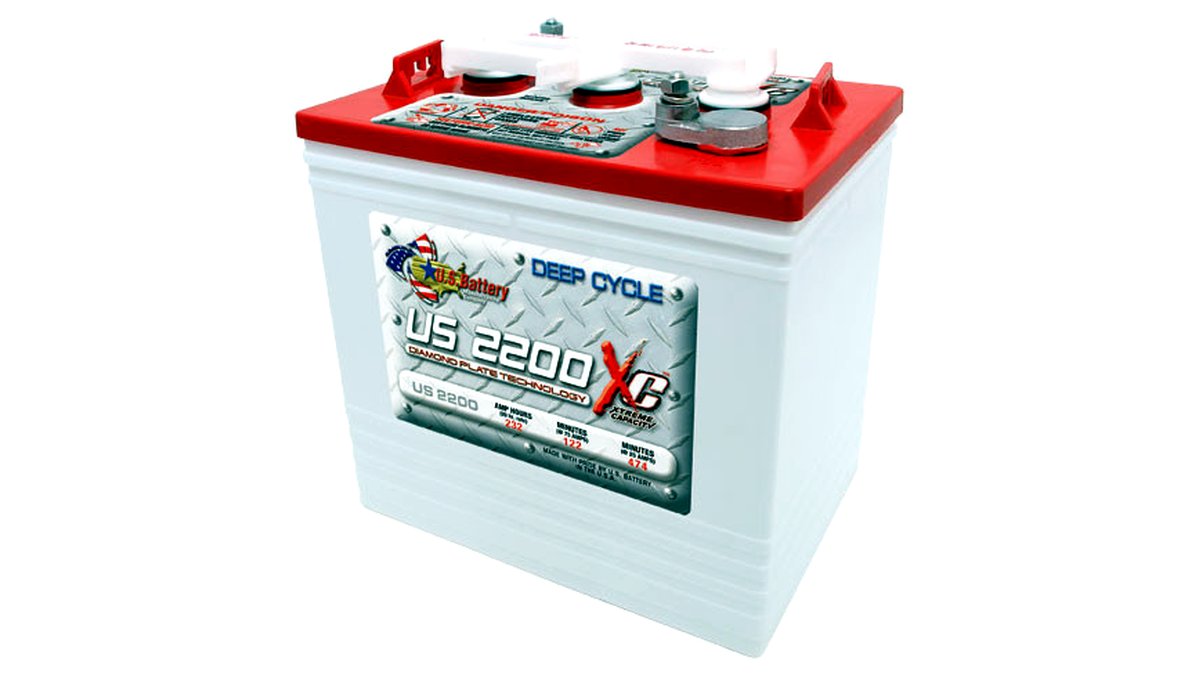
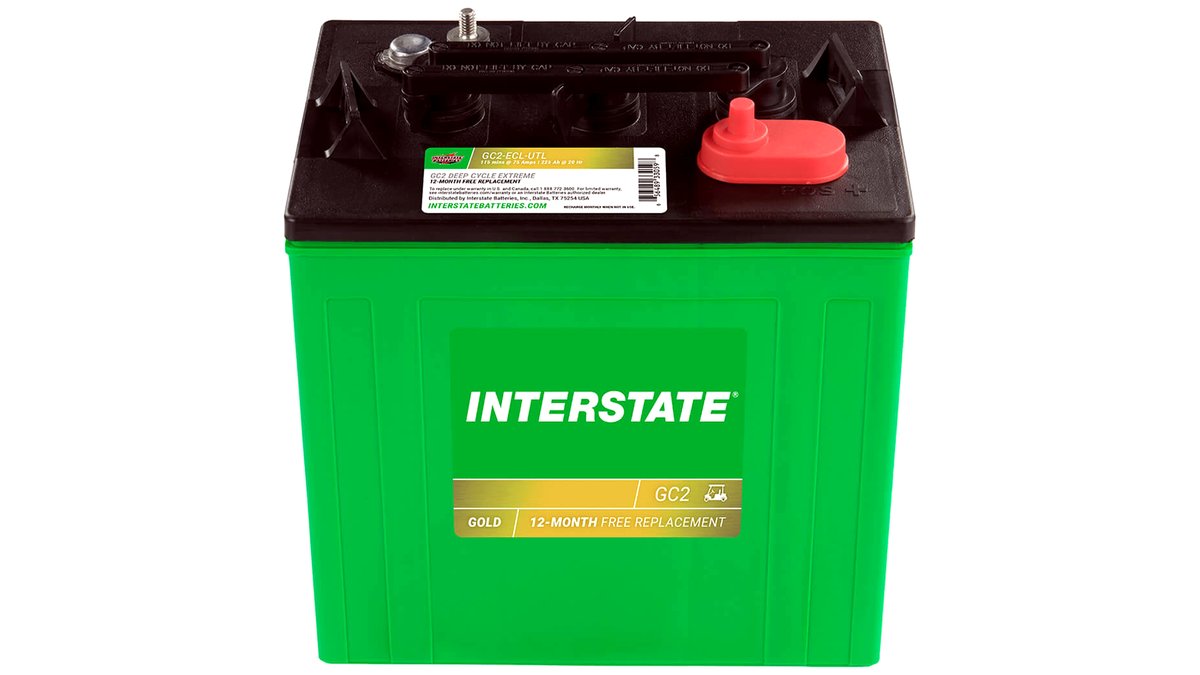
At a Glance: Golf Cart Battery Types
| Battery type | Best for | Key stated specs | Limits |
|---|---|---|---|
| Flooded deep-cycle (6V/8V golf cart group) | Daily golf course use, rental fleets, budget-focused owners | Makers list capacity in the 150-220 Ah range at the 20-hour rate | Needs regular watering; acid can spill if tilted; shorter life if watering is neglected |
| AGM deep-cycle | Off-road carts, hunting rigs, owners who want no maintenance | Sealed design; makers list vibration resistance and deep-cycle ratings similar to flooded packs | Higher purchase cost per Ah than flooded; still needs correct charger profile |
| Gel deep-cycle | Hot-climate storage, infrequent-use carts | Sealed, maintenance-free; makers emphasize heat tolerance | Narrower charge-voltage tolerance; overcharging damages gel cells faster than AGM |
| Standard flooded 12V golf cart battery | Older cart platforms wired for 12V groups | Lower per-unit Ah than 6V/8V units; makers list group-size-specific capacity | Fewer available group sizes than 6V/8V; check cart manual before buying |
Pick This If…
| Situation | Recommended type |
|---|---|
| Cart is used almost daily on a course and budget matters most | Flooded deep-cycle golf cart battery, with a watering commitment |
| Cart sits outdoors or gets tilted on rough ground | AGM deep-cycle |
| Cart is stored for long stretches in heat with light use | Gel deep-cycle |
| Owner wants the longest possible range per charge and doesn’t mind maintenance | Largest-capacity flooded pack that fits the tray |
| Cart is used for light neighborhood trips, not full rounds of golf | Mid-capacity flooded or AGM pack; full premium capacity is unnecessary |
Charging and Maintenance That Determine Lifespan
A golf cart battery’s actual lifespan depends more on charging habits than on brand. Lead-acid packs degrade fastest when left in a partial state of charge for days at a time, so plugging in after every use rather than waiting until the cart is nearly dead extends service life. Makers of golf cart chargers generally recommend a charger matched to the pack’s total voltage and chemistry, with automatic shutoff once the pack reaches full charge to avoid overcharging.
For flooded batteries, electrolyte level should be checked roughly monthly during the season and topped with distilled water only after charging, never before, since the water level rises as the battery charges. Letting plates go exposed to air accelerates sulfation, a buildup on the plates that permanently reduces capacity. Terminals should be kept clean and lightly greased to prevent corrosion, which is one of the more common causes of poor cart performance that owners mistake for a dying battery.
Alternatives Worth Considering
Owners who want to skip lead-acid maintenance entirely and don’t mind a higher upfront cost increasingly move to lithium (LiFePO4) golf cart battery packs, which weigh much less, tolerate partial charging without damage, and last many more cycles than lead-acid according to maker specification sheets. The tradeoff is a controller and charger that must be compatible with lithium chemistry, so this is less of a drop-in swap than switching between lead-acid types.
A second alternative is a hybrid approach some owners use: AGM batteries for the “house” or accessory circuit (lights, chargers for phones) paired with flooded batteries for main drive power, though this is less common and adds wiring complexity. A third alternative for light-duty carts is simply downsizing to a smaller flooded pack if the cart is rarely driven far, since oversized capacity sits unused and ages regardless of how much it’s cycled.
Frequently Asked Questions
How long do lead-acid golf cart batteries typically last?
Makers and battery retailers commonly cite a service life in the range of four to six years for well-maintained flooded deep-cycle packs, though actual results vary with charging habits, climate, and depth of discharge. Carts used daily and charged promptly after each use tend to outlast carts that sit partially discharged for long periods. AGM and gel packs often carry similar or slightly longer stated life expectations from their makers, provided the charger profile is correct.
Can I mix a new battery with older batteries in the same bank?
Battery makers generally advise against mixing batteries of different ages or wear levels in a series bank, because the weaker older units drag down the performance of the newer ones and can be overcharged or undercharged relative to the rest of the pack. The standard recommendation is to replace the entire bank at once for even performance and charging behavior.
Do I need a special charger for AGM or gel batteries?
Yes in most cases; chargers designed for flooded batteries can apply a charge profile that overcharges AGM or gel cells, shortening their life. Checking the charger’s chemistry settings, or buying a charger explicitly rated for the battery type installed, is the step makers most often flag as commonly overlooked.
Why is my cart’s range shorter than when the batteries were new?
Capacity loss is a normal part of lead-acid aging; internal resistance increases with cycle count and age, reducing how much usable energy the pack can deliver before voltage sags. Cold temperatures also reduce usable capacity temporarily, which is why the same pack can feel noticeably weaker in winter than in summer.
Is it safe to use a car battery charger on golf cart batteries?
Golf cart battery banks are wired in series at higher voltages (36V or 48V) than a single 12V car battery, so a standard car charger is not appropriate for charging the whole bank at once and can damage cells if misapplied. A charger sized and rated for the cart’s full pack voltage and chemistry is the setup manufacturers specify.
How often should I check water levels on flooded batteries?
A common maintenance interval cited by battery makers is roughly every two to four weeks during regular use, checked after a full charge when the electrolyte level is at its highest point. Owners who store the cart over winter should still check levels periodically even if the cart isn’t being driven, since self-discharge continues at a slow rate.