Key takeaways
- A charger explicitly rated for lithium (LiFePO4) golf cart batteries at the correct voltage suits anyone who has already converted to a lithium pack, while an older lead-acid charger should not be used on a lithium system at all; the…
A charger explicitly rated for lithium (LiFePO4) golf cart batteries at the correct voltage suits anyone who has already converted to a lithium pack, while an older lead-acid charger should not be used on a lithium system at all; the right pick is determined entirely by the battery chemistry and voltage already installed in the cart, not by price or brand preference.
As an Amazon Associate, we earn from qualifying purchases made through links on this page.
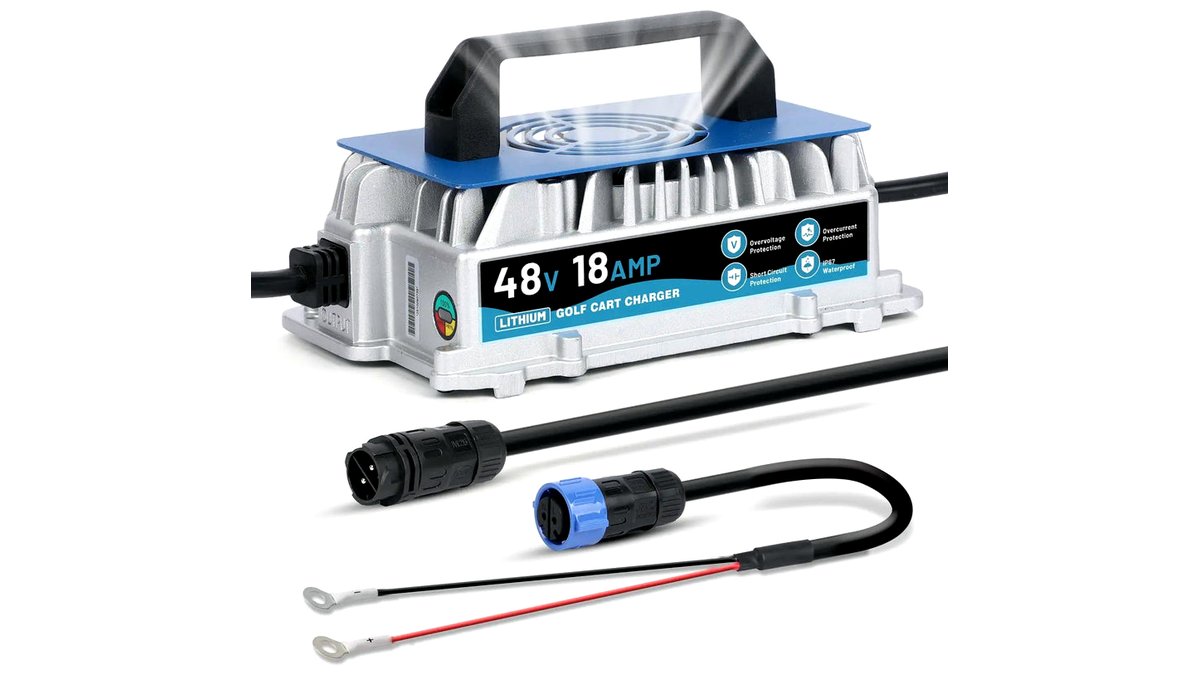
Lithium golf cart batteries use a different charge profile than lead-acid batteries, and using the wrong charger type can prevent proper charging or stress the battery’s internal management system. This guide explains what to check before buying and how lithium-specific chargers differ from the lead-acid chargers many older carts still use.
Why Lithium Needs a Dedicated Charger
Lead-acid chargers use a charge profile built around that chemistry’s voltage curve and typically include an equalization or desulfation stage that lithium batteries do not need and should not receive. Lithium (commonly LiFePO4) battery packs generally include a built-in battery management system (BMS) that handles cell balancing internally, so the charger’s job is simpler in one sense (deliver the correct constant-current then constant-voltage profile) but it must still match the pack’s specified voltage and chemistry exactly, per the battery maker’s instructions.
Makers of lithium golf cart batteries generally state in their documentation which charger types are compatible, and some lithium packs are sold as a charger-and-battery bundle specifically to avoid this mismatch risk. Following the battery maker’s stated charger compatibility list is the most reliable way to avoid damaging a lithium pack or voiding its warranty.
Voltage and Amperage Matching
Golf cart systems commonly run at 36V or 48V, and a charger must match the pack’s nominal voltage exactly; a charger built for the wrong voltage will either fail to charge properly or, in the case of overvoltage, pose a safety risk to the battery and its management system. Amperage (charging current) affects charge speed: a higher-amp charger (commonly in the 15-25A+ range for lithium golf cart packs) charges faster but should still stay within the maximum charge rate the battery maker specifies for that pack, since exceeding the stated maximum can stress the cells and their BMS over time.
At a Glance
| Charger Type | Best For | Key Stated Specs | Limits |
|---|---|---|---|
| Dedicated 36V lithium charger | 36V LiFePO4 golf cart packs | Lithium-specific charge profile, maker-stated max current, built-in safety cutoffs per maker | Not compatible with lead-acid batteries or mismatched voltage packs |
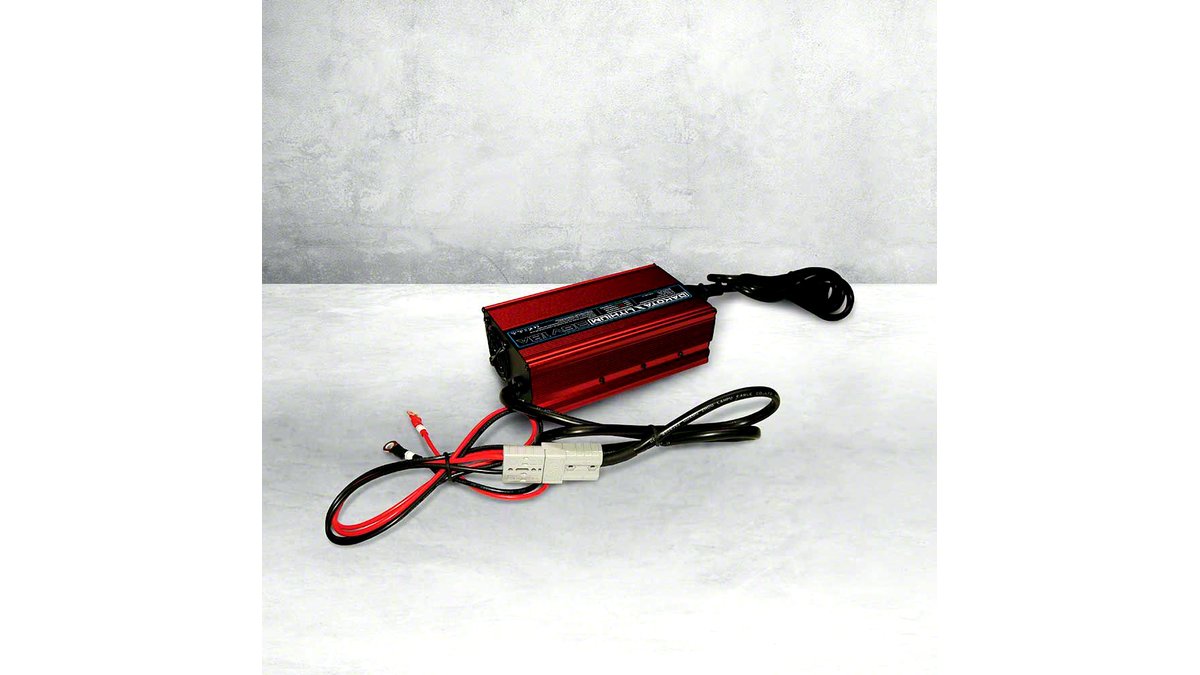
| Dedicated 48V lithium charger | 48V LiFePO4 golf cart packs | Lithium-specific profile at 48V, often used on newer cart platforms | Must match pack voltage exactly; check cart wiring before swapping chargers |
| Multi-chemistry smart charger (lithium-capable) | Fleets or owners who may switch chemistries later | Selectable lead-acid/lithium charge profiles, per maker instructions | Requires correctly selecting the lithium setting; the wrong setting can misconfigure the charge profile |
| Bundled OEM charger (sold with the battery) | Owners who want guaranteed compatibility | Matched to the specific battery model by the same maker | Usually cannot be mixed with a different brand’s battery pack |
Safety Features to Look For
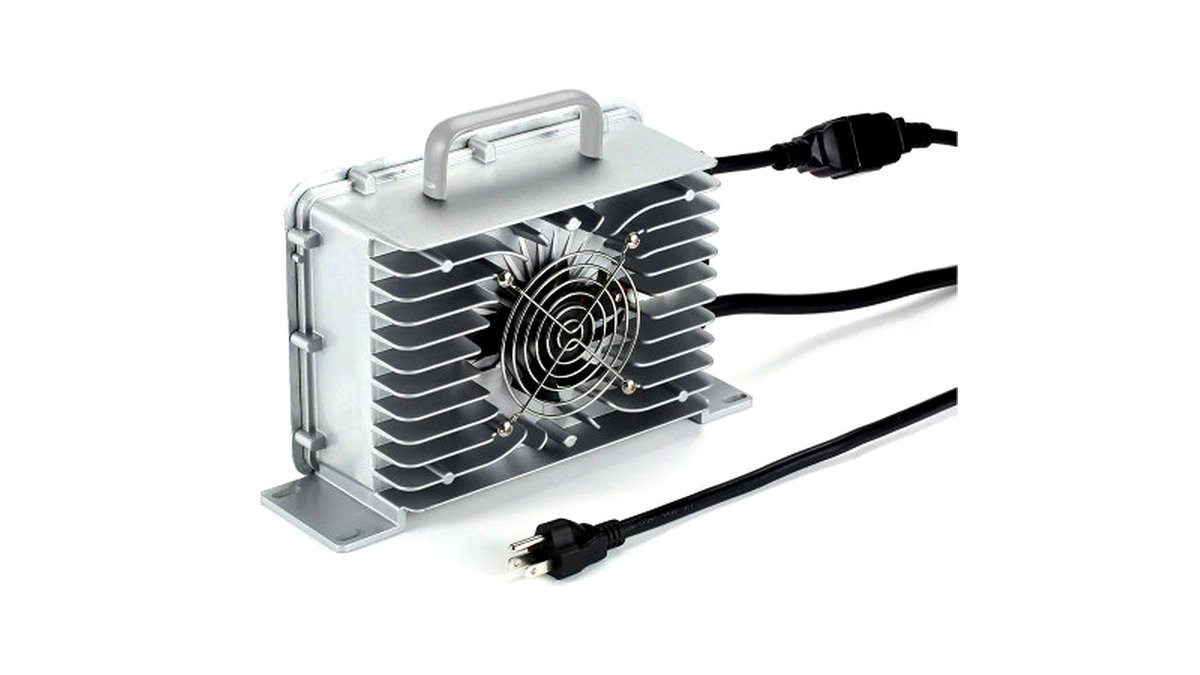
Only state or rely on safety features the charger’s own maker lists in its documentation. Many lithium-specific chargers are described by their makers as including overcurrent, overvoltage, and thermal protection, along with automatic shut-off once the battery reaches full charge, which avoids the overcharging risk that older, non-automatic chargers can pose. Certification markings (such as UL or equivalent regional safety listings), when stated by the maker, are worth confirming on the product page or physical label before buying, especially since charging equipment carries fire risk if damaged, used outdoors without appropriate weather protection, or used with a mismatched battery.
Any charger and battery combination should be set up and used strictly according to both the cart manufacturer’s and battery manufacturer’s instructions, including ventilation and placement guidance, and an electrician should be consulted for any permanent wiring changes to a cart’s charging setup.
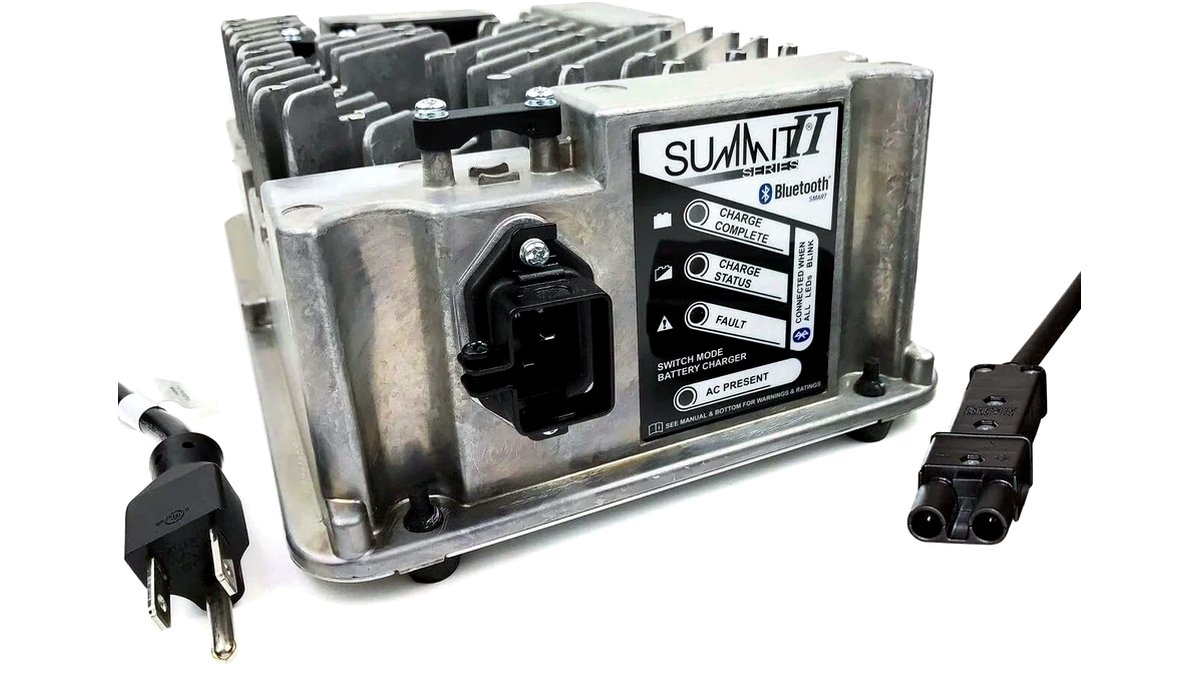
Pick This If…
| Owner Situation | Recommended Charger |
|---|---|
| Converted a 36V lead-acid cart to lithium | Dedicated 36V lithium-specific charger, matched to the new pack’s specifications |
| Running a 48V lithium pack | Dedicated 48V lithium-specific charger |
| Managing a mixed fleet with both lead-acid and lithium carts | A multi-chemistry smart charger with a clearly selectable lithium mode, set correctly for each cart |
| Wants the simplest guaranteed-compatible setup | The OEM charger bundled with the battery at purchase |
| Unsure of exact pack voltage or chemistry | Confirm with the battery’s documentation or maker before buying any charger |
Common Mistakes to Avoid
Reusing an old lead-acid charger on a new lithium battery is one of the most frequent mistakes owners make after converting, since the charger may not deliver the correct profile and some lead-acid chargers’ equalization stage can be inappropriate for lithium cells. Mismatching voltage (for example, using a 48V charger on a 36V pack) is a safety and equipment risk and should never be done regardless of connector compatibility, since physically fitting together does not mean the voltages are compatible. Charging in extreme temperatures outside the range the battery maker specifies can also reduce battery lifespan or trigger the BMS to limit charging as a protective measure.
Alternatives Worth Considering
Some golf cart owners choose an on-board charger permanently wired into the cart rather than a portable plug-in unit, which can simplify daily charging but should be installed by a qualified electrician familiar with the cart’s electrical system. Solar trickle-charging setups exist for lithium golf cart batteries as a supplemental option for carts stored outdoors, though these are generally not a replacement for a full dedicated charger and should be chosen based on the battery maker’s stated compatibility with solar charge controllers.
Frequently Asked Questions
Can I use my old lead-acid charger on a new lithium golf cart battery?
Generally no; lead-acid chargers use a charge profile built for that chemistry and may not charge a lithium pack correctly or safely. The battery manufacturer’s documentation should be checked for its specific charger compatibility statement before attempting to use any existing charger on a new lithium battery.
What voltage charger do I need for my golf cart?
The charger’s voltage must match the battery pack’s nominal voltage exactly, commonly 36V or 48V for golf carts, and this information is available on the battery’s label or documentation. Using a charger at the wrong voltage is not simply a performance issue but a safety concern and should be avoided entirely.
How long does it take to charge a lithium golf cart battery?
Charge time depends on the battery’s capacity, its current state of charge, and the charger’s amperage, and the battery or charger maker typically publishes an estimated charge time for a full cycle under normal conditions. Higher-amperage chargers charge faster within the limits the battery maker specifies as safe for that pack.
Do lithium golf cart batteries need a special charger, or will any smart charger work?
They need a charger specifically designed or selectable for lithium (LiFePO4) chemistry at the correct voltage; a “smart” charger built only for lead-acid profiles is not automatically safe for lithium even if it has multiple settings, unless the maker explicitly lists a lithium mode. Checking both the charger’s and battery’s documentation for stated compatibility is the safest approach.
Is it safe to leave a lithium golf cart battery on the charger overnight?
Many lithium-specific chargers are described by their makers as including automatic shut-off once the battery reaches full charge, which is designed to prevent overcharging during extended connection. This should be confirmed in the specific charger’s documentation rather than assumed, and the setup should otherwise follow the maker’s stated guidance on charging location and ventilation.
What happens if I use a charger with too high an amperage for my battery?
Charging above the maximum current the battery maker specifies can stress the cells and the battery management system over time, potentially shortening the battery’s lifespan or triggering the BMS to limit or stop charging as a protective measure. Staying within the battery maker’s stated maximum charge current is the safest approach regardless of how fast a given charger is capable of charging.