Key takeaways
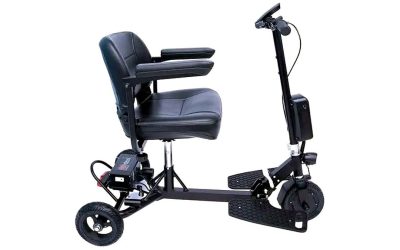
- Ultra-lightweight travel scooters: Designed around airline carry-on or checked-baggage weight limits, often splitting into multiple lighter pieces for easier lifting. Best for frequent air travelers.
- Standard folding scooters: Fold down to a more compact size than non-folding models but remain heavier than ultra-lightweight travel scooters, trading some portability for longer battery range and a larger seat. Best for car trunk storage and regular errands.
- Folding 3-wheel scooters: Tighter turning radius, often lighter than 4-wheel folding models. Best for indoor use and tight spaces like stores or apartment hallways.
- Folding 4-wheel scooters: More stability on uneven outdoor terrain than 3-wheel models. Best for buyers who spend more time outdoors on varied surfaces.
Travelers and frequent flyers who need to check a scooter as luggage do best with the lightest compact folding scooters built around airline-friendly battery limits, while buyers who need a folding scooter mainly for car trunk storage and occasional outings can prioritize a slightly heavier model with longer battery range instead. Folding mobility scooters trade some range and seat comfort for portability, so the right pick depends on whether your top priority is minimum weight or maximum range between folds.
As an Amazon Associate, we earn from qualifying purchases made through links on this page.
What Makes a Folding Scooter Different
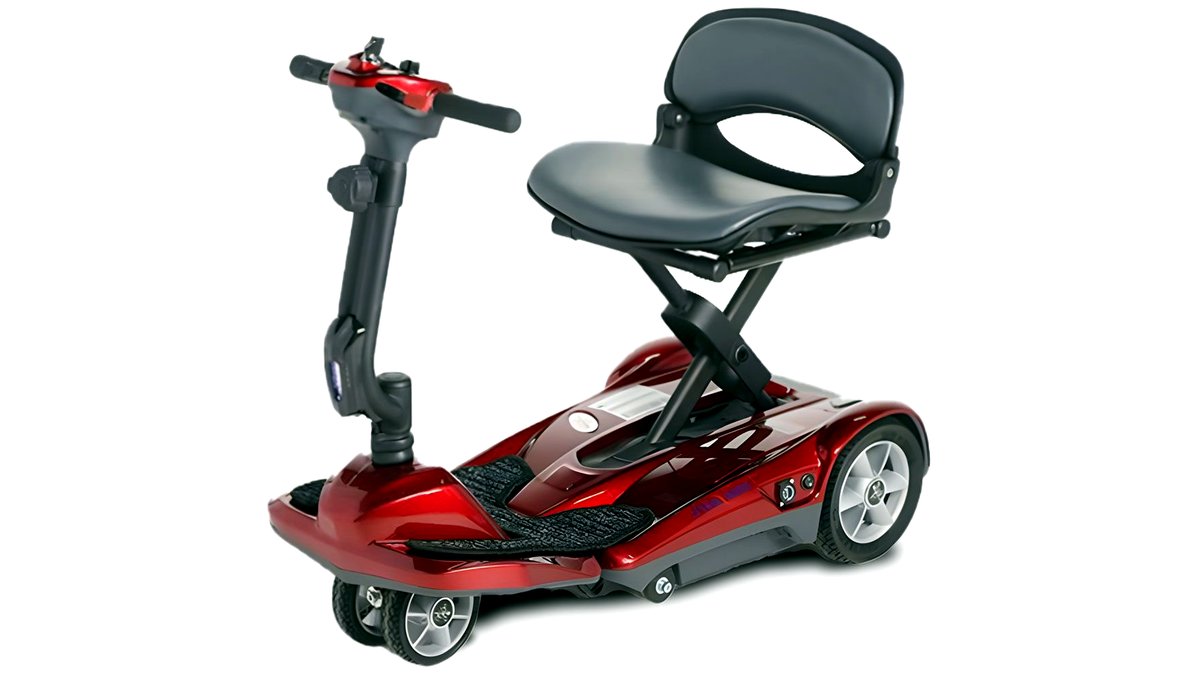
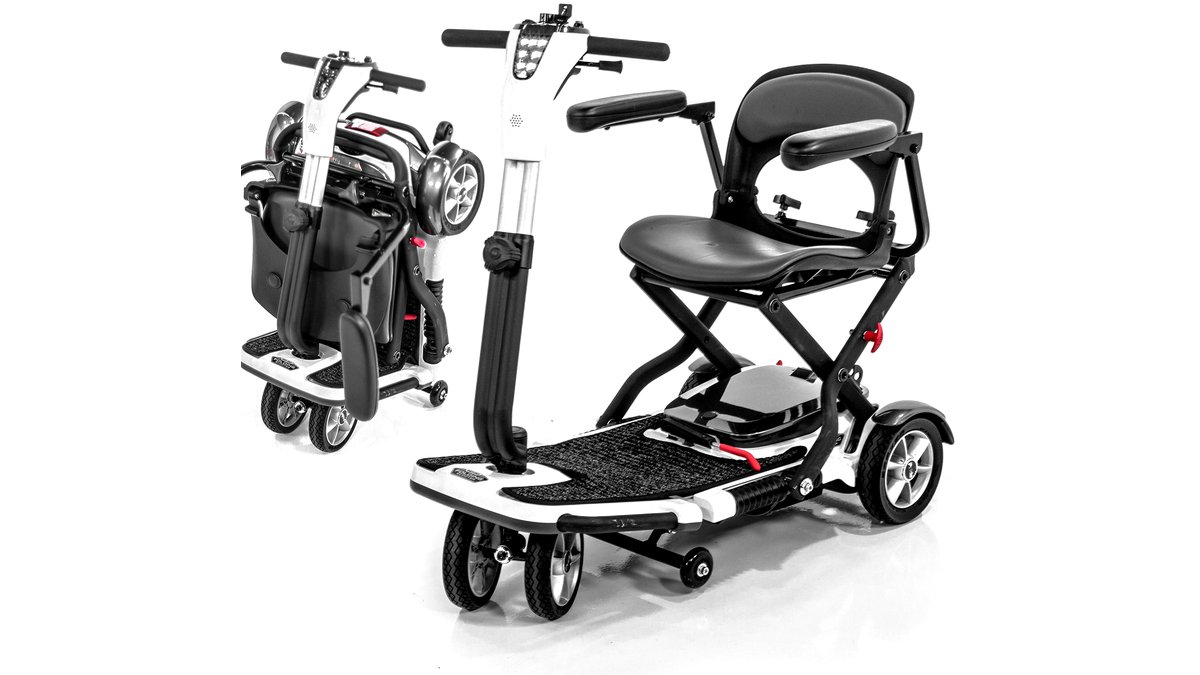
Standard mobility scooters prioritize seating comfort, suspension, and battery range, generally at the cost of a larger, heavier frame that doesn’t break down easily. Folding mobility scooters trade some of that comfort and range for a frame that collapses — often with a single pull-strap or lever mechanism — into a size that fits in a car trunk, an airplane overhead area or cargo hold, or a closet. Within the folding category, models vary significantly in folded weight, which matters most for anyone who needs to lift the scooter themselves rather than rely on a ramp or lift.
Types of Folding Mobility Scooters
- Ultra-lightweight travel scooters: Designed around airline carry-on or checked-baggage weight limits, often splitting into multiple lighter pieces for easier lifting. Best for frequent air travelers.
- Standard folding scooters: Fold down to a more compact size than non-folding models but remain heavier than ultra-lightweight travel scooters, trading some portability for longer battery range and a larger seat. Best for car trunk storage and regular errands.
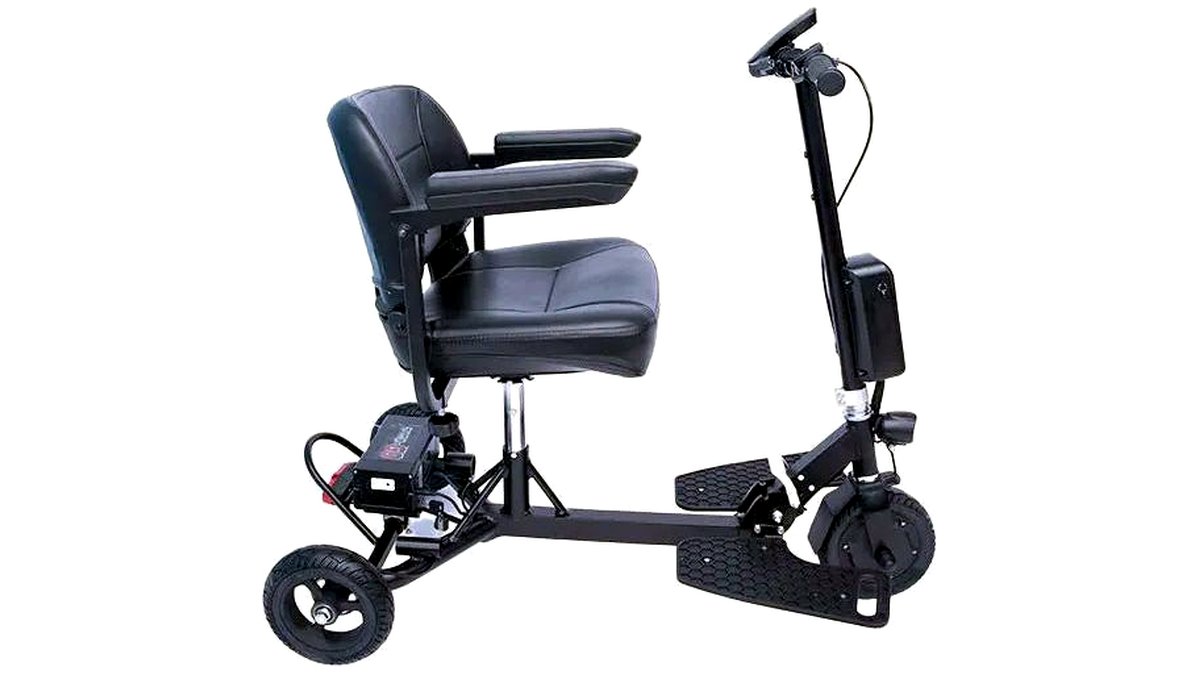
- Folding 3-wheel scooters: Tighter turning radius, often lighter than 4-wheel folding models. Best for indoor use and tight spaces like stores or apartment hallways.
- Folding 4-wheel scooters: More stability on uneven outdoor terrain than 3-wheel models. Best for buyers who spend more time outdoors on varied surfaces.
Folding Mobility Scooters at a Glance
| Type | Best For | Key Stated Specs | Limits |
|---|---|---|---|
| Ultra-lightweight travel scooter | Frequent flyers and public transit users | Makers commonly list folded weight well under heavier scooter classes, with some models splitting into two or three liftable pieces | Smaller seat and shorter stated range than bulkier models |
| Standard folding scooter | Car trunk storage, regular local errands | Makers commonly list a larger seat and longer stated range than ultra-lightweight models | Heavier folded weight; less ideal for air travel |
| Folding 3-wheel scooter | Indoor use and tight turning spaces | Tighter turning radius commonly listed by makers; generally lighter frame | Less stable than 4-wheel models on rough or sloped outdoor terrain |
| Folding 4-wheel scooter | Mixed indoor/outdoor use on varied terrain | Wider wheelbase for stated stability on uneven ground | Wider turning radius than 3-wheel models; can be harder to maneuver indoors |
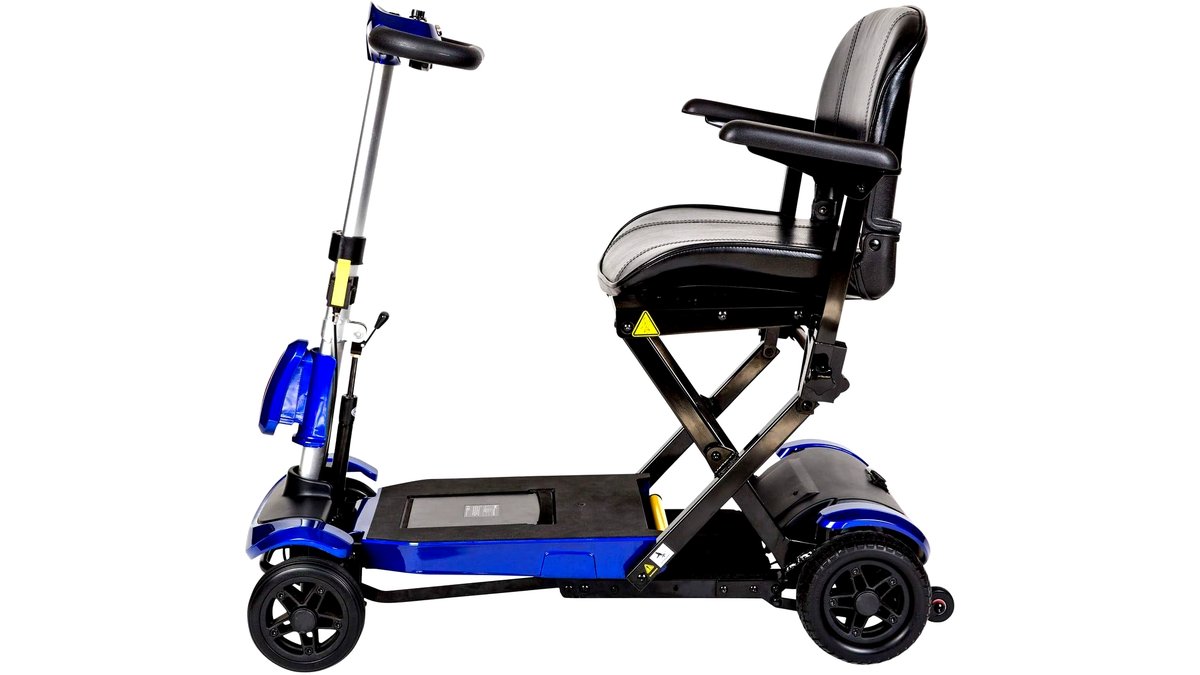
Pick the One That Fits
| If you… | Pick this |
|---|---|
| Fly frequently and need to check the scooter as luggage | Ultra-lightweight travel scooter within airline battery limits |
| Mainly store it in a car trunk for local trips | Standard folding scooter with longer range |
| Use it mostly indoors or in tight retail spaces | Folding 3-wheel scooter |
| Spend significant time outdoors on uneven ground | Folding 4-wheel scooter |
| Cannot lift heavy items unassisted | The lightest-rated model you can find that still meets your range needs, or one with a smaller number of liftable pieces |
Fit, Weight, and Travel Notes
Check the scooter’s unfolded weight capacity against the rider’s weight, and separately check the folded weight against who will be lifting it — these are two different numbers and both matter. A scooter rated to carry a heavier rider isn’t necessarily light enough for that same person, or a caregiver, to lift into a car trunk unassisted.
For air travel, check the battery type and watt-hour rating against the airline’s lithium battery policy before booking; most airlines require the battery to meet specific watt-hour limits for carry-on or checked transport, and spare batteries often have separate rules. Contacting the airline directly ahead of the trip is the most reliable way to confirm current policy, since rules vary by carrier and can change.
Seat width and armrest adjustability affect comfort more than most buyers expect on a folding model, since the folding mechanism often constrains how large the seat can be. If comfort for longer outings matters as much as portability, test the seat dimensions against your own measurements rather than assuming “compact” models are all similarly sized.
Features Worth Checking
- Fold/unfold mechanism: Some models fold with a single pull-strap motion; others require multiple manual steps. Check how much strength or dexterity the process requires.
- Number of pieces when disassembled: Multi-piece designs can reduce the heaviest single lift but add setup steps and small parts to track.
- Tire type: Solid tires need no maintenance but transmit more vibration; pneumatic (air-filled) tires ride smoother but can go flat.
- Ground clearance: Matters for curb cuts, uneven sidewalks, and transitions between surfaces.
- Battery charging time: Check the maker’s stated full-charge time if you need quick turnaround between uses.
Storage and Transport Notes
Beyond the fold itself, think through the full journey a scooter takes on a typical outing: from home storage, into a vehicle trunk or a wheelchair-accessible van lift, and back out again at the destination. A scooter that folds compactly but still requires awkward bending or lifting at an angle can be harder to manage in practice than its folded dimensions suggest. Some owners pair a folding scooter with a small hitch-mounted carrier or a dedicated scooter lift for the vehicle, which removes the lifting step entirely and is worth considering if repeated lifting is a strain concern.
Storage at home is also worth planning for ahead of purchase. Check the scooter’s folded footprint against your closet, hallway, or trunk space, and consider whether the charging cable reaches a wall outlet from the scooter’s typical storage spot, since repeatedly moving the scooter just to charge it adds an extra step most owners would rather avoid.
Alternatives Worth Considering
Non-folding mobility scooters suit buyers who have dedicated storage space and prioritize maximum range, seat comfort, and stability over portability.
Folding power wheelchairs are worth considering for users who need more postural support or all-day seating than a scooter seat typically offers.
Manual folding wheelchairs with a travel scooter attachment can suit users who want a lighter manual chair as a base with powered assistance added only when needed.
Frequently Asked Questions
Can I take a folding mobility scooter on an airplane?
Many ultra-lightweight travel scooters are designed around common airline lithium battery limits, but policies vary by airline and can change. Contact the specific airline before your trip to confirm current battery watt-hour limits and any documentation needed.
How much weight can I expect to lift when folding the scooter?
This varies significantly by model; ultra-lightweight travel scooters are built to minimize this, sometimes splitting into two or three separately liftable pieces, while standard folding scooters are heavier overall. Check the manufacturer’s stated folded weight and piece count before buying if lifting capability is a concern.
Do folding scooters have shorter range than non-folding models?
Generally yes, since a smaller, lighter frame usually means a smaller battery. Makers state an expected range per charge for each model; compare this figure against your typical trip distances rather than assuming all folding scooters perform similarly.
Are 3-wheel or 4-wheel folding scooters more stable?
4-wheel models generally offer more stability on uneven or sloped outdoor terrain due to a wider wheelbase, while 3-wheel models offer a tighter turning radius better suited to indoor and tight spaces. The right choice depends on where you’ll use the scooter most.
How do I maintain a folding mobility scooter?
Follow the manufacturer’s manual for battery charging practices, tire pressure checks if pneumatic tires are used, and periodic inspection of the folding mechanism’s hinges and locking points. Regular light cleaning and avoiding water exposure to electrical components also help extend the scooter’s working life.
Should I consult a doctor or occupational therapist before buying one?
Many users benefit from a professional assessment to confirm the right seat size, weight capacity, and control type for their specific mobility needs. This is especially worth doing if you have a condition affecting balance, grip strength, or vision, since these factors influence which features matter most.