Key takeaways
- Foam blocks / pads: The simplest and cheapest option; the kayak rests hull-down directly on foam blocks strapped to the crossbars. Best for occasional use and lightweight recreational kayaks.
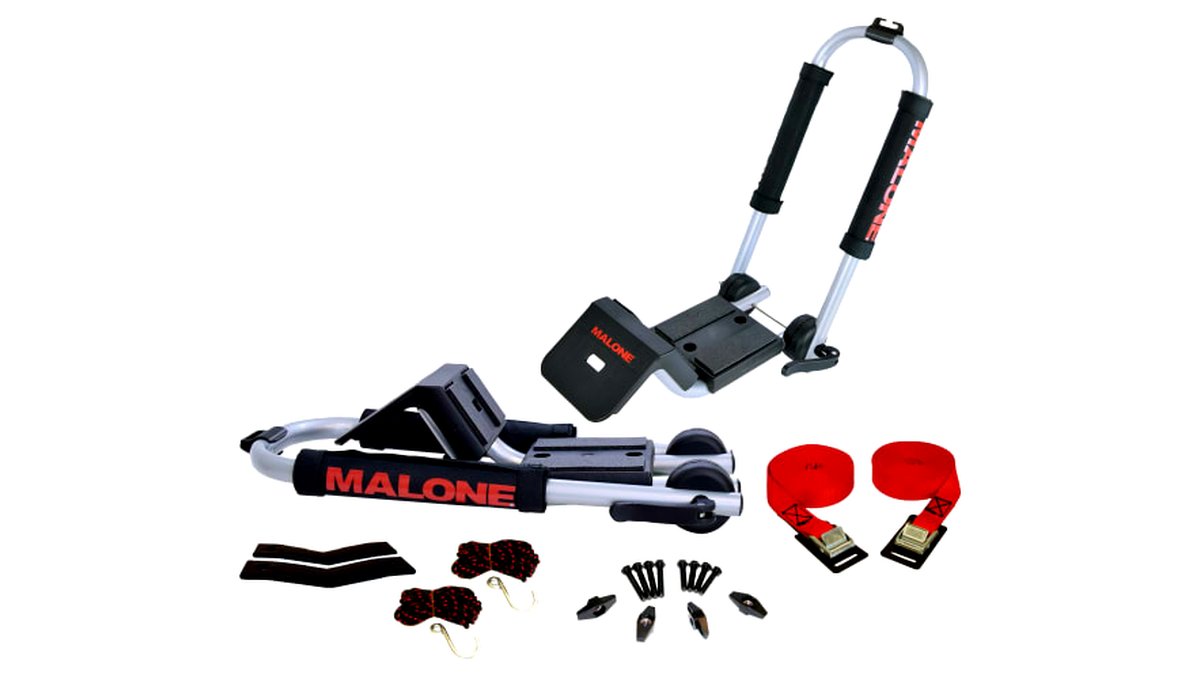
- J-cradles: Hold the kayak on its side at an angle, which lets two kayaks fit side by side on one set of crossbars. Best for regular paddlers who want to carry one or two boats efficiently.
- Saddle-style cradles: Support the kayak hull-up in two contoured cradles, distributing weight more evenly than foam blocks. Best for longer or heavier touring kayaks where hull support matters more.
- Stacker/vertical bars: A padded upright bar that lets multiple kayaks stand on their sides stacked against each other. Best for groups hauling three or more kayaks on one vehicle.
- Rooftop lift-assist / rolling loaders: Mechanically assist lifting the kayak up to roof height and rolling it into position. Best for solo paddlers, shorter drivers, or anyone loading heavier kayaks without help.
Solo paddlers with one kayak and an existing roof rack system do well with simple J-cradles or foam blocks, while anyone hauling two or more kayaks, or loading solo without help, benefits more from a saddle-style or rooftop rolling/lift-assist system. The best kayak roof rack setup depends less on brand and more on how many boats you carry, whether you load alone, and what crossbar system your vehicle already has.
As an Amazon Associate, we earn from qualifying purchases made through links on this page.
How Kayak Roof Racks Are Organized
A “kayak roof rack” is really an accessory that mounts to a vehicle’s existing roof rack crossbars, not a standalone rack by itself (unless the vehicle has no factory rack at all, in which case a full crossbar system is step one). Once crossbars are in place, the kayak-specific carrier determines how the boat sits — on its hull, on its side, or lifted and rolled up from the rear — and that choice affects loading ease, how many boats fit, and how much the hull gets stressed during transport.
Types of Kayak Roof Rack Carriers
- Foam blocks / pads: The simplest and cheapest option; the kayak rests hull-down directly on foam blocks strapped to the crossbars. Best for occasional use and lightweight recreational kayaks.
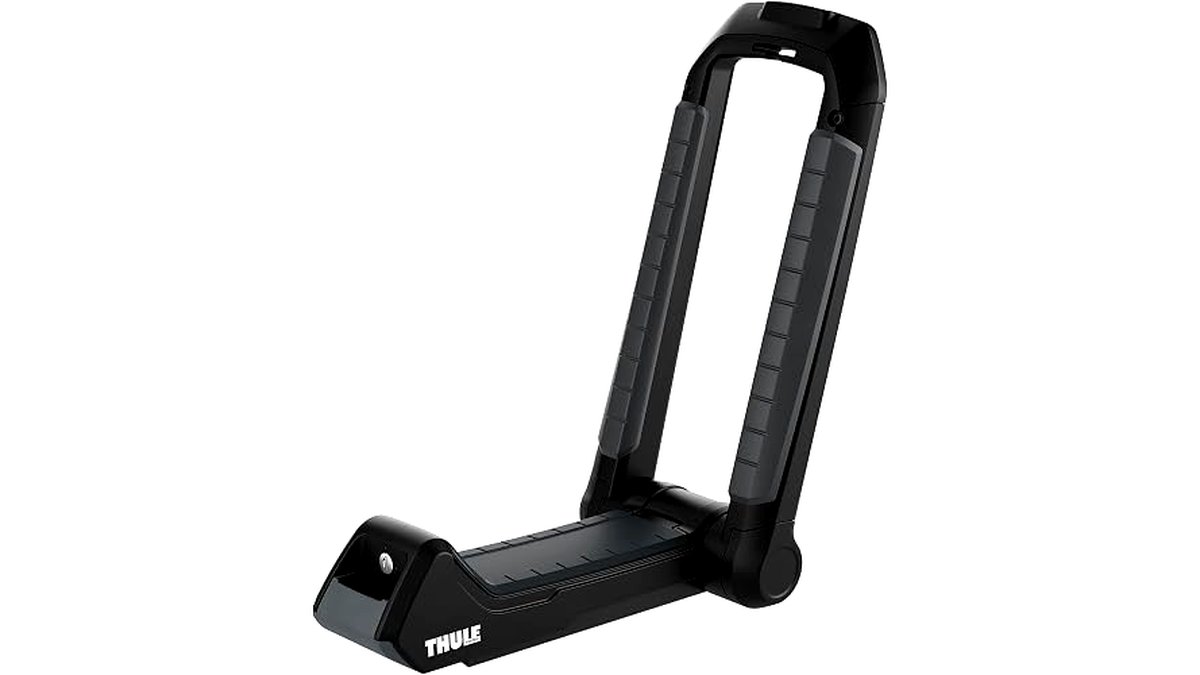
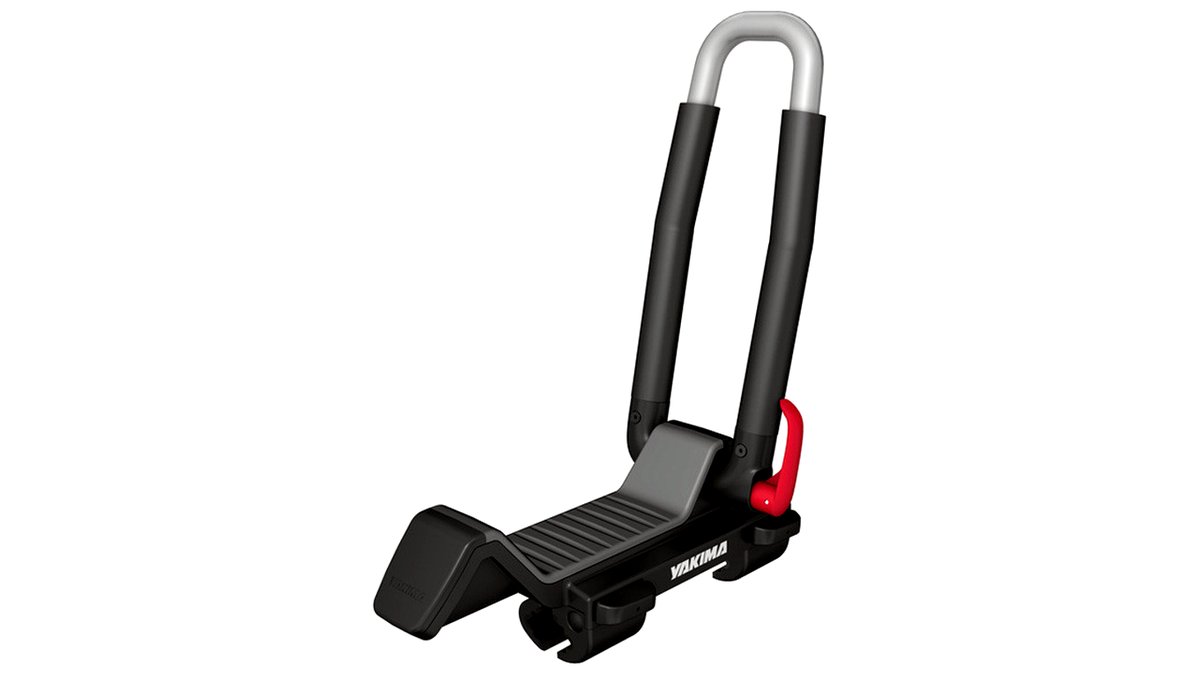
- J-cradles: Hold the kayak on its side at an angle, which lets two kayaks fit side by side on one set of crossbars. Best for regular paddlers who want to carry one or two boats efficiently.
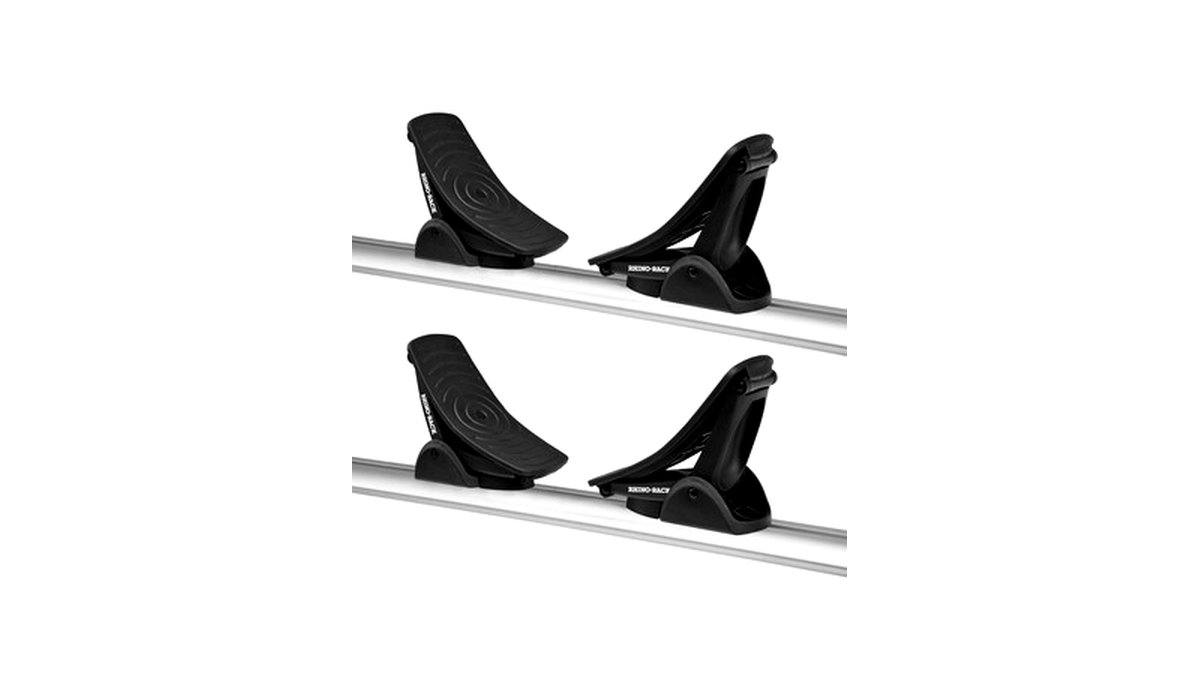
- Saddle-style cradles: Support the kayak hull-up in two contoured cradles, distributing weight more evenly than foam blocks. Best for longer or heavier touring kayaks where hull support matters more.
- Stacker/vertical bars: A padded upright bar that lets multiple kayaks stand on their sides stacked against each other. Best for groups hauling three or more kayaks on one vehicle.
- Rooftop lift-assist / rolling loaders: Mechanically assist lifting the kayak up to roof height and rolling it into position. Best for solo paddlers, shorter drivers, or anyone loading heavier kayaks without help.
Kayak Roof Racks at a Glance
| Carrier Type | Best For | Key Stated Specs | Limits |
|---|---|---|---|
| Foam blocks / pads | Occasional use, lightweight recreational kayaks | Low stated weight capacity per block set; simplest strap-down installation | Less hull support than contoured cradles; not ideal for frequent long trips |
| J-cradles | Carrying one or two kayaks regularly | Makers commonly list per-cradle weight capacity and side-by-side mounting for two kayaks | Side-angled storage can stress the hull slightly more than upright saddle support |
| Saddle-style cradles | Longer touring kayaks needing even hull support | Contoured cradle shape matched to hull profile; stated weight capacity usually higher than foam blocks | Bulkier on the roof when not in use than flat foam pads |
| Stacker/vertical bars | Groups transporting 3+ kayaks | Padded upright post; multiple boats stacked per side | Requires more strapping skill to secure several boats safely |
| Rooftop lift-assist/rolling loader | Solo loading or heavier kayaks | Mechanical arm or roller system; stated weight capacity varies by model | Higher stated price tier and more moving parts to maintain |
Pick the One That Fits
| If you… | Pick this |
|---|---|
| Paddle occasionally with one lightweight kayak | Foam blocks or pads |
| Carry one or two kayaks on a regular basis | J-cradles |
| Have a longer or heavier touring kayak | Saddle-style cradles |
| Transport three or more kayaks at once | Stacker/vertical bars |
| Load and unload alone, or have a shorter reach to roof height | Rooftop lift-assist or rolling loader |
Fit and Compatibility Notes
Every kayak-specific carrier mounts to crossbars, so confirm your vehicle’s roof rack crossbar type and spacing before buying — round, square, aerodynamic, and factory-raised-rail crossbars often need different mounting clamps, and most carrier makers list compatible crossbar shapes directly in the product specs.
Check your vehicle’s total roof load rating, not just the kayak carrier’s weight capacity; the rating in the owner’s manual accounts for the crossbars, the carrier hardware, and the cargo combined, and exceeding it risks roof rack failure or vehicle damage regardless of how strong the kayak carrier itself is rated.
Measure kayak length against your vehicle’s front-to-back overhang limits. Longer touring kayaks may need a bow and stern tie-down in addition to the roof carrier straps, and local traffic law often requires a visibility flag on any load that extends significantly past the bumper.
Loading and Securing Tips
- Always use both the carrier’s built-in straps and separate bow/stern tie-down lines to the vehicle’s frame; the roof carrier alone is not meant to be the only securing point on longer trips or highway speeds.
- Check strap tension periodically on longer drives, since vibration can loosen webbing straps over time.
- Pad any metal-to-hull contact points beyond what the carrier includes if your kayak has a particularly thin or flexible hull.
- Remove or fold down carriers not in use if the design allows, to reduce wind noise and fuel consumption on long drives.
- Re-torque crossbar mounting hardware periodically per the rack maker’s manual, since bolts can loosen with repeated loading and highway vibration.
Weather and Long-Term Care
Straps, pads, and clamp hardware left outdoors or exposed to repeated sun and rain can degrade faster than expected; UV exposure in particular weakens webbing straps over a season or two of regular use, even when they look fine on the surface. Inspecting straps for fraying, stiffness, or cracking before each trip is a quick habit that catches wear before it becomes a failure on the road.
Carriers left mounted year-round benefit from an occasional check of the mounting clamps and bolts, since temperature swings and highway vibration can gradually loosen hardware that was properly torqued at installation. A rack system that’s removed and stored during off-season months also tends to show less wear overall than one left exposed to winter weather continuously.
Alternatives Worth Considering
Trailer-mounted kayak racks suit buyers hauling many kayaks or who want to avoid lifting boats to roof height entirely; they trade the convenience of a car-top rack for towing capability and storage space.
Truck bed extenders or bed racks work well for pickup truck owners, letting the kayak ride lower and often requiring less overhead lifting than a roof-mounted system.
Inflatable or foldable kayaks sidestep the roof rack question entirely for buyers who’d rather store and transport the kayak deflated or folded inside the vehicle.
Frequently Asked Questions
How many kayaks can I carry on one vehicle?
It depends on the carrier type and your vehicle’s roof load rating; J-cradles and stacker bars can fit two to four kayaks depending on crossbar length, while foam blocks are typically used for one. Always check the stated weight capacity of both the carrier and the vehicle’s roof before adding more boats.
Do I need a separate rack system if my car doesn’t have factory crossbars?
Yes, kayak-specific carriers like J-cradles and saddles mount onto crossbars rather than directly onto a bare roof, so a vehicle without factory rails or crossbars needs a compatible aftermarket crossbar system first. Check the crossbar maker’s fitment guide for your specific vehicle before buying a kayak carrier.
Is it safe to drive on the highway with a kayak on the roof?
Yes, when the kayak is properly secured with both the carrier’s straps and separate bow/stern tie-downs, and the vehicle stays within its stated roof load rating. Checking strap tension before highway driving and periodically during long trips is standard practice.
Will a roof rack scratch or damage my kayak’s hull?
Contoured saddle-style cradles distribute pressure more evenly across the hull than flat foam blocks, which can reduce pressure-point wear over repeated trips. Using the carrier’s padding as intended and avoiding over-tightened straps both help minimize hull stress regardless of carrier type.
Can I install a kayak rack myself, or do I need professional installation?
Most kayak-specific carriers are designed for straightforward home installation onto existing crossbars using basic tools, and makers typically include fitting instructions. A full crossbar system on a vehicle without factory rails may involve more precise fitment steps, so following the installation manual closely matters more than the difficulty level itself.
How do I know if my roof can handle the combined weight of the rack and kayak?
Check your vehicle owner’s manual for the stated dynamic roof load rating, which covers the combined weight of crossbars, carrier hardware, and cargo while driving. This figure is usually lower than a static rooftop weight rating, so use the driving-specific number when deciding how many kayaks or how much gear to carry.