Key takeaways
- Ceiling clearance. Pulley hoist systems need the most vertical clearance since the bike travels most of the way up to the ceiling; fixed hook systems that store the bike horizontally or by one wheel need less clearance but still require enough height for the bike’s full length or height depending on orientation.
- Lifting effort. Pulley systems use a rope-and-pulley mechanism to reduce the effort needed to hoist a bike, which matters for heavier bikes or for anyone with limited lifting ability. Fixed hooks require lifting the bike’s full weight by hand to hang it, which is manageable for lighter bikes but harder for heavier e-bikes or cargo bikes.
- Number of bikes. Single hooks or a single pulley hoist handle one bike per unit; multi-bike rail or rack systems mounted across the ceiling or a ceiling track can store several bikes in a row, which suits households with multiple riders.
- Mounting surface. Confirm the ceiling structure can support the rated weight; most systems need to be anchored into ceiling joists or rafters rather than drywall alone, so finding and marking joist locations before installation is an important step.
- Bike orientation. Some systems hang the bike by both wheels horizontally, keeping it level but using more ceiling footprint; others hang it vertically by the front wheel, using less floor footprint but exposing the frame to more sideways sway if not secured well.
- Weight capacity. Check the manufacturer’s stated maximum weight per hook or hoist, especially for e-bikes or cargo bikes, which can weigh significantly more than a standard bike and may exceed a basic hook’s rating.
Garages with a single bike and plenty of ceiling height do well with a simple pulley hoist, while garages storing several bikes or dealing with a lower ceiling are better served by fixed horizontal ceiling hooks or a multi-bike rail system. Ceiling bike storage mainly differs in how much ceiling clearance it needs, how much physical effort is required to lift the bike into place, and how many bikes one system can hold, and matching those factors to the actual garage layout matters more than any single product’s build quality.
As an Amazon Associate, we earn from qualifying purchases made through links on this page.
How to choose a ceiling bike rack
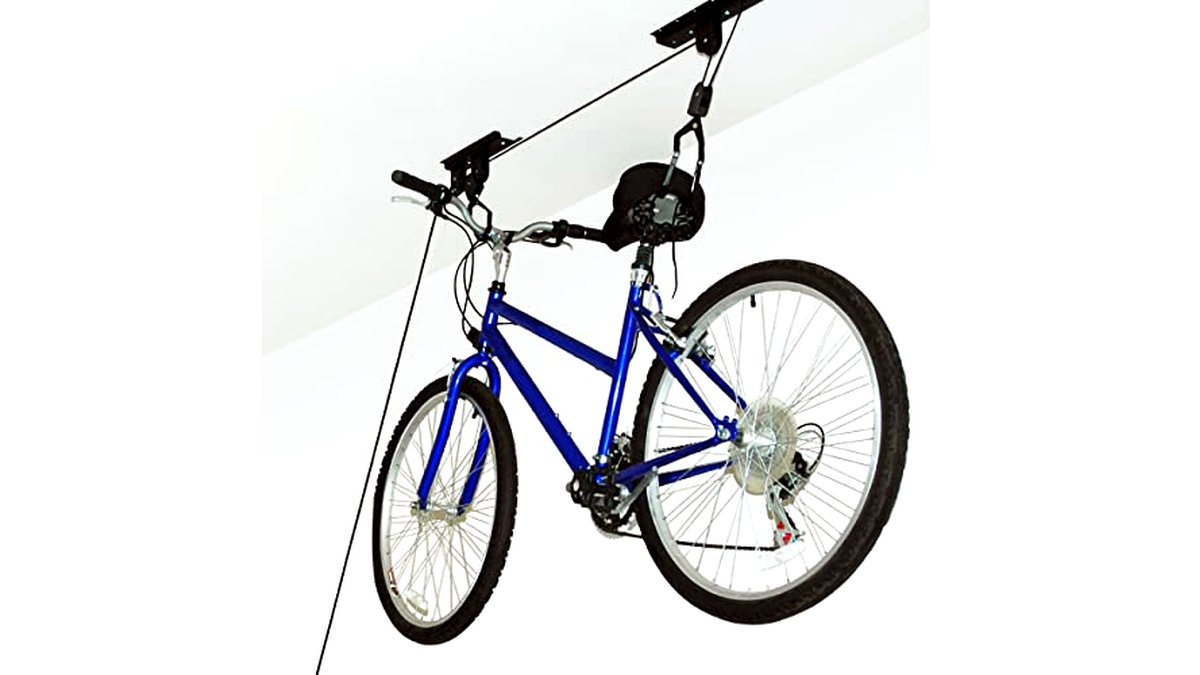
- Ceiling clearance. Pulley hoist systems need the most vertical clearance since the bike travels most of the way up to the ceiling; fixed hook systems that store the bike horizontally or by one wheel need less clearance but still require enough height for the bike’s full length or height depending on orientation.
- Lifting effort. Pulley systems use a rope-and-pulley mechanism to reduce the effort needed to hoist a bike, which matters for heavier bikes or for anyone with limited lifting ability. Fixed hooks require lifting the bike’s full weight by hand to hang it, which is manageable for lighter bikes but harder for heavier e-bikes or cargo bikes.
- Number of bikes. Single hooks or a single pulley hoist handle one bike per unit; multi-bike rail or rack systems mounted across the ceiling or a ceiling track can store several bikes in a row, which suits households with multiple riders.
- Mounting surface. Confirm the ceiling structure can support the rated weight; most systems need to be anchored into ceiling joists or rafters rather than drywall alone, so finding and marking joist locations before installation is an important step.
- Bike orientation. Some systems hang the bike by both wheels horizontally, keeping it level but using more ceiling footprint; others hang it vertically by the front wheel, using less floor footprint but exposing the frame to more sideways sway if not secured well.
- Weight capacity. Check the manufacturer’s stated maximum weight per hook or hoist, especially for e-bikes or cargo bikes, which can weigh significantly more than a standard bike and may exceed a basic hook’s rating.
At a glance: ceiling bike storage types
| Type | Best for | Key stated specs | Limits |
|---|---|---|---|
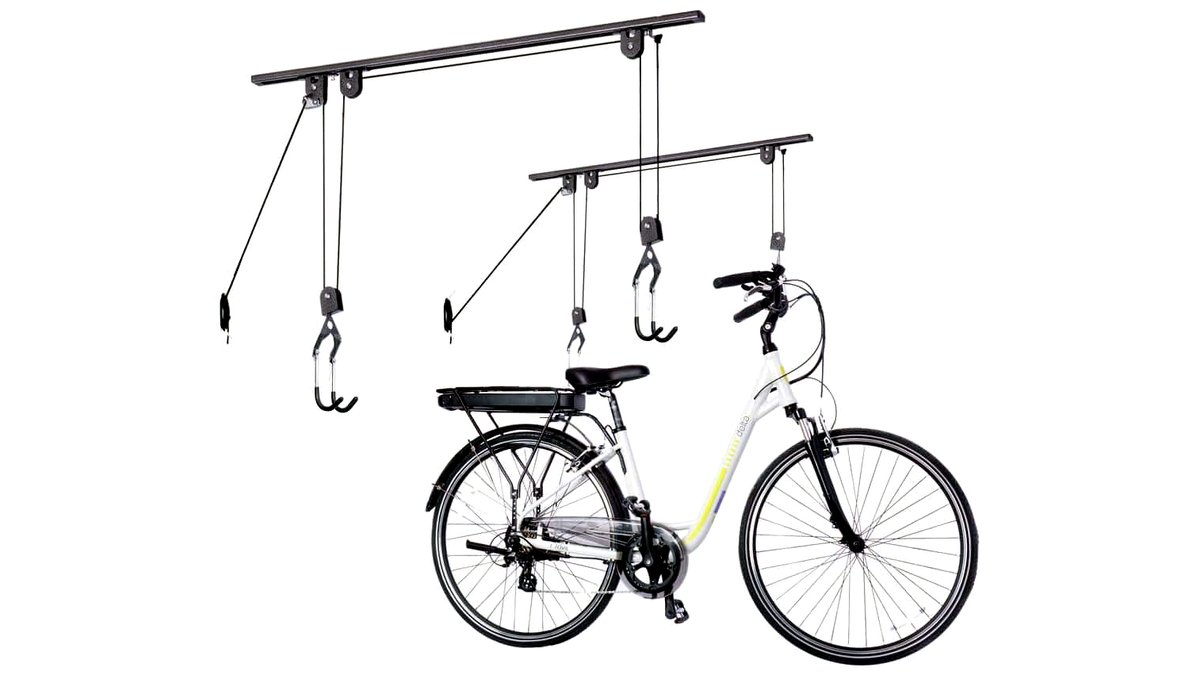
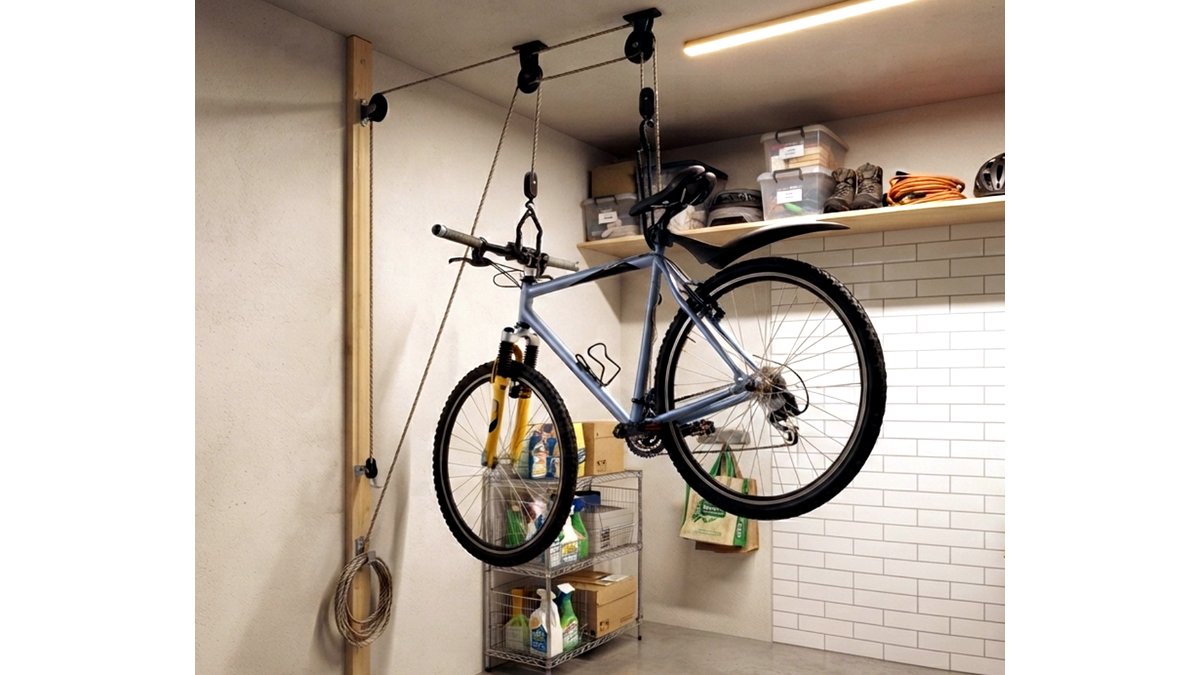
| Pulley hoist system | Single bikes in garages with higher ceilings, heavier bikes, limited lifting strength | Rope-and-pulley mechanism, reduced lifting effort, adjustable height | Needs the most vertical clearance, more involved installation than simple hooks |
| Fixed horizontal ceiling hooks | Single bikes in garages with moderate ceiling height, lighter bikes | Simple hook or hook pair, low cost, minimal moving parts | Requires lifting the bike’s full weight by hand, fixed height (not adjustable after install) |
| Vertical wheel-mount hook | Narrow garages wanting to minimize floor and ceiling footprint | Hangs bike by front wheel vertically, compact footprint | Less stable than horizontal storage if bumped, not ideal for heavier bikes |
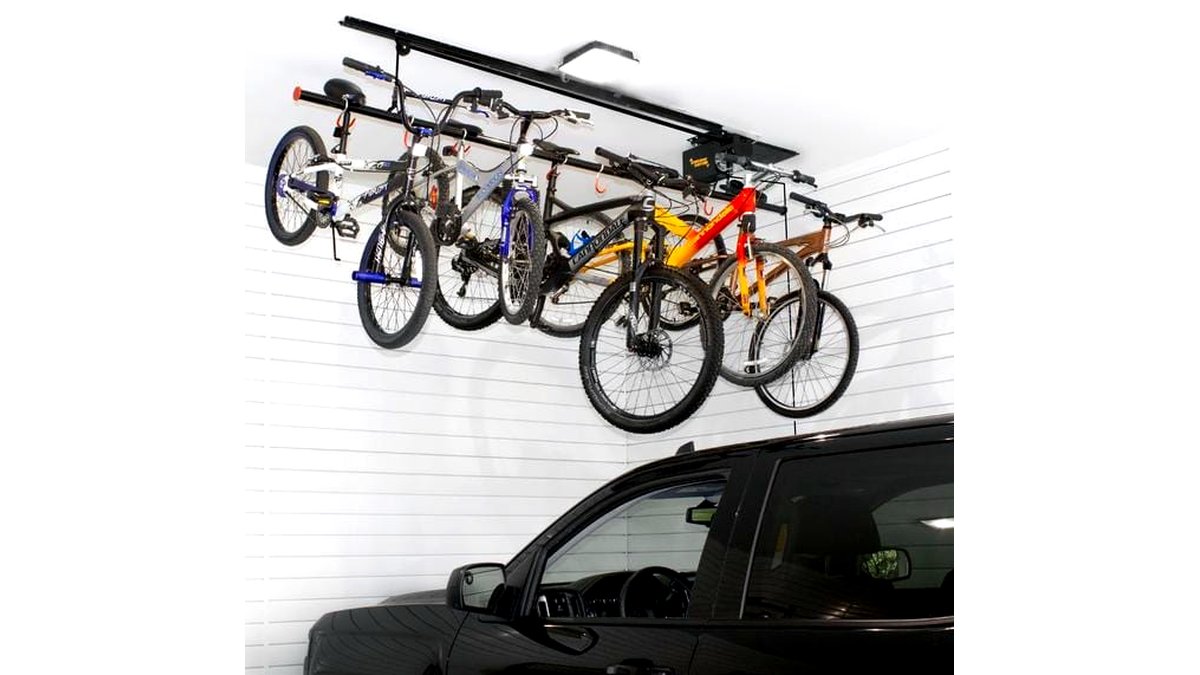
| Multi-bike ceiling rail/rack system | Households with several bikes needing organized storage | Rail or multi-hook design mounted across ceiling joists, supports multiple bikes in a row | More complex installation, higher cost than single-bike hooks, needs adequate joist spacing |
Pick X if…
| If you… | Choose |
|---|---|
| Have a heavier bike or limited lifting strength | A pulley hoist system |
| Have one lighter bike and decent ceiling height | A simple fixed horizontal ceiling hook pair |
| Have a narrow garage and want minimal footprint | A vertical wheel-mount hook |
| Store several bikes for multiple household members | A multi-bike ceiling rail or rack system |
| Have a low garage ceiling with limited clearance | A vertical wheel-mount hook over a horizontal pulley system, which needs less clearance per bike |
Pulley hoist systems
A pulley hoist is generally the easiest system to use for heavier bikes or for anyone who doesn’t want to lift a bike’s full weight by hand, since the rope-and-pulley mechanism spreads the lifting effort out and lets the bike be raised gradually rather than hoisted in one motion. These systems need the most vertical ceiling clearance of any ceiling storage type, since the bike travels most of the way toward the ceiling as part of normal operation, and clearance should be checked against the garage’s actual ceiling height before buying, accounting for any garage door track or opener rail that might be in the way. Installation is also more involved than a simple hook, since the pulley mechanism itself needs secure anchoring, typically into ceiling joists, and the rope-cleat or locking mechanism needs to hold the bike’s weight reliably at the raised position.
Fixed horizontal ceiling hooks
For a single, lighter bike and a garage with reasonable ceiling height, a simple pair of fixed hooks is often the most straightforward and lowest-cost option. The bike is lifted by hand and hung by its wheels across two hooks spaced to the bike’s wheelbase, which keeps it level and clear of car doors or walking paths below. The main practical limitation is that the full weight of the bike has to be lifted by hand to hook height, which can be difficult for heavier bikes or for anyone with shoulder or back limitations, and the hook height is fixed once installed rather than adjustable.
Vertical wheel-mount hooks
In a narrow garage where floor space is tight, hanging a bike vertically by its front wheel from a single ceiling or wall-adjacent hook uses noticeably less lateral space than horizontal storage. This orientation works well for lighter bikes but can leave the bike more prone to swinging or shifting if bumped, since only one wheel is secured and the frame hangs freely below it; some installations add a simple strap or second lower anchor point to reduce sway. This type is also generally not recommended for heavier e-bikes or cargo bikes, since the stress concentrates on a single wheel mount rather than being distributed across two points.
Multi-bike ceiling rail and rack systems
Households storing several bikes benefit from a rail or multi-hook system mounted across the ceiling, which organizes multiple bikes in a row rather than requiring separate individual hook installations spaced out across the garage ceiling. These systems need more planning around joist spacing and total weight distribution, since several bikes’ combined weight is distributed across the mounting hardware, and installation generally takes longer than a single hook or hoist. For families or multi-bike households, though, this approach tends to make better use of limited garage ceiling space than installing several standalone hook pairs.
Fit and installation notes
Nearly every ceiling bike storage system needs to be anchored into ceiling joists or rafters rather than drywall or plaster alone, since drywall anchors are not rated to hold a bike’s weight safely over time; use a stud finder to locate and mark joists before drilling, and follow the manufacturer’s specified screw type and anchor depth. Measure actual available ceiling height with the garage door in its fully open position, since an open garage door track can reduce usable clearance near the door compared with the rest of the ceiling. For e-bikes and cargo bikes, double-check the system’s maximum weight rating against the bike’s actual weight including any battery or rack accessories, since these bikes often weigh substantially more than a standard bike and can exceed a basic hook’s rated capacity.
Alternatives worth considering
- A wall-mounted vertical or horizontal rack. For garages with limited ceiling height or joist access, a wall-mounted rack avoids ceiling installation entirely and can be just as space-efficient depending on available wall area.
- A freestanding floor rack or stand. For renters or anyone who doesn’t want to drill into the ceiling or walls, a freestanding multi-bike floor stand offers a no-installation option, though it uses floor space that ceiling storage avoids.
- A garage storage lift platform. For garages also storing other bulky items like kayaks or totes, a motorized or manual storage lift platform can handle a bike alongside other gear rather than using a bike-specific hook or hoist.
Frequently Asked Questions
How much ceiling clearance do I need for a bike hoist?
Clearance requirements vary by system, but pulley hoists generally need the most since the bike travels close to the ceiling when raised; fixed hooks need less since the bike hangs at a fixed height just below the mounting point. Always check the specific product’s stated clearance requirement against your garage’s actual ceiling height, including any obstruction from garage door tracks or openers.
Can I install a ceiling bike rack without finding a stud or joist?
This isn’t recommended for any system meant to hold a bike’s weight long-term, since drywall or plaster alone generally isn’t rated for that kind of sustained load. Use a stud finder to locate ceiling joists and anchor directly into them, or use hardware specifically rated for the ceiling material if joists aren’t accessible at the needed location.
Will a ceiling rack damage my bike?
Hanging a bike by its wheels is a common and generally safe storage method, but prolonged hanging by a single wheel can theoretically stress that wheel’s rim or spokes over very long periods, which is one reason some riders prefer horizontal two-wheel hanging over single-wheel vertical storage for long-term use. Suspension components on some bikes may also have specific manufacturer guidance about storage orientation, so checking the bike’s own manual is worthwhile.
Are ceiling racks suitable for e-bikes?
Only if the specific rack or hoist’s stated weight capacity meets or exceeds the e-bike’s actual weight including the battery, since e-bikes are typically much heavier than standard bikes. A pulley hoist system is often a more practical choice than a simple fixed hook for e-bikes given the added weight and the reduced lifting effort a hoist provides.
How many bikes can one ceiling rail system hold?
This depends on the specific product and is listed in the manufacturer’s spec sheet, typically based on the rail length and the number of hook or cradle positions included. Total combined weight capacity across all bikes on the rail matters just as much as the number of positions, so check both figures before assuming a system fits a household’s full bike count.
Do I need help installing a ceiling bike rack?
Many single-hook or single-hoist installations are manageable for one person with basic tools, but multi-bike rail systems or installations on very high ceilings may be easier and safer with a second person helping to hold hardware in place during mounting. Following the manufacturer’s installation instructions and using a stable ladder are important regardless of system type.