Key takeaways
- Check working distance against the task; soldering typically needs 4 inches or more of clearance, while small-object inspection can use a shorter distance.
- Boom and articulating stands take up more desk footprint than post stands; measure bench space before buying.
- If camera documentation matters, confirm the trinocular port size matches standard C-mount camera adapters before ordering a camera separately.
- LED ring lights and gooseneck lights are often sold separately from the base scope on some models; check whether lighting is included.
Hobbyists inspecting coins, gems, or insects do best with an entry-level LED stereo microscope around 10x-30x, while electronics repair, PCB soldering, and jewelry work call for a boom-stand model with higher zoom range and stronger, adjustable LED or ring lighting. The right choice comes down to working distance, zoom range, and how the sample needs to be held steady under the lens, not just magnification numbers on the box.
As an Amazon Associate, we earn from qualifying purchases made through links on this page.
What a Stereo Microscope Actually Does Differently
Unlike a compound microscope that looks through thin, flat, transparent slides, a stereo microscope uses two separate optical paths to give a true three-dimensional view of a solid object sitting on a stage or under a boom arm. This is why stereo microscopes are the standard tool for soldering, coin and stamp inspection, insect and plant study, and small-parts assembly: the depth perception lets the user see height, texture, and spatial relationships that a flat 2D view cannot show.
Magnification in stereo scopes is lower than compound microscopes by design, typically ranging from about 2x up to 90x or so on higher-end zoom models, because the whole point is examining a visible, handheld-size object rather than cells or tissue. Working distance, the gap between the lens and the sample, matters just as much as zoom; soldering and dissection work need several inches of clearance to fit tools and hands under the objective, while a tighter working distance can still work fine for coin or gem inspection.
Head Styles, Stands, and Why They Matter
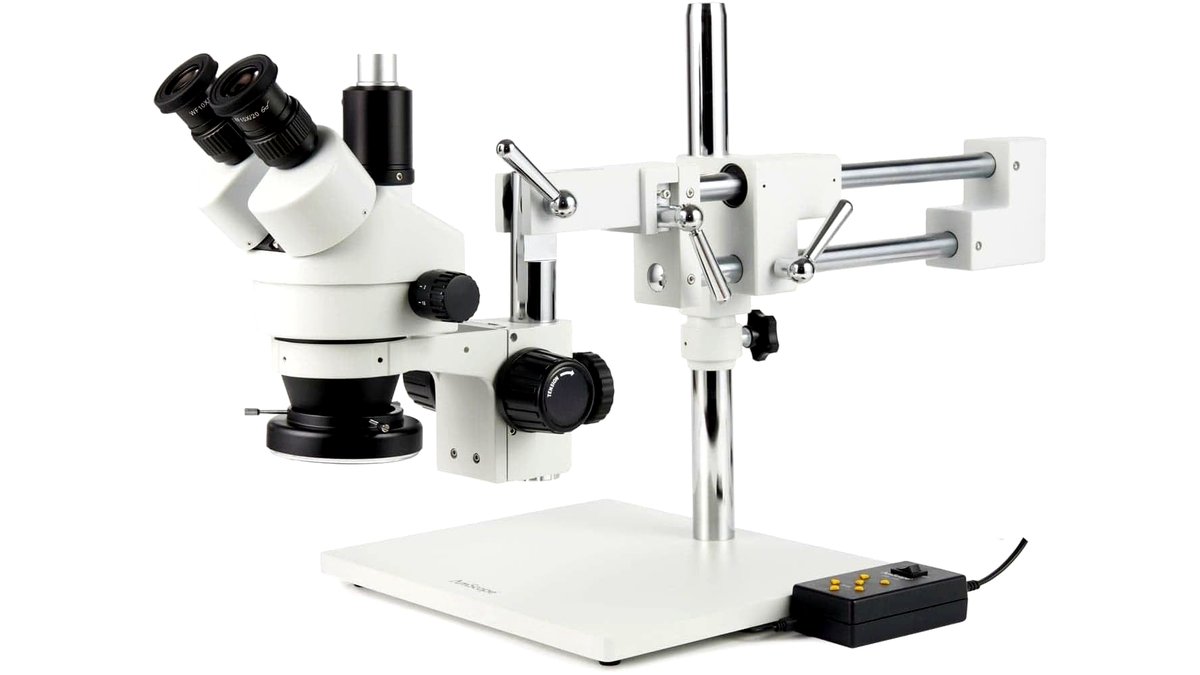
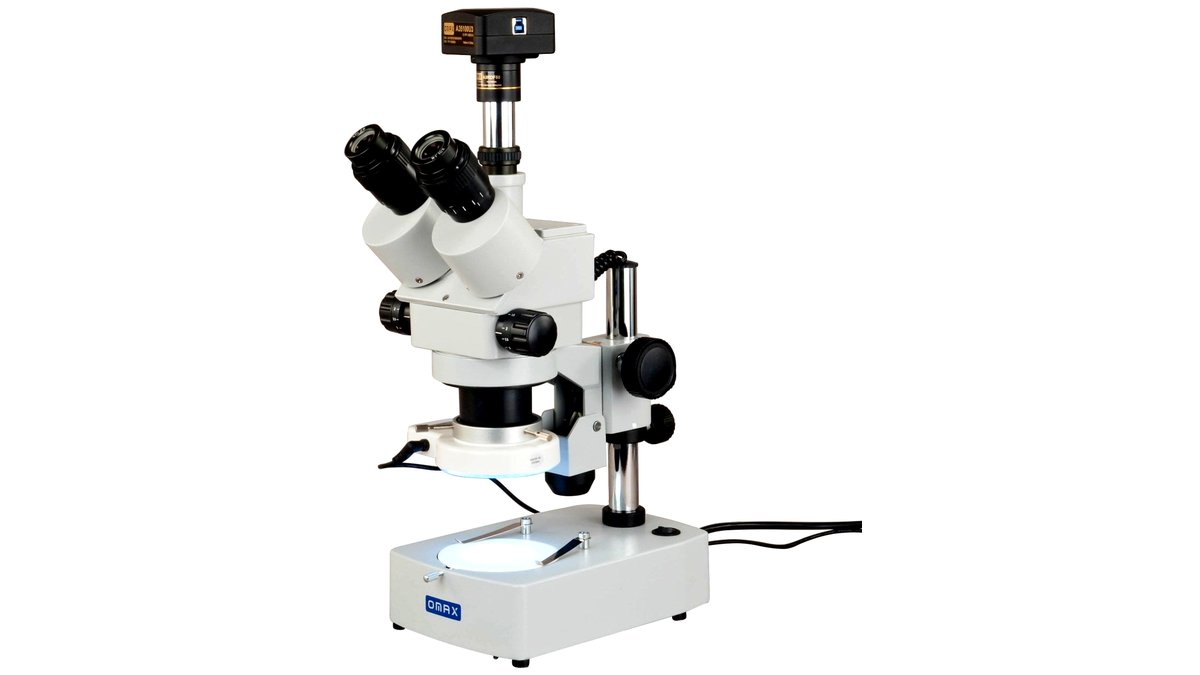
Stereo microscopes typically come as binocular (both eyes, same image) or trinocular (binocular plus a port for a camera). Trinocular models let the user attach a digital camera or microscope camera for photographing samples or displaying the view on a monitor, which reviewers note is increasingly common in jewelry appraisal and quality-control settings.
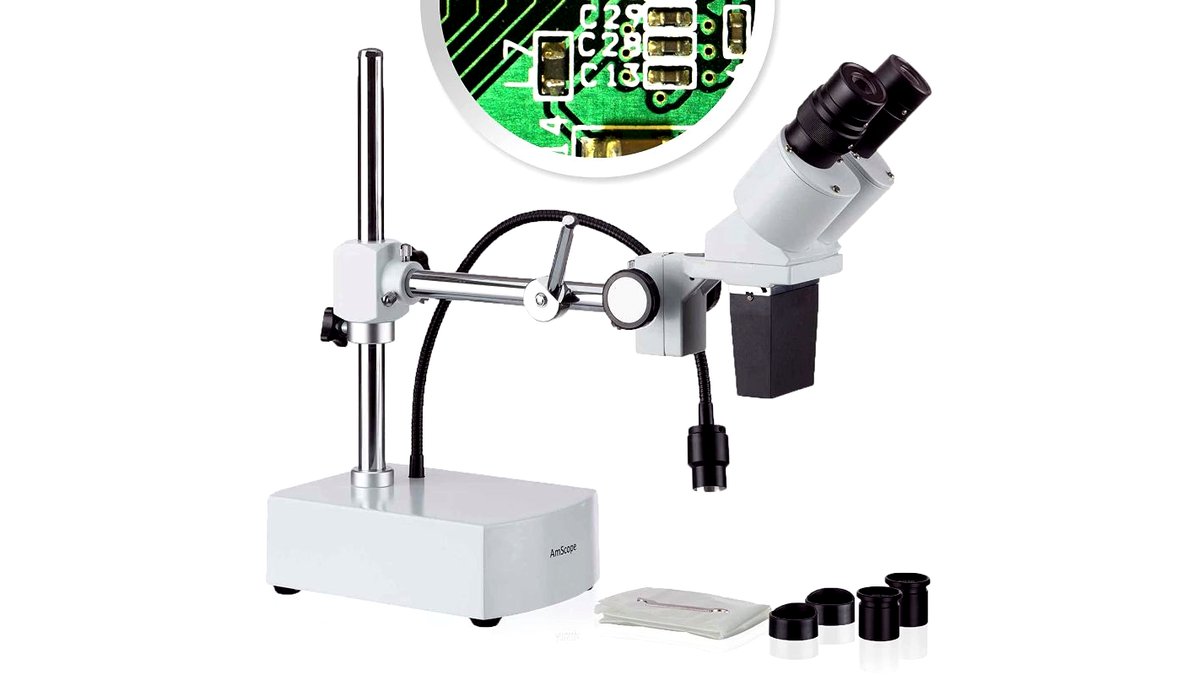
Stand type is one of the most overlooked specs. A fixed post stand works for stationary lab-bench inspection. A boom stand, where the optical head swings out on an arm, is the standard choice for soldering and PCB work because it lets the user maneuver a large PCB or chassis freely underneath without the base getting in the way. Articulating-arm stands offer similar freedom with a different footprint, useful in tighter bench spaces.
Fit and Compatibility Notes
- Check working distance against the task; soldering typically needs 4 inches or more of clearance, while small-object inspection can use a shorter distance.
- Boom and articulating stands take up more desk footprint than post stands; measure bench space before buying.
- If camera documentation matters, confirm the trinocular port size matches standard C-mount camera adapters before ordering a camera separately.
- LED ring lights and gooseneck lights are often sold separately from the base scope on some models; check whether lighting is included.
At a Glance: Stereo Microscope Types
| Type | Best for | Key stated specs | Limits |
|---|---|---|---|
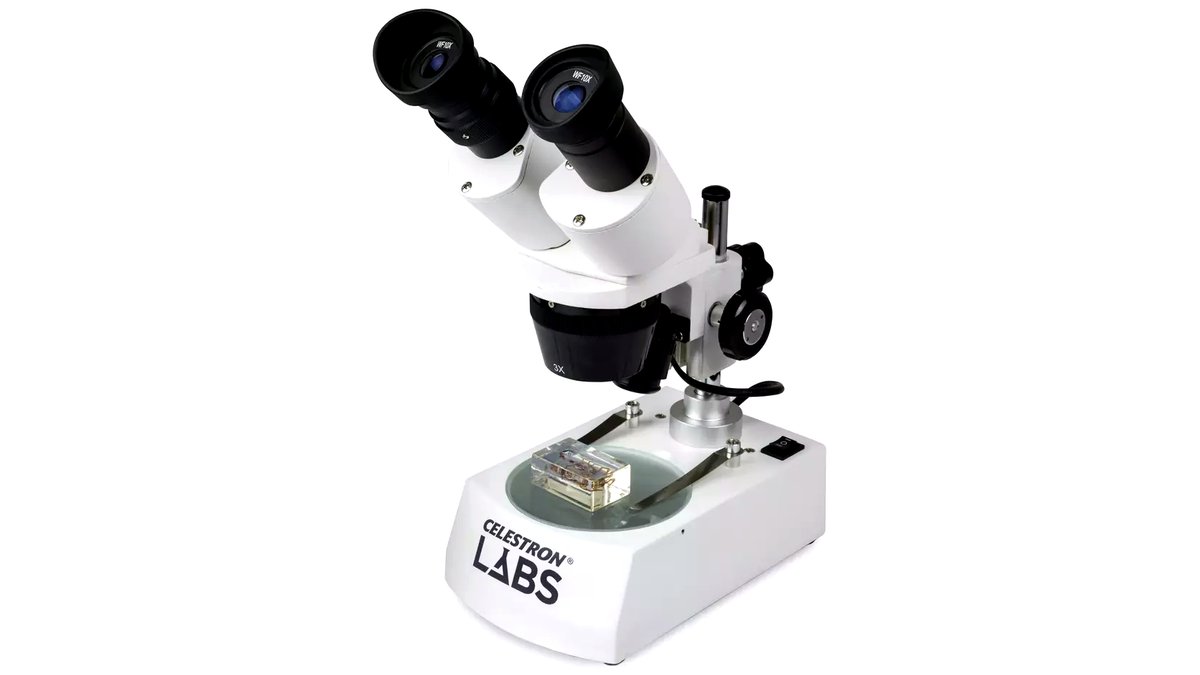
| Fixed-magnification binocular, post stand | Coin, stamp, and hobby inspection on a budget | Makers commonly list 10x-30x fixed or two-step magnification | No zoom flexibility; limited working distance adjustment |
| Zoom binocular, boom or post stand | General lab, hobby, and light electronics use | Continuous zoom typically listed in the 7x-45x range | Mid-range models may have dimmer stock lighting; upgrade LEDs often recommended |
| Trinocular zoom, boom stand | Electronics repair, soldering, jewelry work, documentation | Zoom ranges up to roughly 7x-90x on higher-end models; camera port included | Higher cost; larger footprint; camera sold separately on many models |
| Dedicated jewelry/gemology scope | Gem and jewelry inspection | Makers emphasize high clarity optics and strong incident lighting | Narrower use case outside gemology; limited working distance for larger objects |
Pick This If…
| Situation | Recommended type |
|---|---|
| Casual coin, stamp, or nature hobby use on a budget | Fixed or two-step magnification binocular, post stand |
| General bench use across multiple small hobbies | Zoom binocular, boom or post stand |
| Soldering, PCB rework, or small-parts assembly | Trinocular zoom, boom stand with strong LED lighting |
| Jewelry appraisal or gem grading | Dedicated jewelry/gemology scope |
| Need to document or share what’s under the lens | Trinocular model with a camera port |
Lighting, Eyepieces, and Other Specs That Change the Experience
Stock lighting on budget stereo microscopes is often a single ring of LEDs with limited brightness, which can leave shadows on textured or reflective samples like solder joints and metal parts. Reviewers covering electronics work frequently recommend upgrading to a brighter, adjustable-intensity LED ring light or adding a secondary gooseneck light for raking light across a surface, since this reveals solder bridges and surface defects that flat lighting can hide.
Eyepiece diopter adjustment and interpupillary distance adjustment are worth checking before buying, since a scope that can’t adjust to the user’s eye spacing or correct for a difference between eyes causes eye strain during long sessions. Wide-field eyepieces (commonly WF10x) are the standard baseline; higher-power eyepieces trade field of view for more magnification and are usually an add-on rather than a swap most casual users need.
Alternatives Worth Considering
For users focused purely on soldering and PCB inspection without needing true stereo depth perception, a digital microscope with a single camera and an HDMI or USB monitor output can be a lower-cost alternative, though it sacrifices the natural depth cues a true optical stereo scope provides. A second alternative is a head-mounted or glasses-style magnifier with built-in LED lighting for quick spot checks, which is far cheaper but offers much lower magnification and no zoom range. A third option for documentation-heavy work is a lower-magnification stereo scope paired with a dedicated external camera and ring light, which can match a pricier all-in-one trinocular setup at a different cost and complexity tradeoff.
Frequently Asked Questions
What magnification range do I actually need for soldering?
Most electronics reviewers point to roughly 10x-20x as the practical working range for standard through-hole and surface-mount soldering, with higher zoom reserved for fine-pitch SMD rework. Going much higher than needed narrows the field of view and working distance, which can make hand tool access harder rather than easier.
Do I need a trinocular head if I don’t plan to take photos right away?
Not necessarily; a binocular-only model is usually less expensive and fully capable for visual inspection tasks. A trinocular port is worth the added cost mainly if documentation, teaching, or sharing the view on a screen is a near-term need, since adding a camera later still requires the trinocular port to exist on the scope itself.
Why does the stock LED light on budget scopes look dim or uneven?
Entry-level ring lights are often built with fewer or lower-output LEDs to control cost, and single-source ring lighting can wash out texture on shiny surfaces like solder or polished metal. Many users address this by adding an adjustable or dimmable light source, or a secondary angled light for better contrast on reflective samples.
What’s the difference between a boom stand and a post stand?
A post stand holds the optical head over a fixed base, suited to small samples placed directly under the lens. A boom stand extends the head out on an arm so larger objects, like a full-size PCB or chassis, can be positioned freely underneath without the base getting in the way, which is why boom stands are common in electronics repair.
Can a stereo microscope be used for biology or classroom dissection?
Yes; stereo microscopes are the standard tool for dissecting insects, plants, and small specimens because the 3D view and moderate magnification suit solid-object examination better than a compound microscope. A model with a larger working distance and stage lighting from below as well as above tends to work best for this use.
How important is interpupillary and diopter adjustment?
Both matter for comfort during extended use; interpupillary adjustment matches the eyepiece spacing to the user’s eyes, and diopter adjustment compensates for any difference in focus between the user’s two eyes. Skipping this adjustment is a common reason users report eye strain or headaches after longer sessions at the scope.