Key takeaways
- Magnification and objective lens size (written as, e.g., 8×42). The first number is magnification; the second is the objective lens diameter in millimeters, which affects brightness and field of view. Higher magnification narrows the field of view and amplifies hand shake, while a larger objective lens generally brightens the image, especially in low light.
- Field of view. A wider field of view makes it easier to locate and track a moving bird, which matters more in birding than in most other binocular uses.
- Close focus distance. Many birders watch songbirds just a few meters away; a binocular with a short minimum focus distance (some models reach under 2 meters) stays usable at close range, while others blur anything closer than 4-5 meters.
- Light transmission and lens coatings. Fully multi-coated lenses and phase-corrected roof prisms generally produce a brighter, higher-contrast image, which matters most in the low light of early morning and evening birding.
- Weight and eye relief. Birders often hold binoculars for extended periods, so weight affects fatigue; eye relief (the distance the eye can be from the eyepiece and still see the full image) matters especially for eyeglass wearers.
- Waterproofing and fog-proofing. Nitrogen- or argon-purged, O-ring-sealed binoculars resist internal fogging in humid or rainy conditions, which matters for birders who go out regardless of weather.
A backyard or general-purpose birder is usually best served by 8×42 binoculars, which balance magnification, brightness, and a steady handheld view, while anyone watching open fields, shorebirds, or raptors at longer distances benefits more from 10×42 or 10×50 for the extra reach; close-focus specialists chasing warblers in dense foliage should prioritize a model with a short minimum focus distance over raw magnification.
As an Amazon Associate, we earn from qualifying purchases made through links on this page.
What Matters Most for Birding Binoculars
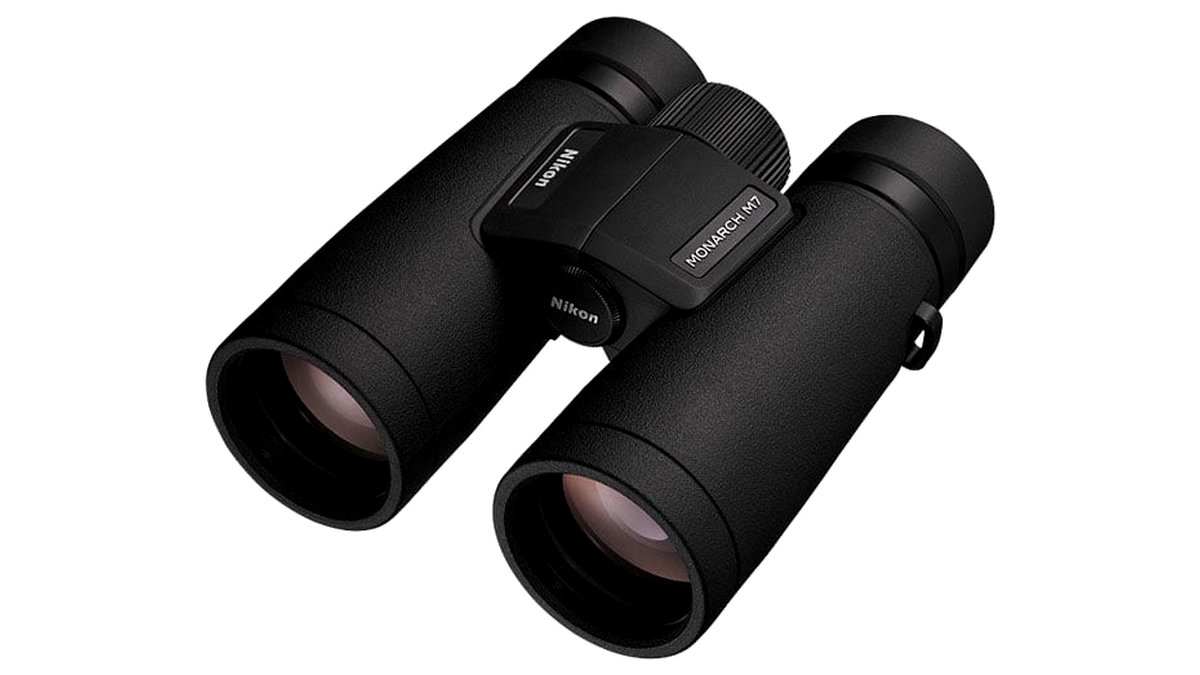
Birding has specific demands that differ from general outdoor or hunting optics: birds move quickly, often in low light (dawn and dusk), and are frequently seen at close range in brush as well as far away in open sky. A few specs matter more here than elsewhere:
- Magnification and objective lens size (written as, e.g., 8×42). The first number is magnification; the second is the objective lens diameter in millimeters, which affects brightness and field of view. Higher magnification narrows the field of view and amplifies hand shake, while a larger objective lens generally brightens the image, especially in low light.
- Field of view. A wider field of view makes it easier to locate and track a moving bird, which matters more in birding than in most other binocular uses.
- Close focus distance. Many birders watch songbirds just a few meters away; a binocular with a short minimum focus distance (some models reach under 2 meters) stays usable at close range, while others blur anything closer than 4-5 meters.
- Light transmission and lens coatings. Fully multi-coated lenses and phase-corrected roof prisms generally produce a brighter, higher-contrast image, which matters most in the low light of early morning and evening birding.
- Weight and eye relief. Birders often hold binoculars for extended periods, so weight affects fatigue; eye relief (the distance the eye can be from the eyepiece and still see the full image) matters especially for eyeglass wearers.
- Waterproofing and fog-proofing. Nitrogen- or argon-purged, O-ring-sealed binoculars resist internal fogging in humid or rainy conditions, which matters for birders who go out regardless of weather.
Binocular Types and Who They Suit
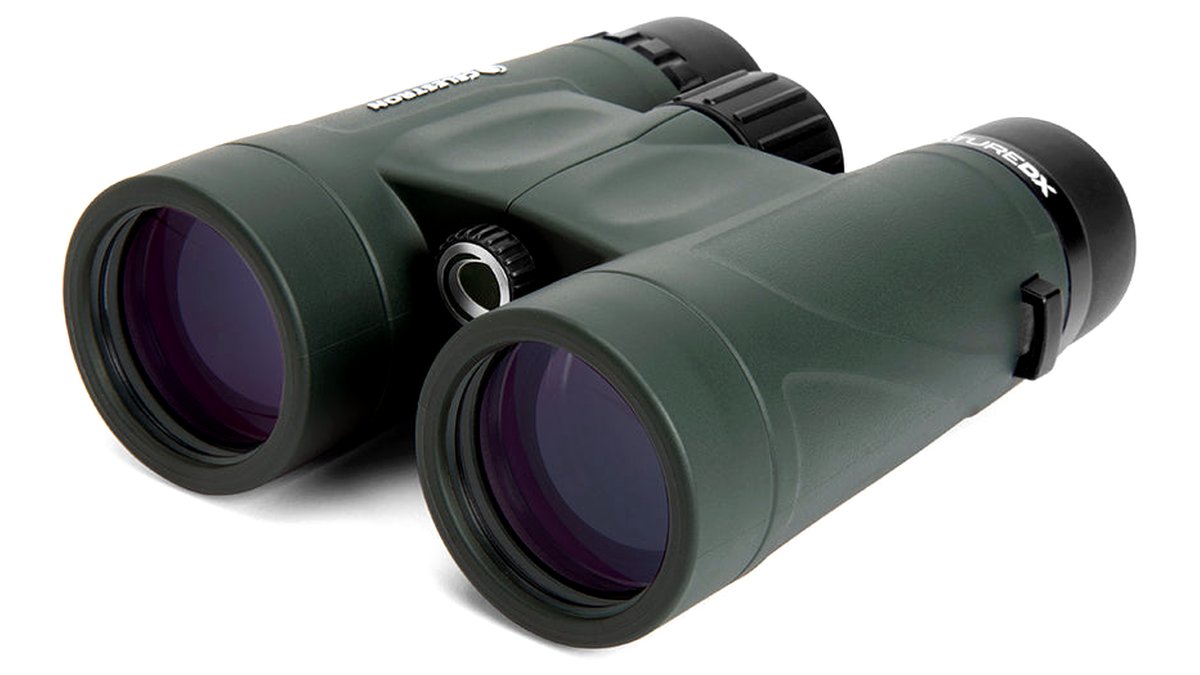
8×42 Binoculars (the Birding Standard)
This configuration is widely treated as the default for general birding because it balances a wide field of view, bright image, and a steady enough handheld view for most situations. It suits beginners and experienced birders alike who want one pair that works across woodland, backyard, and open-field birding without major compromises.
10×42 and 10×50 Binoculars
The higher magnification helps identify distant birds, raptors overhead, or shorebirds across open water, at the cost of a narrower field of view and more noticeable hand shake at full zoom. These suit birders who frequently watch open habitats (coastlines, prairies, lakes) where distance matters more than quick tracking of nearby movement.
Compact Binoculars (8×25, 10×25)
Smaller and lighter for travel or casual carry, compact binoculars trade some brightness and field of view (due to smaller objective lenses) for portability. These suit birders who want something to keep in a bag or pocket for opportunistic sightings rather than dedicated birding outings.
Close-Focus Specialist Binoculars
Some models are built or tuned specifically for a very short minimum focus distance, aimed at birders who spend significant time watching warblers, hummingbirds, or other small birds at close range in brush or garden settings. Raw magnification matters less here than the ability to focus sharply on something just a couple of meters away.
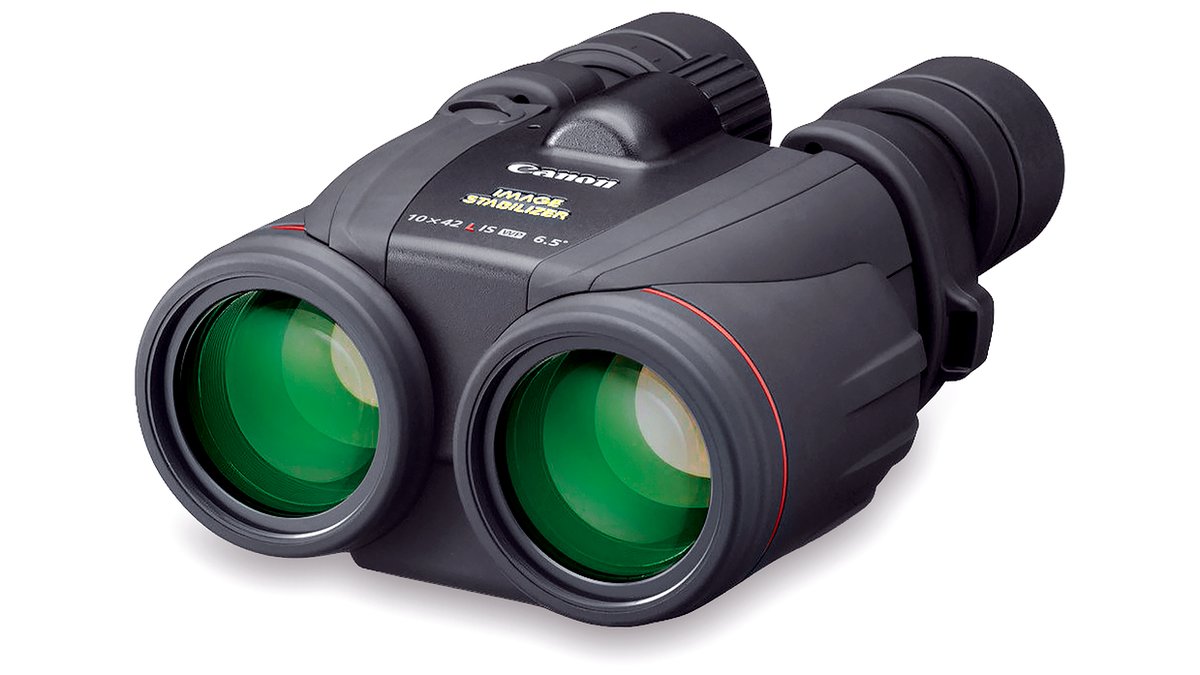
Image-Stabilized Binoculars
Built-in stabilization (mechanical or electronic) reduces hand shake, which is especially useful at higher magnifications (10x and above) or for birders with less steady hands, such as from a boat or while standing for long periods. These are heavier and pricier than non-stabilized equivalents, generally reserved for buyers who specifically need the steadying effect.
Roof Prism vs. Porro Prism Designs
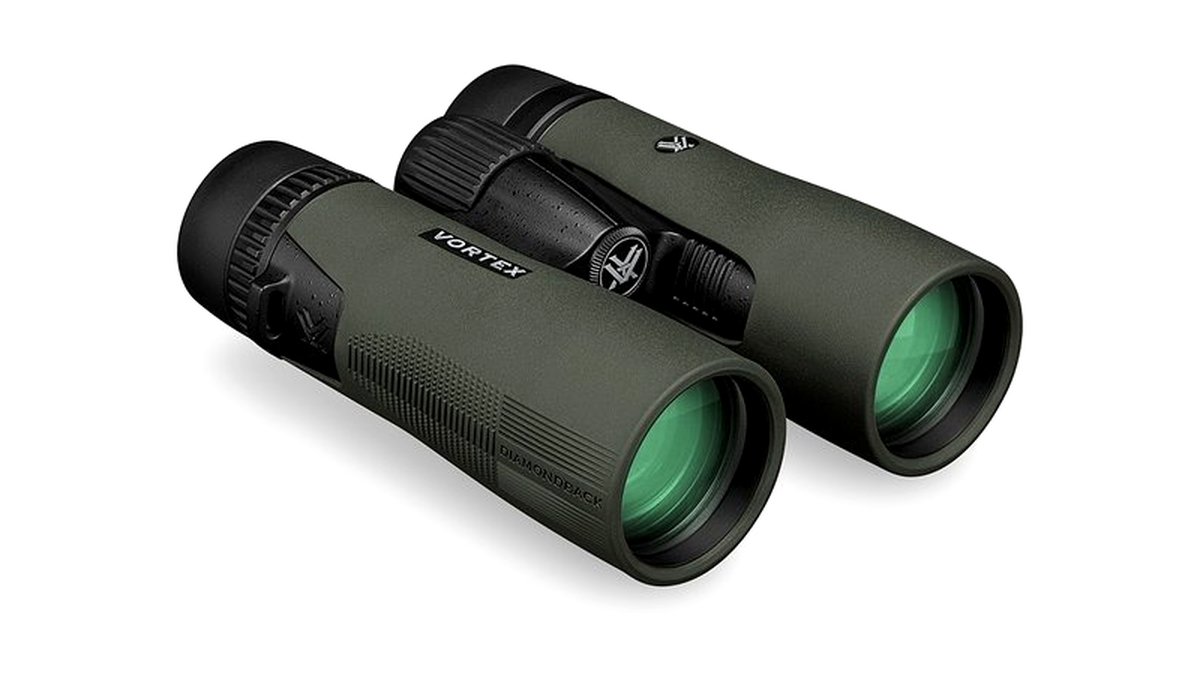
Roof prism binoculars are more compact and generally more weather-sealed, dominating the current birding market; Porro prism binoculars are bulkier but can offer a wider field of view and more three-dimensional depth perception at a given price point. Birders prioritizing a streamlined, weatherproof design generally lean roof prism; those prioritizing value and depth perception sometimes still choose Porro prism models.
| Type | Best For | Key Stated Specs | Limits |
|---|---|---|---|
| 8×42 roof prism | General all-purpose birding | 8x magnification, 42mm objective, wide FOV | Less reach for distant open-field birds |
| 10×42 / 10×50 | Open fields, shorebirds, raptors at distance | 10x magnification, larger objective options | Narrower FOV, more noticeable hand shake |
| Compact (8×25/10×25) | Travel, casual/opportunistic use | Lightweight, pocket-sized | Dimmer image, smaller FOV than full-size |
| Close-focus specialist | Warblers, hummingbirds, garden birding | Short minimum focus distance (often under 2m) | May trade off some long-distance performance |
| Image-stabilized | High magnification, unsteady hands, boats | Mechanical/electronic stabilization | Heavier, higher cost, batteries for electronic types |
| Porro prism | Budget-focused buyers wanting wide FOV/depth | Traditional offset-barrel design | Bulkier, often less weather-sealed |
Fit and Use Notes
Interpupillary distance (the spacing between a person’s eyes) needs to match the binocular’s adjustable hinge range for a comfortable, single merged image; most adult binoculars adjust across a wide enough range for most users, but it’s worth checking before buying for a smaller-framed user or a child. Eyeglass wearers should look for binoculars with adjustable or twist-up eyecups and sufficient stated eye relief (generally at least 15mm) to see the full field of view without removing their glasses. For neck comfort during long birding walks, a wider, padded strap or a harness-style strap redistributes weight better than a thin standard strap, especially for heavier 10×50 or stabilized models.
Pick This If…
| Situation | Pick |
|---|---|
| Want one all-purpose pair for most birding situations | 8×42 roof prism binoculars |
| Mainly watch open fields, coastlines, or raptors overhead | 10×42 or 10×50 binoculars |
| Want something small enough for a jacket pocket or daypack | Compact 8×25/10×25 binoculars |
| Spend most time on close songbirds in dense brush | A close-focus specialist model |
| Need steady high-magnification views or have shaky hands | Image-stabilized binoculars |
| Want wide field of view and depth on a budget | A Porro prism model |
Alternatives to Consider
- Spotting scopes: for serious long-distance birding (shorebirds, raptors on distant perches), a tripod-mounted spotting scope with high magnification outperforms any handheld binocular, at the cost of portability and setup time.
- Monoculars: a single-barrel, lighter alternative for casual or opportunistic use, trading depth perception and sometimes image quality for reduced size and weight.
- Smartphone digiscoping adapters: rather than buying a dedicated camera setup, an adapter that mounts a phone to existing binoculars or a scope lets birders capture reference photos without separate photography gear.
Frequently Asked Questions
Is higher magnification always better for birding?
Not necessarily; higher magnification narrows the field of view and makes handheld shake more noticeable, both of which can make it harder to find and track a moving bird compared to a lower-magnification binocular. Most birding guides and experienced birders point to 8x as the more versatile choice for general use, reserving 10x for situations where distance specifically outweighs tracking ease.
What does “close focus distance” mean and why does it matter for birding?
Close focus distance is the nearest point at which a binocular can produce a sharp image; birders often encounter songbirds just a few meters away in gardens or brush, and a binocular that can’t focus that close will blur the subject. Checking this spec specifically (not just magnification) matters for anyone who does a lot of close-range birding.
Do more expensive binoculars actually perform noticeably better?
Generally, higher-priced binoculars use better glass, coatings, and prism materials that produce a brighter, sharper, higher-contrast image, especially noticeable in low light at dawn or dusk. For casual daytime birding the difference can be less dramatic, so matching the budget tier to how often and in what conditions the binoculars will actually be used is reasonable.
How do I know if binoculars are truly waterproof versus just water-resistant?
Makers generally state a specific waterproof rating (often tied to a submersion depth and duration) for fully sealed, nitrogen- or argon-purged models, while water-resistant binoculars only claim protection from light rain or splashes. Checking the manufacturer’s specific waterproofing claim, rather than assuming “weatherproof” language means full submersion protection, avoids a mismatch with actual field conditions.
Can I use the same binoculars for birding and other activities like hunting or stargazing?
General-purpose binoculars like 8×42 or 10×42 models work reasonably well across birding, hunting, and casual astronomy, though each activity has its own ideal specs (hunters often prioritize different magnification ranges, and astronomy benefits from larger objective lenses for night sky brightness). A single versatile pair is a reasonable choice for someone splitting time across activities rather than buying specialized optics for each.
What’s the benefit of phase-corrected roof prisms?
Phase correction coatings on roof prism binoculars correct for a light-wave shift that otherwise reduces contrast and sharpness, which makers generally apply to mid-range and higher-tier roof prism models. Entry-level roof prism binoculars without phase correction can still work well for birding but typically show slightly less contrast and resolution than phase-corrected equivalents.