Key takeaways
- Celestron StarSense Explorer series: Uses a smartphone-based star-matching system instead of a motorized GoTo mount, which appeals to buyers who want guided finding without batteries or electronics in the mount itself.
- Orion Dobsonian reflectors: A similar large-aperture, simple-mount approach to Sky-Watcher’s classic Dobsonians, worth comparing on specific aperture and included accessories.
- Unistellar and similar smart telescopes: Fully automated, app-driven devices that capture and stack images of faint objects for the viewer, trading traditional eyepiece viewing for a screen-based experience at a different price tier.
Beginners who want wide, bright views of star clusters and nebulae do best with a Sky-Watcher Dobsonian, casual backyard observers who want planets and the Moon fit a Maksutov-Cassegrain like the Skymax, and buyers who want the scope to find targets automatically should look at the Virtuoso GTi or AZ-GTi series. Sky-Watcher’s catalog spans tabletop reflectors, achromatic refractors, catadioptric designs, and GoTo mounts, so the right pick depends more on how and where a buyer plans to observe than on price alone.
As an Amazon Associate, we earn from qualifying purchases made through links on this page.
What Sky-Watcher Actually Makes
Sky-Watcher is a long-running optics brand known for packaging solid glass and mirrors into approachable, well-supported telescopes. The lineup breaks into a few clear families: Dobsonian reflectors (large mirrors on simple rocker-box mounts), Heritage tabletop Dobsonians (collapsible, portable versions of the same idea), Evostar and Startravel achromatic refractors, Skymax Maksutov-Cassegrain compacts, and the Virtuoso GTi and AZ-GTi smart mounts that can be paired with several optical tubes. Each family trades portability, aperture, and automation differently, and matching the family to the buyer’s actual observing habits matters more than chasing the largest aperture number on the box.
Aperture (the diameter of the main mirror or lens) is the number that predicts how much faint detail a telescope can gather. Bigger generally means brighter, more detailed views of deep-sky targets, but it also means a heavier, bulkier tube. Buyers who observe from an apartment balcony or who need to carry gear to a dark-sky site benefit from matching aperture to how far they are willing to carry the telescope, not just to what looks impressive on paper.
Dobsonian Reflectors for Deep-Sky Views
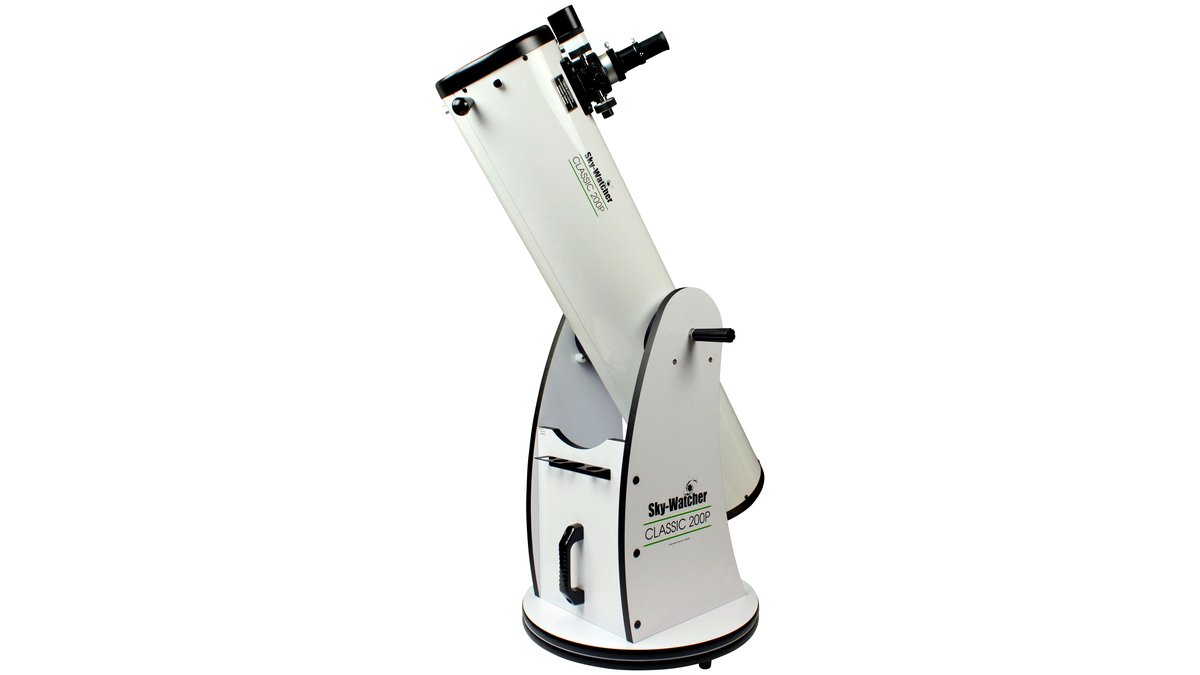
The classic Sky-Watcher Dobsonian, sold in 6-inch, 8-inch, 10-inch, and larger apertures, remains a favorite among experienced amateur astronomers because it delivers large aperture for comparatively little cost. The simple rocker-box mount has no fine electronics to fail, and the optical tube is a straightforward Newtonian reflector that most owners learn to collimate (align the mirrors) within their first few sessions. These scopes excel at star clusters, nebulae, and galaxies under dark skies, though their size means they are better suited to a car trunk than a backpack.
The tradeoff with a full-size Dobsonian is bulk. An 8-inch or 10-inch tube is long and the base is heavy, so buyers without a vehicle or storage space for a roughly waist-high telescope should consider the smaller apertures or the tabletop line instead.
Heritage Tabletop Dobsonians for Portability
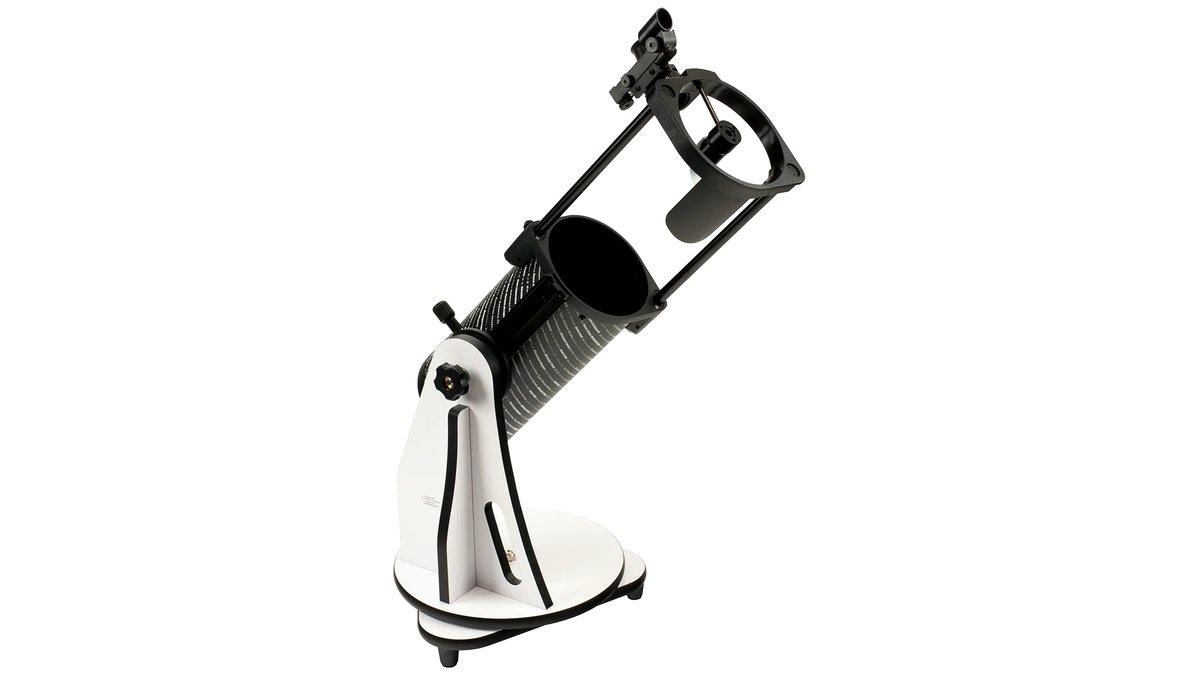
The Heritage series collapses the same reflector optics into a shorter, lighter package that sits on a table or a short tripod. A 100P or 130P Heritage model gives up some aperture compared with a full-size Dobsonian but gains a build that fits in a car’s back seat or a large backpack. This family suits apartment dwellers, travelers, and anyone who wants a grab-and-go scope for a quick look at the Moon or a bright planet before packing it away again.
Maksutov-Cassegrain Scopes for Planets and the Moon
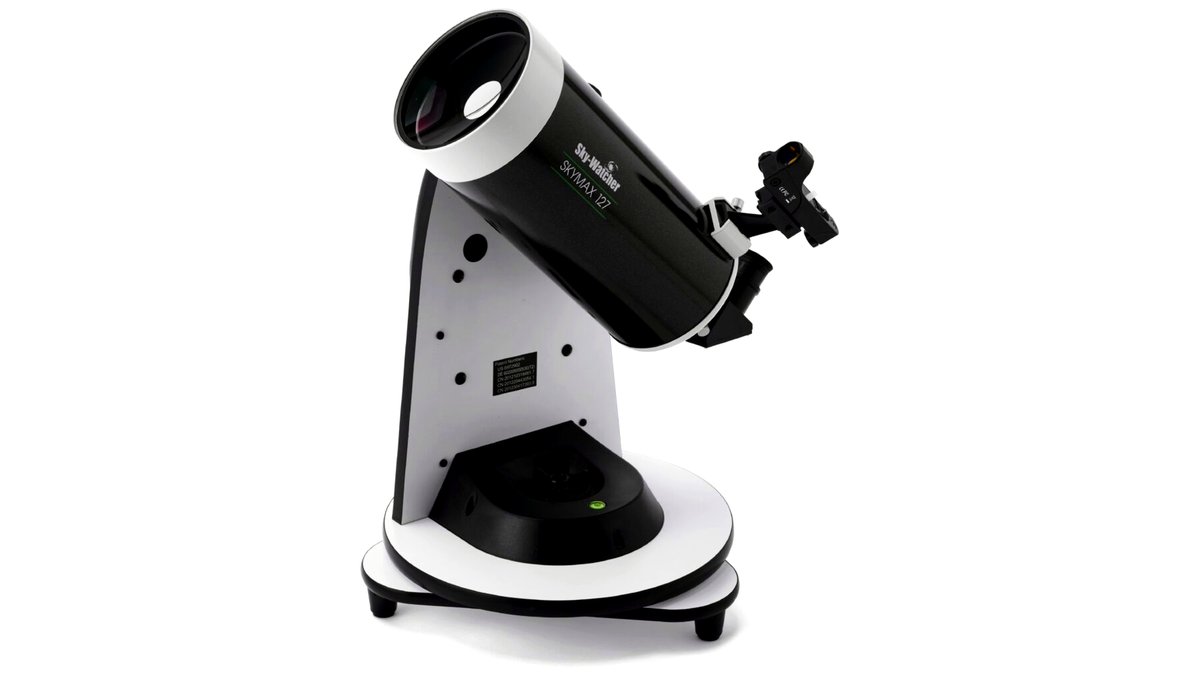
The Skymax series uses a folded optical path that packs a longer focal length into a short, sealed tube. That design produces a narrower field of view than a reflector of similar aperture, which makes these scopes better matched to the Moon, planets, and double stars than to sprawling nebulae. Their sealed tubes also resist dust and need little maintenance, which appeals to buyers who want a telescope they can store and pull out occasionally without a maintenance routine.
Refractors for Simplicity
Evostar and Startravel refractors use a lens instead of a mirror, so there is no collimation step and essentially no setup beyond attaching the tube to a mount. Smaller achromatic refractors in this line are often sold as complete packages with an alt-azimuth or basic equatorial mount, making them a common recommendation for a first telescope for a child or a household that wants something that works reliably with minimal learning curve. Larger-aperture refractors exist but become long and front-heavy, so most buyers choosing this family stick to smaller apertures.
GoTo Mounts: Virtuoso GTi and AZ-GTi
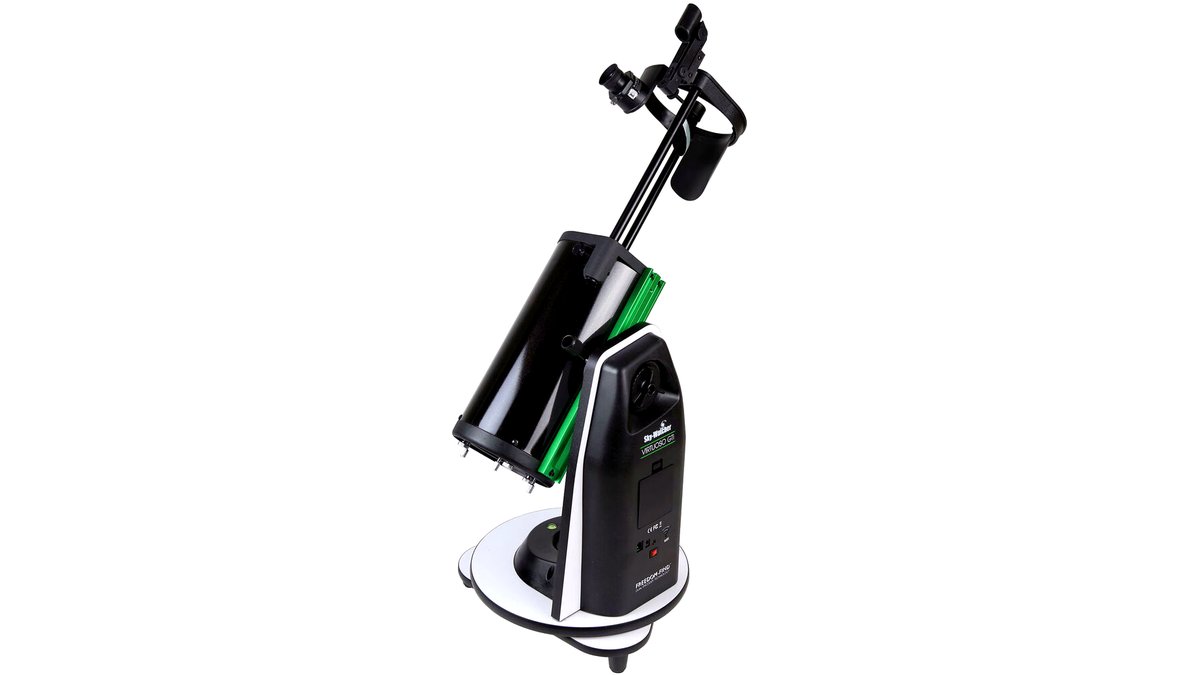
Buyers who find star-hopping (manually locating targets using star patterns) frustrating can add computerized pointing with the Virtuoso GTi or AZ-GTi mounts. Both connect to a smartphone app that the maker states can direct the mount to known objects, and the Virtuoso GTi includes a built-in tabletop Dobsonian tube while the AZ-GTi is sold as a standalone mount that accepts various optical tubes. These mounts run on batteries and need a brief alignment routine at the start of a session, so they suit buyers who value convenience and are comfortable with a short setup ritual each time.
At a Glance: Sky-Watcher Families Compared
| Family | Best For | Key Stated Traits | Limits |
|---|---|---|---|
| Classic Dobsonian (6-10 inch+) | Dark-sky deep-sky observing | Large aperture, simple manual mount, maker lists fast focal ratios for wide views | Bulky, needs occasional collimation, hard to transport without a vehicle |
| Heritage Tabletop Dobsonian | Portable, grab-and-go use | Collapsible tube, sits on a table or short tripod | Smaller aperture than full-size Dobsonians |
| Skymax Maksutov-Cassegrain | Moon and planets | Sealed, low-maintenance tube, long focal length | Narrow field of view, not ideal for large nebulae |
| Evostar / Startravel Refractor | First-time and beginner use | No collimation needed, often bundled as a complete kit | Smaller apertures limit faint-object detail |
| Virtuoso GTi / AZ-GTi | Hands-off target finding | App-guided GoTo pointing, maker lists smartphone control | Needs an alignment routine and charged batteries each session |
Pick X If…
| If You… | Choose |
|---|---|
| Have dark skies and a vehicle to transport gear | Classic Dobsonian (8-inch or larger) |
| Live in an apartment or travel often | Heritage tabletop Dobsonian |
| Mainly want detailed views of the Moon and planets | Skymax Maksutov-Cassegrain |
| Are buying a first telescope for a beginner or child | Evostar or Startravel refractor kit |
| Want the mount to locate targets automatically | Virtuoso GTi or AZ-GTi |
Fit and Compatibility Notes
Most Sky-Watcher optical tubes use a standard dovetail bar that fits the brand’s own mounts and many third-party alt-azimuth or equatorial mounts, so buyers who already own a compatible mount can sometimes buy a tube alone. Eyepieces generally use the common 1.25-inch barrel size across the lineup, though some larger Dobsonians also accept 2-inch eyepieces for wider fields of view; checking the focuser size on a specific model before buying extra eyepieces avoids a mismatch. Buyers planning to add a smartphone or camera adapter should confirm the adapter is rated for their specific focuser diameter.
Alternatives Worth Considering
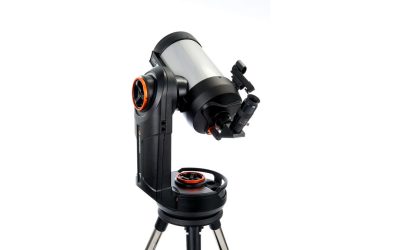
- Celestron StarSense Explorer series: Uses a smartphone-based star-matching system instead of a motorized GoTo mount, which appeals to buyers who want guided finding without batteries or electronics in the mount itself.
- Orion Dobsonian reflectors: A similar large-aperture, simple-mount approach to Sky-Watcher’s classic Dobsonians, worth comparing on specific aperture and included accessories.
- Unistellar and similar smart telescopes: Fully automated, app-driven devices that capture and stack images of faint objects for the viewer, trading traditional eyepiece viewing for a screen-based experience at a different price tier.
Frequently Asked Questions
Do Sky-Watcher Dobsonians need regular maintenance?
Newtonian reflectors like the Dobsonian line occasionally need collimation, meaning the mirrors need realignment if the scope is bumped or transported often. Most owners learn this as a short routine using a basic collimation tool, and many models ship with simple adjustment knobs for this purpose. Scopes that stay in one place and are handled gently need collimation far less often.
Can a beginner use a GoTo mount like the AZ-GTi without experience?
The maker lists a smartphone app intended to simplify alignment and target selection, which reduces the learning curve compared with fully manual star-hopping. New users still benefit from reading the included guide and practicing the initial alignment steps during a clear evening before relying on it for a specific event. Basic familiarity with a few bright stars or planets speeds up the first alignment.
What is the difference between a refractor and a reflector?
A refractor uses a glass lens at the front of the tube to bend and focus light, while a reflector uses a curved mirror at the back of the tube. Refractors need no collimation and tend to produce crisp, high-contrast views at smaller apertures, while reflectors typically offer more aperture per dollar but need occasional mirror alignment. Both designs are represented in the Sky-Watcher catalog, so the choice often comes down to maintenance tolerance versus aperture priorities.
How much aperture is enough for seeing planets well?
Reviewers commonly note that apertures in the 90mm to 130mm range already show cloud bands on Jupiter, the rings of Saturn, and phases of Venus under reasonably steady skies. Larger apertures reveal finer detail and allow higher magnification on calm nights, but atmospheric conditions often limit how much extra detail very large apertures actually deliver on any given evening. Buyers focused mainly on planets do not need to prioritize the largest aperture available.
Will a Sky-Watcher telescope work well in a light-polluted city?
Planets, the Moon, and double stars remain visible from most city locations because they are bright enough to overcome sky glow. Faint deep-sky targets like galaxies and dim nebulae lose contrast badly under light pollution regardless of aperture, so city-based buyers often get more satisfaction from a Maksutov-Cassegrain or refractor aimed at bright targets than from a large Dobsonian bought specifically for faint deep-sky objects.
Do these telescopes come with everything needed to start observing?
Most complete packages include the optical tube, a mount, at least one or two eyepieces, and a basic finder. Buyers should still expect to budget separately for a red flashlight, a star chart or app, and possibly a carrying case, since these are rarely included. Checking the specific package contents listed by the maker before buying avoids surprises about what else is needed on the first night out.