Key takeaways
- Visual observers who want the scope to track targets automatically should look at a mid-range GoTo equatorial mount, while astrophotographers doing long-exposure imaging need a mount with autoguider input and a payload capacity well above the telescope’s actual weight. The…
Visual observers who want the scope to track targets automatically should look at a mid-range GoTo equatorial mount, while astrophotographers doing long-exposure imaging need a mount with autoguider input and a payload capacity well above the telescope’s actual weight. The right choice depends on whether the goal is tracking for viewing or precision tracking for imaging.
As an Amazon Associate, we earn from qualifying purchases made through links on this page.
What “Guided” Means for a Telescope Mount
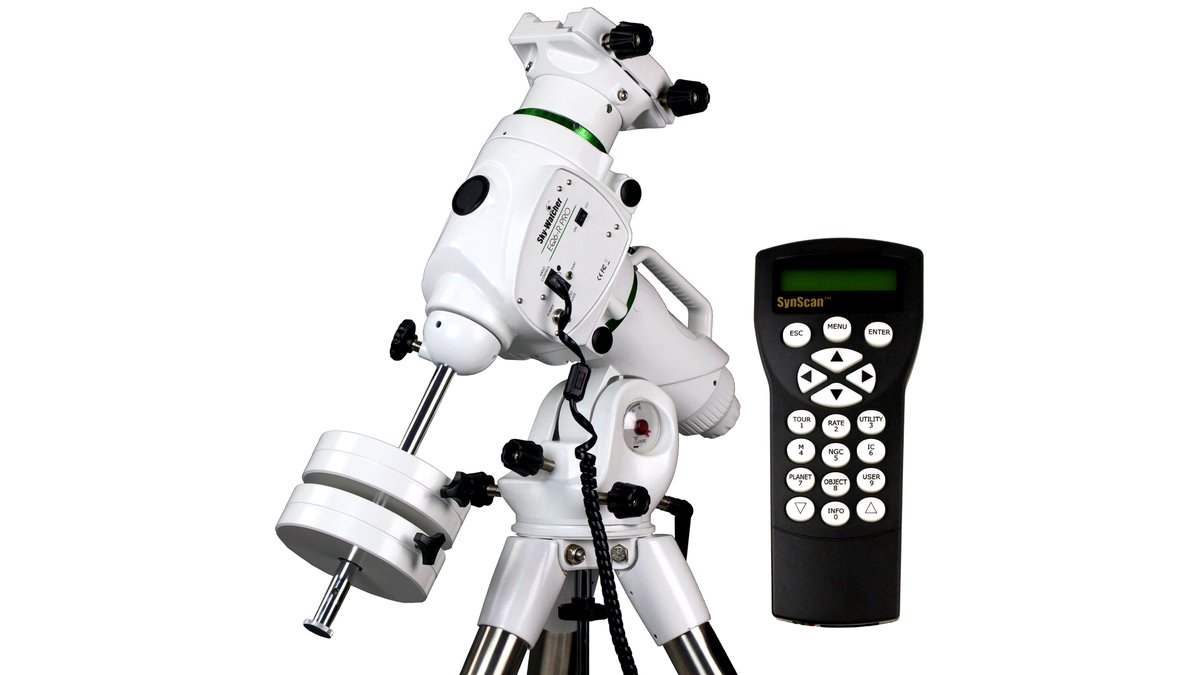
A guided mount, in the astrophotography sense, is one that accepts corrections from an autoguider, a small secondary camera and software combination that watches a guide star and sends tiny steering corrections to the mount’s motors. This is different from a simple GoTo mount, which can locate and track objects on its own but has no feedback loop to correct for small mechanical errors like periodic error in the drive gears. Any mount sold as “guide-capable” should have a dedicated ST-4 or USB autoguider port, which is the physical connection point an autoguider camera uses to talk to the mount.
Payload capacity is the second major spec, and it matters more for guided imaging than for casual visual use. A mount’s rated capacity is the maximum weight it can carry while still tracking accurately, but imaging loads should stay well under that rated maximum, since a mount working near its limit tracks less precisely and is more prone to vibration. A good rule reviewers commonly cite is to keep the imaging payload, including the telescope, camera, guide scope, and any counterweights’ opposing load, to roughly half the mount’s stated maximum capacity.
Mount type also determines what kind of guiding is even useful. An equatorial mount, aligned with Earth’s rotational axis, only needs to correct motion along a single arc to track a star, making it the standard choice for long-exposure deep-sky imaging. An alt-azimuth mount moves in two perpendicular directions and introduces field rotation during long exposures, which is why altazimuth mounts are far less common for serious guided astrophotography, even though many support basic GoTo tracking for visual use.
Mount Types for Guided Use
Entry Equatorial GoTo Mounts
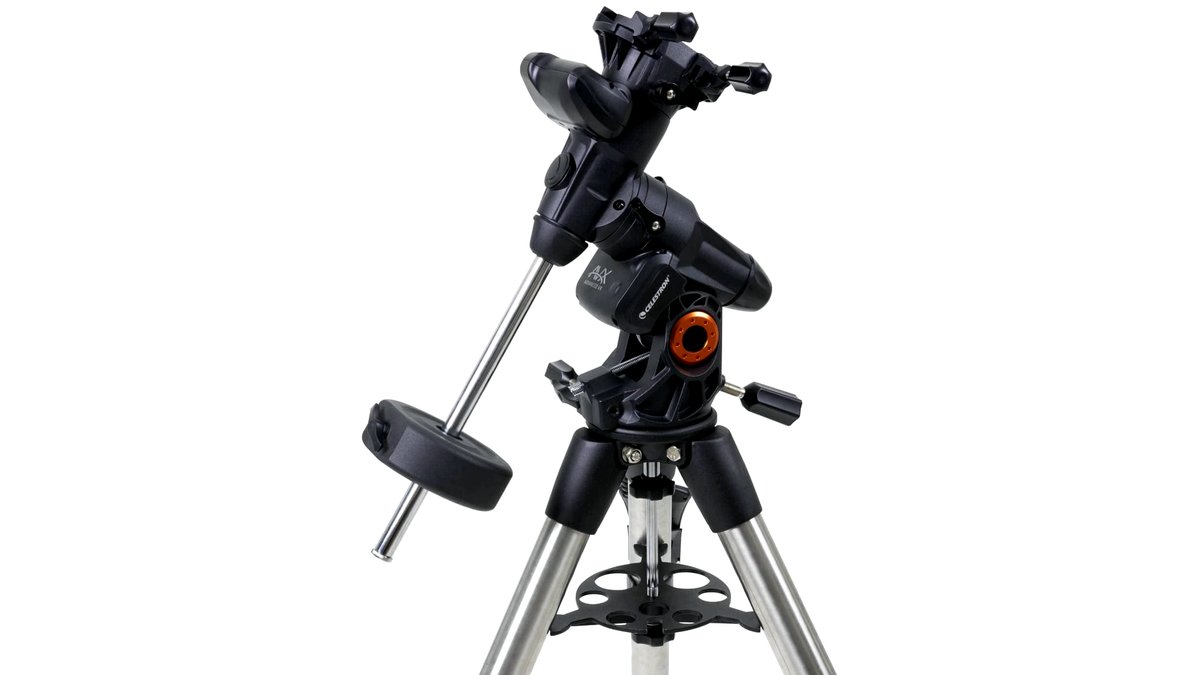
These mounts combine a basic equatorial head with a computerized GoTo controller and typically include an autoguider port even at lower price points. They suit beginners moving from visual observing into short-exposure imaging of the moon, planets, or bright deep-sky targets. Limits: lower payload capacity and looser mechanical tolerances mean longer unguided exposures show more star trailing, and heavier imaging setups push past the mount’s comfortable working capacity.
Mid-Range German Equatorial Mounts (GEM)
A German equatorial mount uses a counterweighted design that balances the telescope on one side of the mount head. Mid-range GEMs with higher-precision gearing and belt-drive systems reduce periodic error, which means the autoguider has less work to do and tracking stays smoother between corrections. These suit dedicated astrophotographers imaging with a DSLR, mirrorless camera, or a dedicated astro camera on a mid-size refractor or reflector. Limits: higher weight and a steeper learning curve for polar alignment and balancing.
Harmonic Drive Mounts
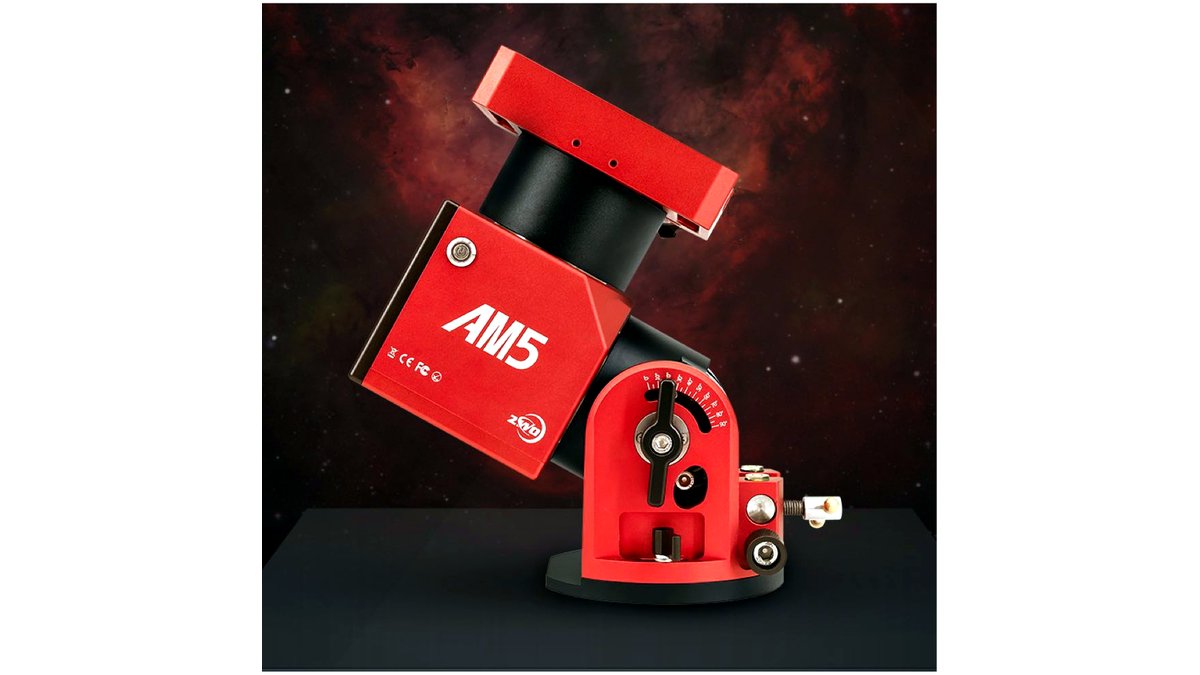
Harmonic drive mounts use a different internal gear mechanism than traditional worm-gear GEMs, resulting in a much lighter mount for a given payload capacity and typically very low periodic error out of the box. They suit imagers who travel to dark-sky sites and want to minimize gear weight without sacrificing guided tracking performance. Limits: significantly higher cost per unit of payload capacity compared to traditional GEMs.
Observatory-Grade Equatorial Mounts
Built for permanent or semi-permanent setups, these mounts offer the highest payload capacities and the tightest tracking tolerances, often used with large reflectors or multiple instruments on one mount. They suit serious imagers with a fixed observatory or roll-off shed. Limits: size, weight, and cost put these well outside casual or portable use.
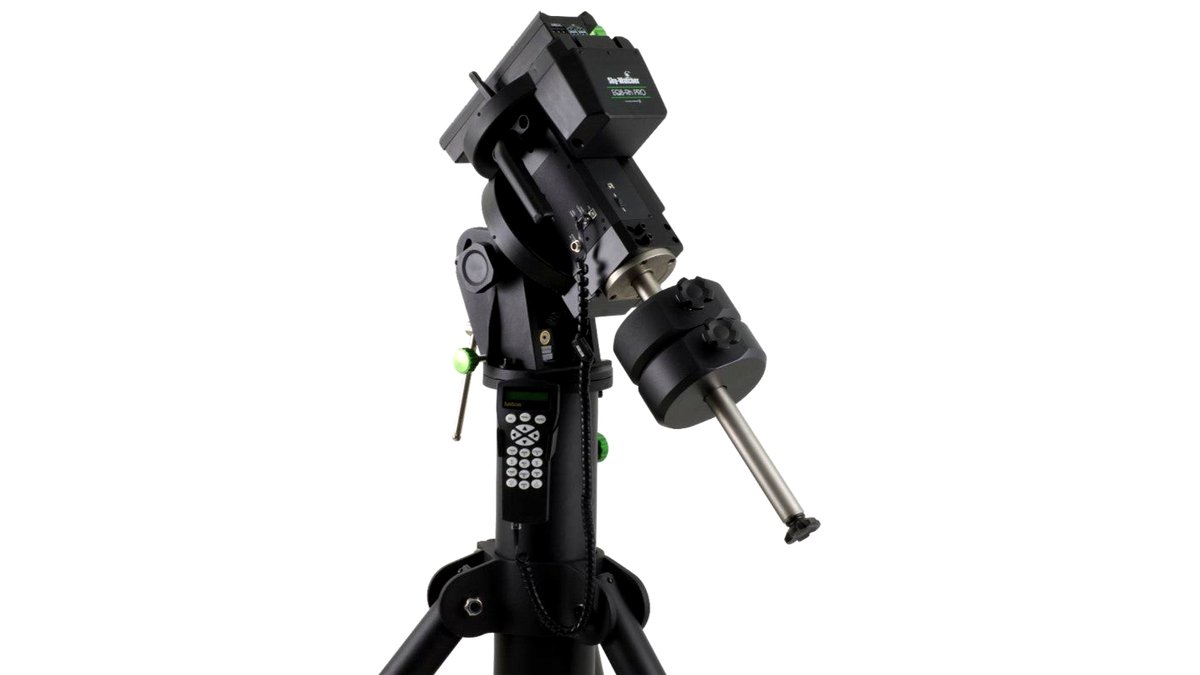
At a Glance: Guided Mount Types Compared
| Mount Type | Best For | Key Stated Specs | Limits |
|---|---|---|---|
| Entry equatorial GoTo | Beginners, short-exposure imaging | Autoguider port, modest payload capacity, computerized tracking | Looser tolerances, lower payload ceiling |
| Mid-range GEM | Dedicated deep-sky astrophotography | Belt or worm-gear drive, higher payload capacity, autoguider port | Heavier, steeper setup learning curve |
| Harmonic drive | Travel and portable imaging setups | Low periodic error, high capacity-to-weight ratio | Premium pricing tier |
| Observatory-grade equatorial | Fixed observatory, large instruments | Very high payload capacity, precision tracking | Large, heavy, not portable |
Pick X If…
| If You… | Choose |
|---|---|
| Are new to astrophotography and imaging bright targets with a small scope | An entry equatorial GoTo mount |
| Image deep-sky objects regularly with a mid-size refractor or reflector | A mid-range GEM with an autoguider port |
| Travel to dark-sky sites and want to minimize gear weight | A harmonic drive mount |
| Run a fixed observatory or large-aperture instrument | An observatory-grade equatorial mount |
| Only observe visually and don’t plan to image | A simpler alt-azimuth or basic GoTo mount, since guiding isn’t needed |
Fit, Compatibility, and Setup Notes
Every guided mount needs a usable polar alignment for equatorial tracking to work correctly; many mid-range and higher mounts include a built-in polar scope or support an electronic polar alignment routine through their hand controller or companion app. Check that the telescope’s dovetail bar matches the mount’s saddle type, since Vixen-style and wider Losmandy-style dovetails are not interchangeable without an adapter.
Autoguider compatibility depends on the port type: an ST-4 port works with a wide range of basic autoguider cameras using a simple cable, while a USB-only guiding interface typically requires a computer or dedicated guiding device running the mount maker’s or a third-party guiding software. Confirm the autoguider camera and mount use a matching connection before buying either separately.
Power needs are often overlooked: most GoTo and guided mounts run on 12V DC, and field use requires either a dedicated rechargeable power pack or a home AC adapter, with the maker’s current draw specification determining how long a given battery lasts in the field.
Alternatives Worth Considering
A fixed tripod with a simple manual equatorial head is worth a look for visual-only observers who don’t need GoTo or guiding at all, since it costs far less and has fewer parts to maintain. A star tracker-style mount, smaller and lighter than a full GEM, suits wide-field astrophotography with a camera lens rather than a telescope, and some models now include basic autoguider support despite their compact size. For those unsure whether to commit to guided imaging, renting or borrowing a mount through a local astronomy club before buying is also worth considering, since direct time with a mount reveals workflow preferences that spec sheets don’t.
Frequently Asked Questions
Do I need a guide scope and camera, or does the mount guide on its own?
The mount itself does not generate guiding corrections; it only receives and acts on them. A separate guide scope or off-axis guider paired with a dedicated guide camera and software captures the guide star and sends correction signals to the mount through its autoguider port.
What’s the difference between payload capacity and imaging capacity?
A mount’s maximum stated payload capacity is usually a visual-use figure, representing the heaviest load the mount can carry at all. Imaging capacity is a more conservative figure, and reviewers commonly suggest staying at roughly half the stated maximum when the goal is guided long-exposure imaging rather than casual visual use.
Can an alt-azimuth mount be guided?
Some alt-azimuth mounts support basic autoguiding for short exposures, but the field rotation inherent to alt-azimuth tracking makes them a poor fit for the long, unrotated exposures typical of deep-sky astrophotography. An equatorial mount avoids this problem by design and remains the standard recommendation for guided deep-sky work.
How important is polar alignment accuracy for guiding?
Polar alignment accuracy directly affects how much work the autoguider has to do; a poorly aligned mount introduces drift that guiding can only partially correct over longer exposures. Most current mounts include either a polar scope or an electronic alignment assistant specifically to make this step more accurate for less experienced users.
Does a heavier mount always track better?
Not necessarily; tracking precision depends more on gear quality, periodic error, and how close the actual payload is to the mount’s rated capacity than on raw mount weight alone. A well-built lighter mount running well under its capacity can outtrack a heavier mount pushed near its limit.
Is Wi-Fi or app control necessary for guided astrophotography?
App or Wi-Fi control is a convenience feature for slewing and basic setup, not a requirement for guiding itself, since guiding corrections typically run through the dedicated autoguider port independent of any app connection. Some imagers do use app control for polar alignment assistance, which can simplify setup even if it isn’t part of the guiding process itself.