Key takeaways
- Height and width range. Check both the maximum height the uprights extend to and the maximum width the horizontal crossbar extends to, since these need to match or exceed the backdrop size being used, with some margin for mounting hardware.
- Weight capacity. Paper and lightweight muslin backdrops need minimal capacity, but canvas backdrops, multiple layered backdrops, or anything with added lighting modifiers clamped on requires a stand rated for more weight.
- Base stability. Tripod-style bases with spread legs are generally more stable than simple cross-foot bases, especially with heavier or wider backdrops that create more leverage and tipping risk.
- Portability and setup time. Collapsible, lightweight stands that pack into a carry bag suit mobile photographers who shoot on location; heavier, more rigid stands suit a fixed studio space where setup time matters less than stability.
- Crossbar type. Telescoping tube crossbars are simplest and most common; some systems use a chain-and-pulley or electric motorized mechanism for raising and lowering backdrops quickly, which matters for studios that switch backdrops often.
- Accessory compatibility. Confirm the stand’s crossbar diameter and upright design work with the clamps, backdrop paper roll holders, or expansion kits being considered, since these aren’t universal across every stand brand.
Home and small-studio photographers who need an easy setup for paper or cloth backdrops should look at a basic telescoping crossbar stand, while anyone shooting video, using heavier muslin or canvas, or needing a wide multi-backdrop setup should choose a sturdier stand with a wider crossbar range and higher weight capacity. Backdrop stands are mechanically simple, so the real differences come down to height and width range, weight capacity, portability, and how well the stand resists tipping once a backdrop and any clamps are hanging on it.
As an Amazon Associate, we earn from qualifying purchases made through links on this page.
How to choose a backdrop stand
- Height and width range. Check both the maximum height the uprights extend to and the maximum width the horizontal crossbar extends to, since these need to match or exceed the backdrop size being used, with some margin for mounting hardware.
- Weight capacity. Paper and lightweight muslin backdrops need minimal capacity, but canvas backdrops, multiple layered backdrops, or anything with added lighting modifiers clamped on requires a stand rated for more weight.
- Base stability. Tripod-style bases with spread legs are generally more stable than simple cross-foot bases, especially with heavier or wider backdrops that create more leverage and tipping risk.
- Portability and setup time. Collapsible, lightweight stands that pack into a carry bag suit mobile photographers who shoot on location; heavier, more rigid stands suit a fixed studio space where setup time matters less than stability.
- Crossbar type. Telescoping tube crossbars are simplest and most common; some systems use a chain-and-pulley or electric motorized mechanism for raising and lowering backdrops quickly, which matters for studios that switch backdrops often.
- Accessory compatibility. Confirm the stand’s crossbar diameter and upright design work with the clamps, backdrop paper roll holders, or expansion kits being considered, since these aren’t universal across every stand brand.
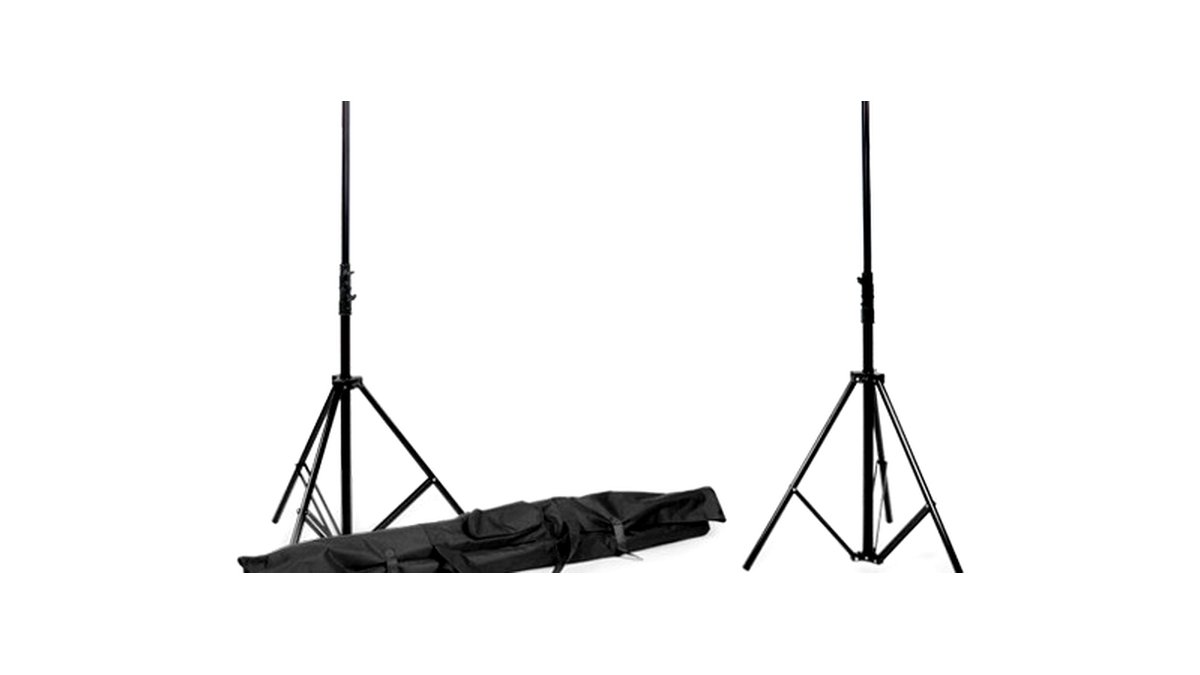
At a glance: backdrop stand types
| Type | Best for | Key stated specs | Limits |
|---|---|---|---|
| Basic telescoping kit stand | Home studios, beginners, paper and light muslin backdrops | Telescoping uprights and crossbar, cross-foot base, carry bag included on many kits | Lower weight capacity, less stable with heavy or wide backdrops |
| Heavy-duty tripod-base stand | Small commercial studios, canvas backdrops, frequent backdrop changes | Tripod-style spread-leg base, higher weight capacity, wider maximum crossbar extension | Bulkier to transport and store, higher cost than basic kits |
| Paper roll background system | Studios using continuous roll paper backdrops | Wall-mounted or floor-stand brackets sized for roll width, support for multiple rolls side by side | Needs dedicated wall space or a wide floor footprint, roll paper itself not reusable like cloth |
| Motorized/pulley background system | Busy studios switching backgrounds frequently during sessions | Chain-and-pulley or motorized raise/lower mechanism, support for multiple backdrops on one system | Higher cost, more complex installation, usually a fixed studio fixture rather than portable |
Pick X if…
| If you… | Choose |
|---|---|
| Shoot occasional portraits at home with paper or muslin | A basic telescoping kit stand |
| Run a small studio with heavier canvas backdrops | A heavy-duty tripod-base stand |
| Use continuous roll paper backgrounds | A dedicated paper roll background system |
| Switch backgrounds often during back-to-back sessions | A motorized or pulley-driven background system |
| Need to transport the stand to different locations | A lightweight collapsible kit with a carry bag, not a fixed-mount system |
Basic telescoping kit stands
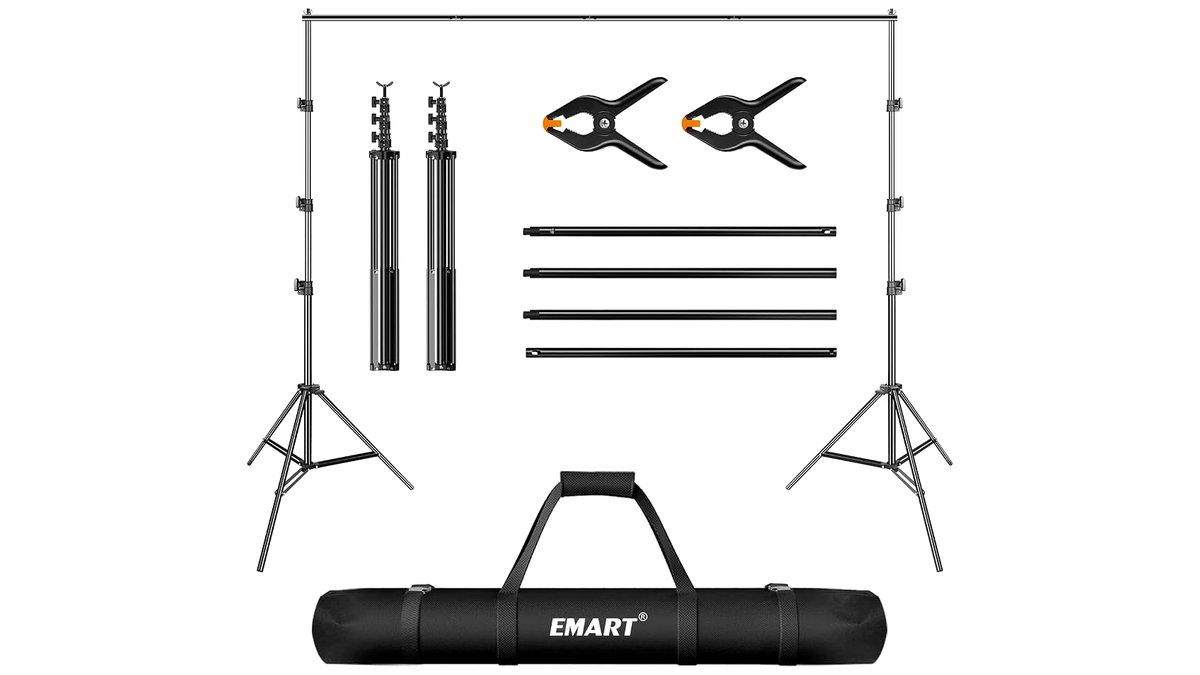
For most home studios and photographers just getting started with backdrops, a basic telescoping crossbar stand is the simplest and most affordable way to hang paper, muslin or vinyl backdrops. These kits typically include two telescoping uprights on cross-foot bases and a telescoping horizontal crossbar, all of which collapse down for storage and often ship with a carry bag. The weight capacity on this tier is modest, which is fine for single-layer paper or muslin but can become a stability concern if multiple backdrops or heavier material are hung at once. Because the base uses simple cross-feet rather than a spread tripod design, these stands are also more prone to tipping if bumped or if a wide, heavy backdrop catches airflow from an HVAC vent or open door, so weighting the base feet with sandbags is a common and inexpensive precaution.
Heavy-duty tripod-base stands
Small commercial studios or anyone using heavier canvas backdrops generally get more reliable results from a heavy-duty stand built on a tripod-style spread-leg base, which resists tipping far better than a simple cross-foot design. These stands typically offer a higher stated weight capacity and a wider maximum crossbar extension, which matters for wide group shots or when running two backdrops side by side on one crossbar. The tradeoff is size and weight: tripod-base stands take up more floor space when deployed and are heavier and bulkier to transport than basic kits, which makes them better suited to a stationary studio setup than frequent location work.
Paper roll background systems
Studios that primarily use continuous roll paper backdrops benefit from a dedicated roll system, either wall-mounted or on a floor stand, sized to the roll width and often built to hold several rolls side by side so the photographer can switch colors quickly by rolling one up and pulling another down. This setup trades portability for convenience: it generally needs a dedicated wall or a wide floor footprint and isn’t something that packs up and travels to a different location easily, which makes it best suited to a fixed studio space rather than mobile shooting.
Motorized and pulley background systems
Busy studios that photograph a high volume of clients and need to switch between multiple backgrounds quickly during a single session often invest in a motorized or chain-and-pulley system that raises and lowers backdrops with a crank or a button rather than manual repositioning. These systems support multiple backdrops mounted on one fixture and speed up transitions significantly compared with manually swapping backdrops on a basic stand. The cost and installation complexity are both higher, and these are generally built as a fixed studio fixture rather than something that’s taken down and moved between locations.
Fit and setup notes
Measure the ceiling height of the intended space before buying a tall stand, since fully extended uprights in a basic kit can exceed the clearance of a standard residential ceiling; most kits list their maximum extended height on the packaging or spec sheet. When mounting a backdrop, center the weight on the crossbar and use clamps rated for the backdrop’s weight rather than relying on the crossbar’s friction grip alone, since a backdrop slipping mid-session can damage both the material and anything positioned beneath it. In any space with foot traffic near the setup, weighting the base feet with sandbags or similarly rated counterweights reduces tipping risk, which matters most with wider, heavier backdrops that have more surface area to catch air movement or an accidental bump.
Alternatives worth considering
- A collapsible reversible backdrop panel. For very small spaces or quick product photography, a self-supporting collapsible panel with two colors on either side can skip the need for a separate stand entirely.
- A portable pop-up background with its own frame. Pop-up backgrounds that unfold with a built-in spring frame set up faster than a stand-and-backdrop combination and are popular for location headshots and events, though they come in fixed sizes rather than adjustable dimensions.
- Wall-mounted curtain track systems. For a permanent studio installation, a ceiling or wall-mounted track system can hold fabric backdrops without a floor-standing stand at all, freeing up floor space in a small studio.
Frequently Asked Questions
How tall should a backdrop stand be for full-body shots?
For full-body portraits, most photographers want a stand that extends at least a bit taller than the subject plus some margin for the backdrop to puddle or drape at the bottom. Checking the stand’s maximum extended height against the ceiling clearance of the shooting space is important before buying, especially for taller stands in rooms with standard residential ceiling heights.
Do I need sandbags with a backdrop stand?
Sandbags or similar weights on the base feet are widely recommended, especially with basic cross-foot stands, because a hanging backdrop adds surface area that can catch airflow or get bumped and tip the stand. This is particularly important in spaces with foot traffic, pets, or HVAC vents near the setup.
Can one stand hold multiple backdrops at once?
Many stands can hold more than one backdrop on the same crossbar if the combined weight stays within the stand’s rated capacity, which is useful for switching colors quickly during a session. Heavier combined loads call for a heavy-duty tripod-base stand rather than a basic kit, since the added weight increases tipping risk on a less stable base.
What’s the difference between muslin, canvas, and vinyl backdrops for stand selection?
Muslin and most paper backdrops are lightweight and work fine on basic stands, while canvas backdrops are generally heavier and benefit from a higher-capacity, more stable stand. Vinyl backdrops vary in weight by thickness, so checking the specific product’s weight against the stand’s rated capacity is worthwhile before assuming any backdrop type is automatically “safe” for a given stand.
How much floor space does a backdrop stand setup need?
Beyond the stand’s own footprint, plan for enough distance between the backdrop and the subject to avoid shadows falling on the background, plus room behind the subject for the photographer and any additional lighting. A rough starting point many studios use is several feet of clearance behind the subject and additional space in front for the camera and lights, though exact spacing depends on the lighting setup and lens choice.
Are motorized background systems worth it for a small home studio?
For occasional personal or hobby use, the added cost and installation complexity of a motorized system usually isn’t justified compared with a basic stand. They tend to pay off for studios running frequent sessions where quick, repeated backdrop changes save meaningful time over a working day.