Key takeaways
- Voltage match: the charger’s output voltage must match the cart’s total battery bank voltage (commonly 36V or 48V); using the wrong voltage charger is not safe.
- Battery chemistry compatibility: flooded lead-acid, AGM, and lithium batteries each need a different charge profile; the charger must be rated for the specific chemistry installed.
- Charging amperage: higher amperage charges faster but must stay within the battery manufacturer’s recommended charge rate to avoid shortening battery life.
- Automatic shutoff and maintenance mode: a charger that tapers and switches to float/maintenance mode after reaching full charge reduces the risk of overcharging during long storage periods.
- Connector type: golf cart chargers use various plug styles; confirming the connector matches the cart’s charging port, or that an adapter is available, avoids a charger that can’t physically connect.
- Indoor/outdoor use rating: chargers used in a garage, carport, or outdoors should be checked against the maker’s stated weather and ventilation requirements.
A smart automatic charger suits most lead-acid golf cart battery banks left plugged in between rounds, a higher-amperage charger suits larger battery banks or owners who need faster turnaround, and an onboard charger built into the cart suits owners who want a permanent, set-and-forget setup; the right choice depends on battery chemistry, bank voltage, and how the cart is stored.
As an Amazon Associate, we earn from qualifying purchases made through links on this page.
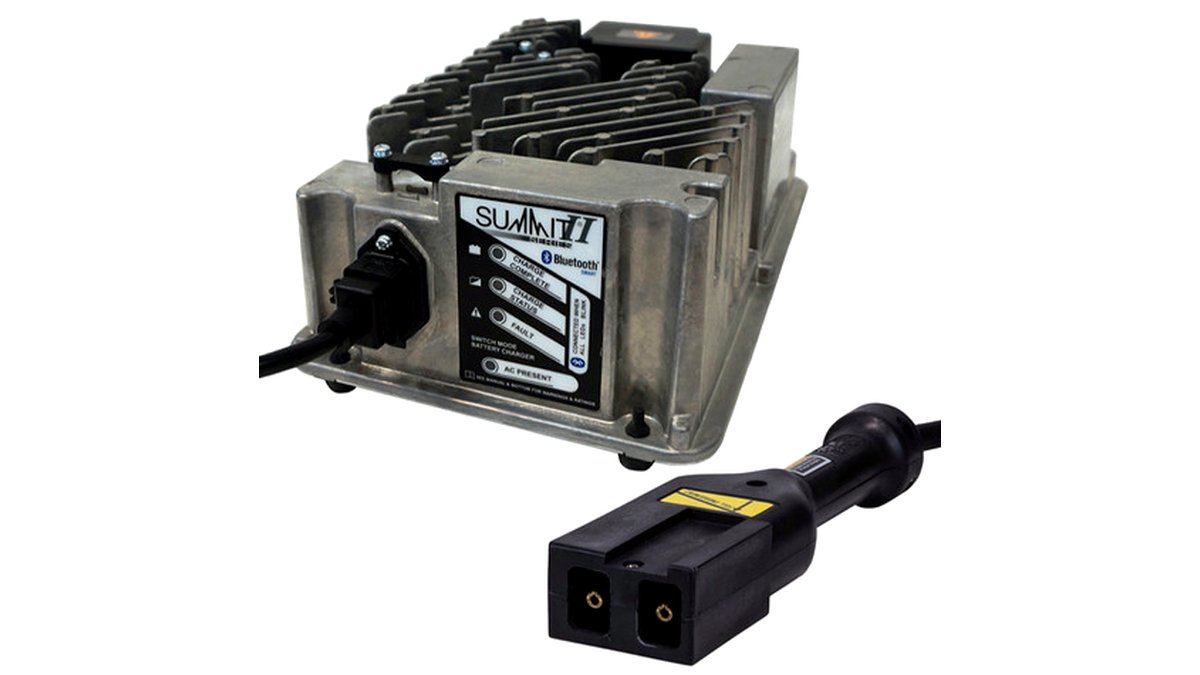
Golf cart batteries are typically wired in series to reach a total system voltage, commonly 36 or 48 volts on electric carts, and a charger must match that total voltage and the battery chemistry (flooded lead-acid, AGM, or lithium) to charge safely and effectively. Using a charger that doesn’t match the cart’s voltage or battery chemistry risks undercharging, overcharging, or triggering a battery management system fault on lithium setups, so checking both specs before buying matters more than comparing wattage alone. Automatic, multi-stage chargers that taper current as the battery approaches full charge and then switch to a maintenance or float mode are generally recommended over basic chargers for extending battery life.
Who Should Buy Which Type
Owners with a flooded lead-acid or AGM battery bank who store the cart between uses benefit most from a smart automatic charger with a maintenance or float mode, since it prevents both overcharging and the slow discharge that happens when batteries sit unused. Owners who use their cart daily or need a faster turnaround between charges should look at a higher-amperage charger rated appropriately for their battery bank’s capacity, within the charger manufacturer’s stated limits. Owners who have converted to or purchased a cart with a lithium battery pack need a charger specifically rated for lithium chemistry, since lithium packs require a different charge profile than lead-acid and often include their own battery management system that communicates with a compatible charger.
Key Factors Before Buying
- Voltage match: the charger’s output voltage must match the cart’s total battery bank voltage (commonly 36V or 48V); using the wrong voltage charger is not safe.
- Battery chemistry compatibility: flooded lead-acid, AGM, and lithium batteries each need a different charge profile; the charger must be rated for the specific chemistry installed.
- Charging amperage: higher amperage charges faster but must stay within the battery manufacturer’s recommended charge rate to avoid shortening battery life.
- Automatic shutoff and maintenance mode: a charger that tapers and switches to float/maintenance mode after reaching full charge reduces the risk of overcharging during long storage periods.
- Connector type: golf cart chargers use various plug styles; confirming the connector matches the cart’s charging port, or that an adapter is available, avoids a charger that can’t physically connect.
- Indoor/outdoor use rating: chargers used in a garage, carport, or outdoors should be checked against the maker’s stated weather and ventilation requirements.
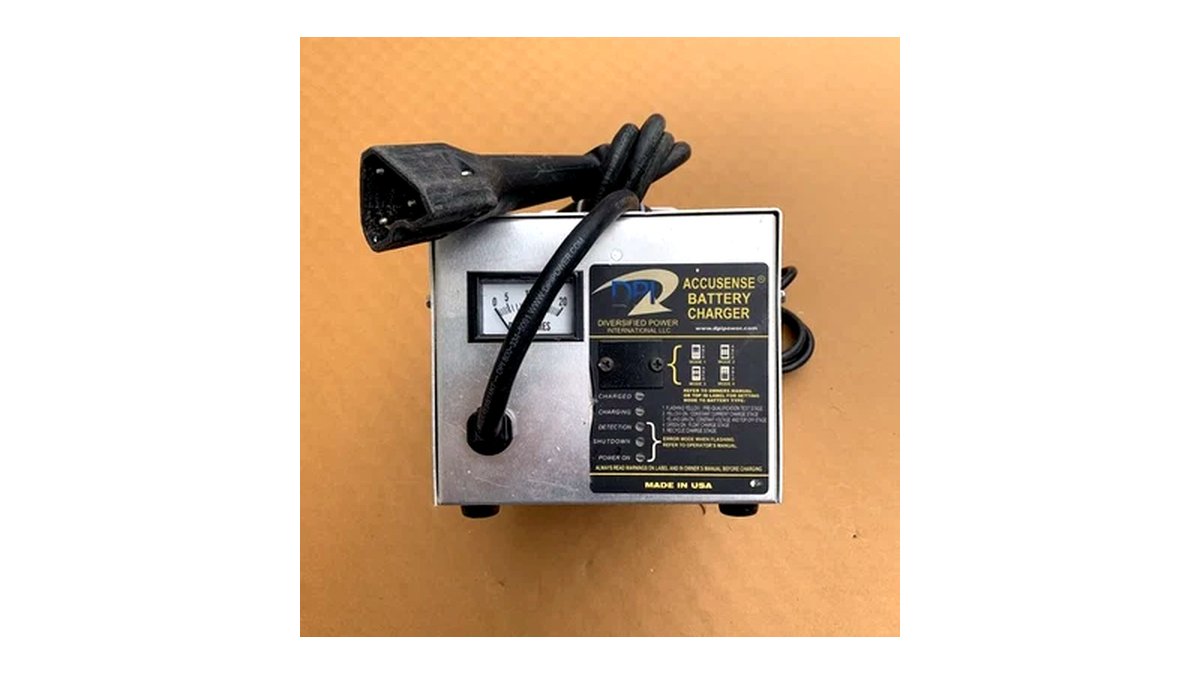
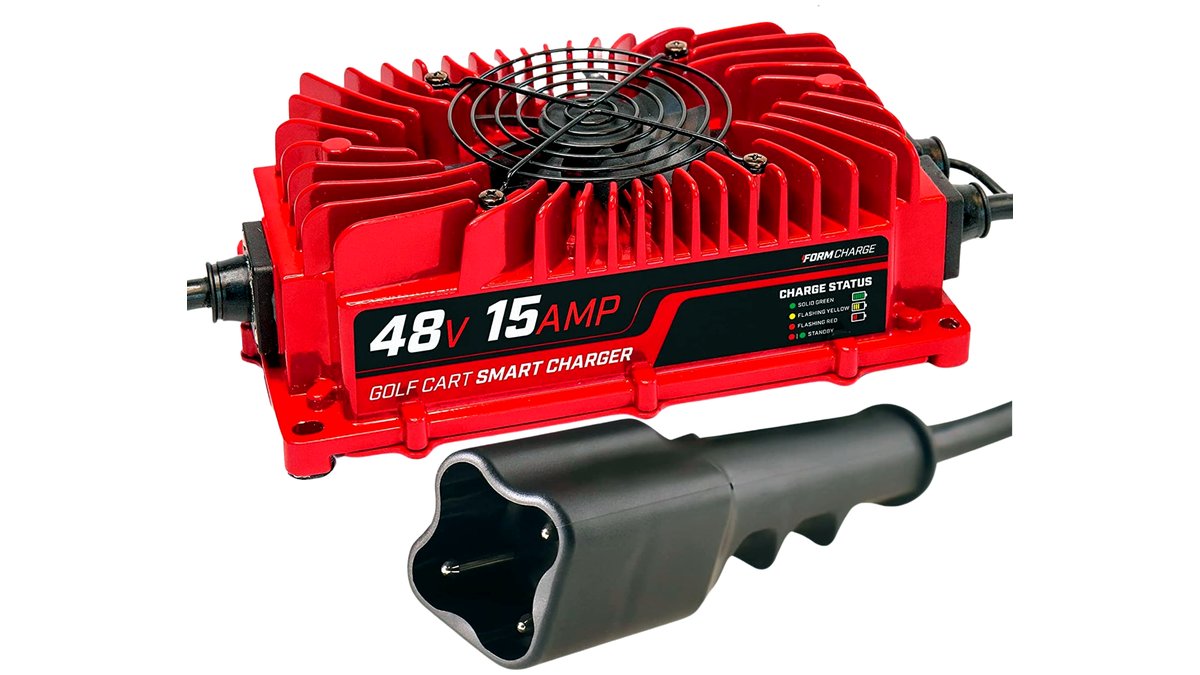
At a Glance Comparison
| Charger Type | Best For | Stated Specs/Design | Limits |
|---|---|---|---|
| Smart automatic charger (lead-acid/AGM) | Carts stored between uses with flooded or AGM batteries | Multi-stage charging, automatic taper, float/maintenance mode | Not compatible with lithium packs unless specifically rated for them |
| High-amperage charger | Larger battery banks or frequent daily use needing faster charging | Higher current output within battery-rated limits | Must stay within the battery maker’s max charge rate to avoid shortened battery life |
| Lithium-specific charger | Carts converted to or equipped with lithium battery packs | Charge profile matched to lithium chemistry, often communicates with battery management system | Not interchangeable with lead-acid chargers; higher cost tier |
| Onboard/built-in charger | Owners wanting a permanent, plug-and-forget setup | Mounted on the cart, wired directly to the battery bank | Installation required; less portable than a standalone charger |
Pick X If…
| Situation | Recommended Pick |
|---|---|
| You store your cart for weeks between uses | Smart automatic charger with float/maintenance mode |
| You use the cart daily and need faster charge turnaround | Higher-amperage charger rated within your battery’s limits |
| Your cart has a lithium battery pack | A charger specifically rated for lithium, matched to your battery management system |
| You want a permanent setup without plugging in a separate unit | Onboard charger wired into the cart |
| You’re unsure of your cart’s voltage or battery chemistry | Check the battery labels and cart manual before buying any charger |
Compatibility and Safety Notes
Golf cart battery banks are most commonly wired for 36-volt or 48-volt systems, and the charger must be rated for the cart’s total system voltage rather than the voltage of a single battery in the bank. Mixing battery chemistries within a single bank, or charging a lithium pack with a lead-acid-rated charger, is not recommended and can create a safety risk or damage the battery management system on lithium packs; always follow the battery and cart manufacturer’s documentation for the correct charger specification. Charging should take place in a ventilated area away from open flame or spark sources, since flooded lead-acid batteries can release gas during charging, and the charger and cables should be inspected periodically for wear or damage before each use. Anyone unsure about their cart’s wiring, voltage, or a suspected electrical fault should consult a qualified golf cart technician or electrician rather than troubleshooting the charging system directly.
Getting the Most Life From the Battery Bank
Battery makers generally recommend charging after each use rather than letting a lead-acid bank sit in a partially discharged state, since repeated deep discharges without prompt recharging shorten battery lifespan. A charger with an automatic maintenance or float mode is particularly useful for seasonal storage, since it keeps the battery topped up without the risk of overcharging that comes with leaving a basic, non-automatic charger connected indefinitely. Checking water levels on flooded lead-acid batteries periodically, per the battery manufacturer’s manual, also matters since charging can accelerate water loss in the cells over time.
Alternatives Worth Considering
- Solar trickle chargers: useful as a supplemental maintenance charge for carts stored outdoors with sun exposure, though generally too slow to serve as a primary charger.
- Multi-bank chargers: designed for charging each battery in a bank individually rather than through the series connection, which some owners use for more even charging across all batteries, following the charger and battery maker’s instructions.
- Battery bank upgrade to lithium: a longer-term alternative to repeatedly replacing a lead-acid bank, though it requires a compatible charger and sometimes other electrical system changes; consulting a technician before converting is advisable.
Common Mistakes When Buying a Golf Cart Charger
A frequent mistake is buying a charger based on amperage or price alone without first confirming it matches the cart’s voltage and battery chemistry, since a charger that looks like a good deal but doesn’t match the installed battery bank is not just ineffective, it can be unsafe to use. Buyers also sometimes assume any charger connector will fit any cart, when connector styles vary across manufacturers and cart models, making it important to check the cart’s existing plug or consult the cart’s manual before ordering a replacement or upgraded charger. Another common oversight is continuing to use an aging, non-automatic charger out of habit after switching to a cart with different batteries, such as upgrading from flooded lead-acid to AGM or lithium, without checking whether the old charger is still appropriate for the new chemistry.
Skipping routine inspection of charger cables and connectors is also a common lapse, since frayed cords or corroded terminals can develop gradually and go unnoticed until a charging failure or, in more serious cases, a safety issue occurs. Finally, some owners store their cart for an extended off-season without any charging maintenance plan at all, which can leave a lead-acid battery bank deeply discharged and permanently damaged by the time the cart comes back out of storage, a risk that a basic maintenance charger is specifically designed to prevent.
Storage Season Charging Habits
For carts stored over a winter or other extended off-season, connecting a smart automatic charger with a float or maintenance mode at the start of storage and leaving it connected for the duration is the approach most battery manufacturers recommend for flooded lead-acid and AGM batteries, since it offsets the natural self-discharge that happens even when a cart isn’t being used. Lithium battery packs generally self-discharge more slowly than lead-acid, and some lithium battery management systems have their own built-in protections against deep discharge during storage, but checking the specific battery manufacturer’s storage guidance is still the most reliable approach rather than assuming all chemistries behave the same way in storage. Periodically checking on a stored cart, even once a month, to confirm the charger is still functioning and the connection hasn’t been disrupted is a simple habit that catches problems before they lead to a dead or damaged battery bank by the time the storage season ends.
Frequently Asked Questions
Can any 48-volt charger be used on any 48-volt golf cart?
Not necessarily. The charger must also match the specific battery chemistry (flooded lead-acid, AGM, or lithium) in addition to the voltage, since each chemistry needs a different charge profile. Checking both the cart’s battery documentation and the charger’s stated compatibility before buying is the safest approach.
How long does it take to fully charge a golf cart battery bank?
Charge time depends on the battery bank’s capacity, how depleted it was, and the charger’s amperage output, and the charger or battery manufacturer’s documentation typically gives an estimated range. Smart automatic chargers generally taper the charge rate as the battery nears full, which extends the final portion of the charge time compared to a steady, constant-current charge.
Is it safe to leave a golf cart charger plugged in all the time?
This depends on the charger type; a smart automatic charger with a float or maintenance mode is generally designed for extended connection, while a basic, non-automatic charger left connected indefinitely risks overcharging the battery. Checking the charger’s manual for its intended connection duration is the most reliable way to confirm.
What happens if the wrong charger is used on a lithium golf cart battery?
Using a charger not rated for lithium chemistry on a lithium pack can trigger the battery management system to reject the charge, or in some cases create a safety risk, since lithium batteries require a different charge profile than lead-acid. Always use a charger specifically rated for the battery’s chemistry, as specified by the battery manufacturer.
Why does my golf cart battery charger get warm during use?
Some warmth during charging is normal as the charger converts electrical current, but a charger that becomes excessively hot, emits an unusual smell, or shows visible damage should be disconnected and inspected or replaced. Following the manufacturer’s ventilation and placement guidance during charging reduces heat buildup.
How do I know if my golf cart batteries need replacing instead of just charging?
Batteries that no longer hold a charge for the expected run time, show visible swelling or corrosion, or fail to reach full voltage after a complete charge cycle are generally signs of battery wear rather than a charging problem. A golf cart technician or battery specialist can test individual battery capacity to confirm whether replacement is needed.