Key takeaways
- A basic 3-speed box fan suits anyone who just wants steady airflow for a bedroom or window, a multi-speed model with a thermostat or timer suits people who run a fan overnight or want it to adjust automatically, and a…
A basic 3-speed box fan suits anyone who just wants steady airflow for a bedroom or window, a multi-speed model with a thermostat or timer suits people who run a fan overnight or want it to adjust automatically, and a weather-resistant box fan suits garages, porches, and other semi-outdoor spaces. At 20 inches, box fans are close to the largest commonly sold size, so the differences between models come down to speed options, noise level, and a handful of convenience features rather than size itself.
As an Amazon Associate, we earn from qualifying purchases made through links on this page.
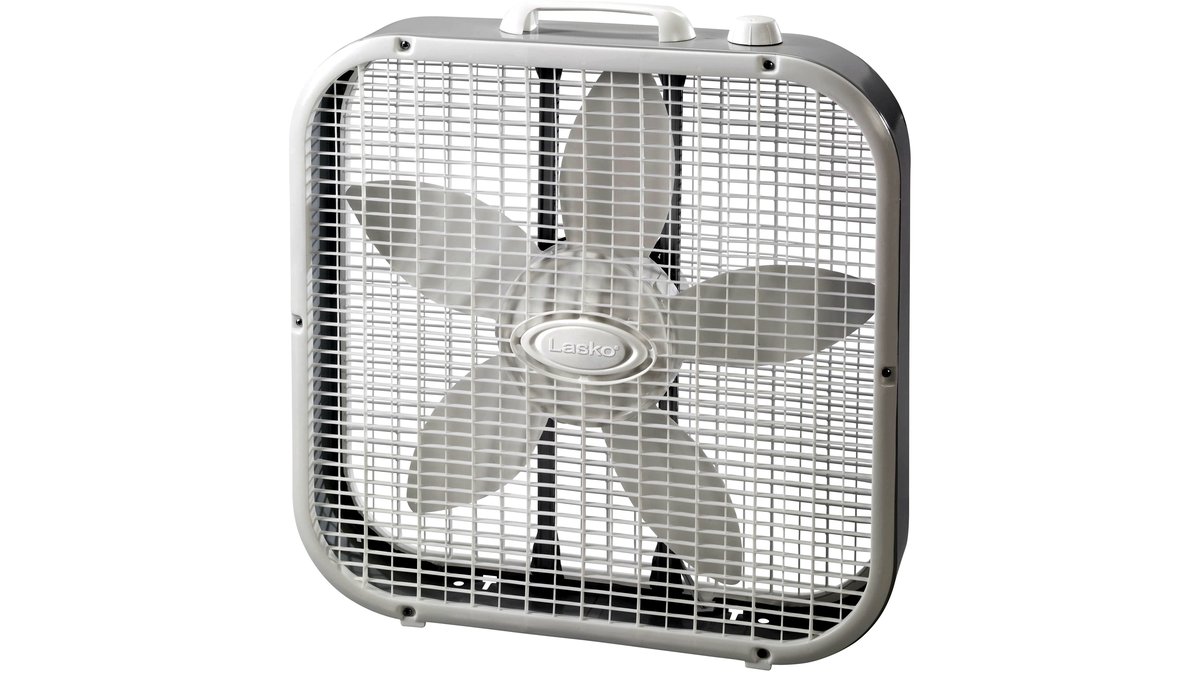
Box fans are a simple, mature product category: a square frame, a motor, and blades, designed to sit in a window or on the floor and move a large volume of air at low cost. Most of the meaningful differences between 20-inch models are speed settings, stated airflow, noise level, and a few added features like timers or remote control.
What Separates Basic From Feature-Added Models
Basic 3-speed box fans are the simplest and generally the least expensive option in this size. They offer low, medium, and high settings with a mechanical dial or button, no electronics beyond the motor itself, and a straightforward on/off operation that’s easy to use and has little to go wrong. This is the category most people picture when they think of a classic box fan.
Multi-speed models with additional electronic features add a digital control panel, sometimes a remote control, a built-in timer for automatic shutoff, and on some models a thermostat that cycles the fan based on room temperature. The maker lists these features as convenience additions rather than changes to core airflow performance, and reviewers tend to value the timer feature most for overnight or unattended use.
Weather-resistant or “weatherproof” box fans are built with materials and seals intended for garages, covered porches, workshops, or other spaces exposed to more dust, moisture, or temperature swings than a typical bedroom. These are less common than standard indoor box fans and are usually labeled explicitly for that use case rather than assumed; a standard indoor box fan isn’t rated for sustained outdoor or high-moisture exposure.
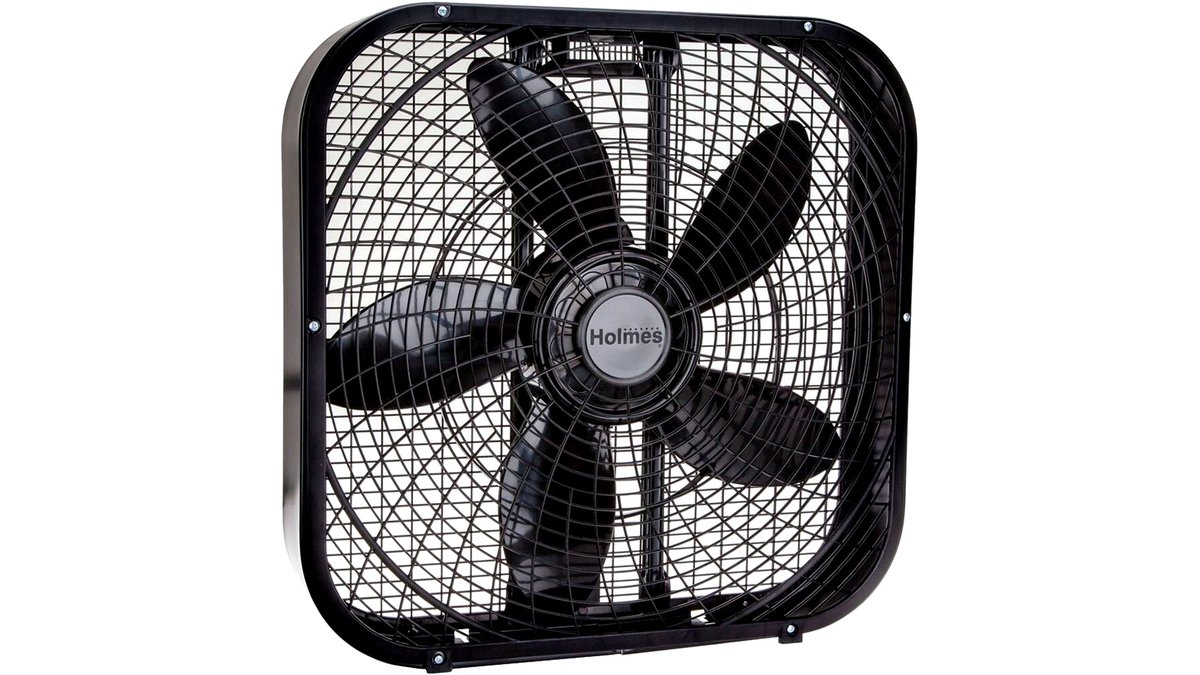
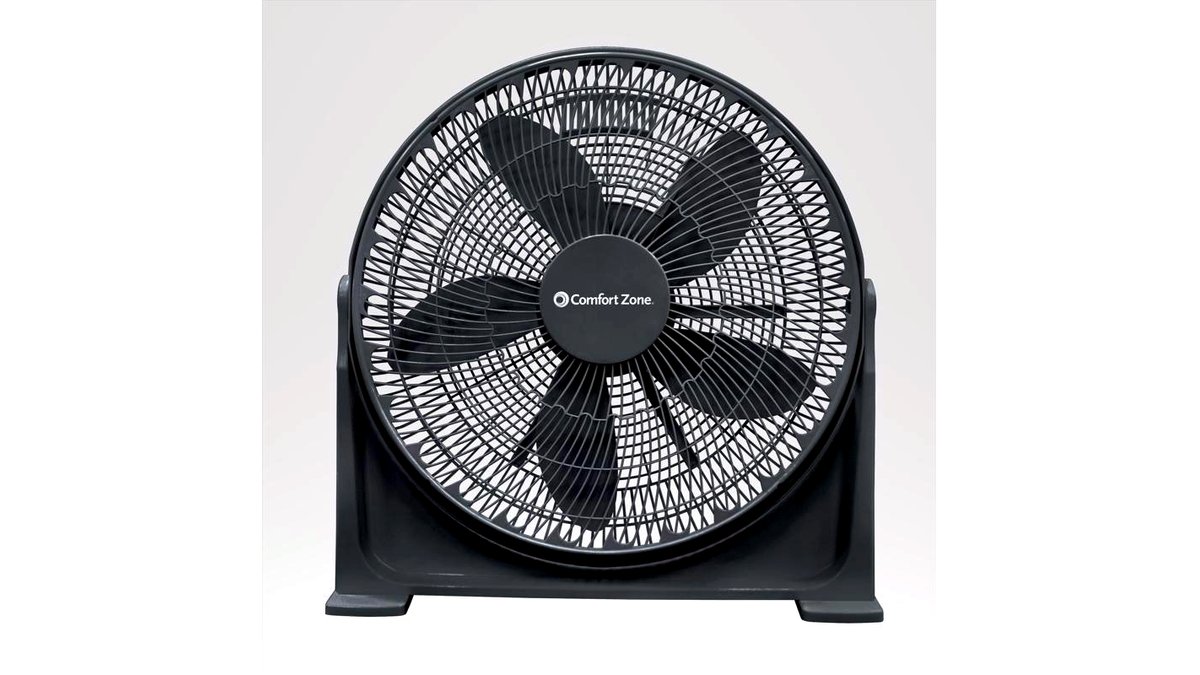
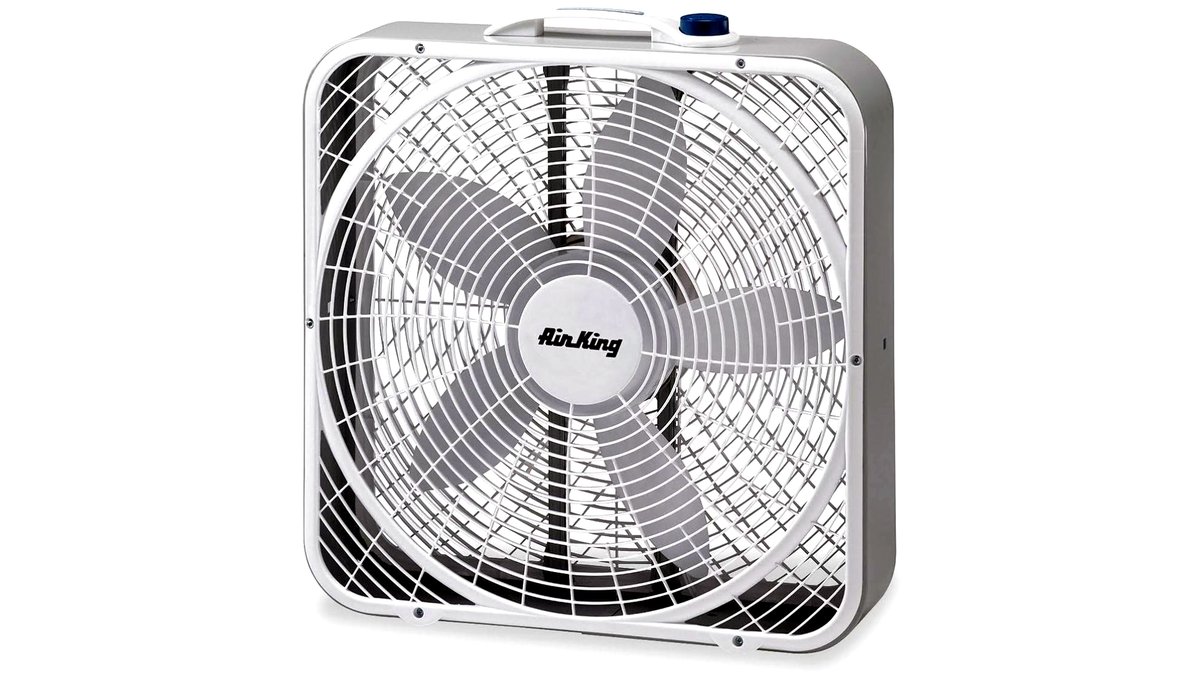
At a Glance Comparison
| Type | Best For | Key Stated Specs | Limits |
|---|---|---|---|
| Basic 3-speed | Simple, low-cost airflow for a bedroom or window | 3 fixed speeds; mechanical dial control; stated CFM airflow varies by model | No timer or thermostat; manual speed changes only |
| Multi-speed with timer/remote | Overnight use, unattended operation | Digital controls; auto shutoff timer; some models include remote control | Costs more than basic models; more parts that could eventually need servicing |
| Thermostat-equipped | Rooms where temperature-based cycling is wanted | Built-in thermostat; cycles fan on/off based on set temperature | Thermostat accuracy and placement affect how well it tracks actual room temperature |
| Weather-resistant | Garages, porches, workshops | Sealed or moisture-resistant housing per maker’s specification | Not a substitute for a fan explicitly rated for full outdoor exposure |
Fit and Compatibility Notes
A 20-inch box fan is sized to fit most standard double-hung window openings when used as a window fan, but window width and the fan’s frame depth should both be checked against the specific window, since older or narrower window frames may need adapter panels sold separately or included by some manufacturers. For floor use, a 20-inch fan needs a reasonably clear few feet of space on the intake side to move air efficiently; placing it too close to a wall or furniture reduces the effective airflow regardless of the fan’s rated output. Cord length varies between models and is worth checking against the distance to the nearest outlet, since box fans typically aren’t sold with extension cords included.
Pick This If…
| Situation | Recommended Type |
|---|---|
| Just need basic cooling, lowest cost | Basic 3-speed box fan |
| Run the fan overnight or while away from home | Multi-speed model with a timer |
| Want the fan to adjust automatically to room temperature | Thermostat-equipped model |
| Fan will live in a garage, porch, or workshop | Weather-resistant model |
| Prioritize the quietest possible operation | Check stated noise/decibel specs across multi-speed models, since this varies more by model than by category |
Noise and Energy Notes
Noise level varies noticeably between models even within the same speed category, and the maker’s stated decibel rating (where provided) is the most reliable way to compare before buying, since in-store or anecdotal impressions can be misleading. Lower speeds are quieter but move less air, which is the standard trade-off with any fan; running a larger 20-inch fan on a lower speed is sometimes a better balance of airflow and noise than running a smaller fan on high. Box fans are generally inexpensive to run compared to air conditioning, which is the main reason they remain popular as a supplement to or substitute for AC in moderate climates, though they move air rather than actively cooling it the way an air conditioner does.
Placement Strategies for Better Airflow
How a box fan is positioned affects comfort as much as the fan itself in many cases. Pointing a fan outward in a window to exhaust warm indoor air, paired with a second fan drawing cooler air in through a window on the opposite side of the home, is a commonly recommended cross-ventilation setup for cooling an entire floor during moderate weather rather than relying on a single fan in one room. Placing a fan to blow across a room rather than directly at a person also tends to move more total air through the space, which some users find more effective for overall room cooling than a direct, narrow airflow path aimed at a single seat or bed.
In rooms with ceiling fans already installed, a box fan is often better used for directed, localized airflow (near a desk or bed) while the ceiling fan handles general room circulation, rather than treating the two as redundant. Combining a box fan with a bowl of ice or a damp towel draped nearby is a common low-cost trick some households use to add a slight evaporative cooling effect, though this is a minor, temporary effect rather than a substitute for air conditioning on genuinely hot days.
A Few Alternatives Worth Comparing
Tower fans take up less floor footprint than a box fan and are often quieter at comparable airflow, making them a reasonable alternative for smaller rooms where floor space is limited. Pedestal or stand fans offer adjustable height and oscillation that a box fan doesn’t, which suits rooms where directing airflow at a specific height matters more than raw volume. For whole-room air movement in larger spaces, a smaller number of higher-powered fans or a ceiling fan may outperform a single box fan, though that’s a different installation and cost consideration entirely.
Frequently Asked Questions
Is a 20-inch box fan better than a smaller box fan for a large room?
Generally yes, since a larger fan moves more air at a given speed setting, which matters more in larger rooms. For small rooms, a smaller fan run on a lower speed can achieve comparable comfort with less noise.
Can a 20-inch box fan be used safely outdoors?
Only if it’s specifically labeled weather-resistant or rated for outdoor/garage use by the manufacturer; a standard indoor box fan isn’t built to handle moisture and dust exposure over time. Checking the product’s stated use case avoids both a safety issue and premature failure of the motor.
How much electricity does a box fan use compared to central air conditioning?
Box fans use substantially less electricity than central or window air conditioning units, since they only move air rather than actively cooling and dehumidifying it. This is why many households use fans to supplement AC on moderate days rather than running air conditioning continuously.
Do box fans need regular cleaning?
Yes, dust buildup on the blades and grille reduces airflow efficiency over time and can affect indoor air quality if left unaddressed. Most manufacturers recommend periodic cleaning with a vacuum attachment or a damp cloth after unplugging the unit, per the specific model’s care instructions.
What’s the difference between CFM ratings on different box fans?
CFM (cubic feet per minute) is the manufacturer’s stated measure of how much air the fan moves at a given speed, and higher CFM generally means stronger airflow at that setting. Comparing CFM figures across models at the same speed setting (e.g., high) gives a more apples-to-apples sense of relative airflow than fan size alone.
Is a box fan safe to leave running overnight?
Many people do run fans overnight, and models with a timer add a layer of automatic shutoff for added peace of mind. As with any electrical appliance, using it as intended, keeping it clear of bedding or curtains, and following the manufacturer’s safety guidance reduces risk during extended unattended use.