Key takeaways
- Rail length must match the door’s track travel distance; most manufacturers offer an extension kit for taller doors, which should be checked separately from the base motor unit.
- Replacement chain and rail kits are generally brand- and sometimes model-specific, so confirm compatibility with the existing motor head before ordering a replacement rather than a full new unit.
- Battery backup modules add weight and a mounting location requirement; confirm the garage has suitable space and that the battery type is one that can be serviced or replaced locally over time.
- Smart-connected models typically require a stable home Wi-Fi signal reaching the garage; a detached garage with weak signal may need a range extender for reliable app control.
- Most residential garage door motors sold today include a photoelectric safety sensor pair required by current safety standards; confirm these are included and mounted per the manufacturer’s manual, since bypassing or removing them is not a safe substitute.
A homeowner replacing a standard single-car or two-car garage door opener should look at a mid-range chain-drive motor rated for their door’s weight and size, someone in a detached garage or workshop where occasional extra noise does not matter should lean toward the lower-cost end of the category, and anyone with a bedroom or living space directly above or beside the garage should weigh a belt-drive motor instead, since chain drives are the noisiest common drive type.
As an Amazon Associate, we earn from qualifying purchases made through links on this page.
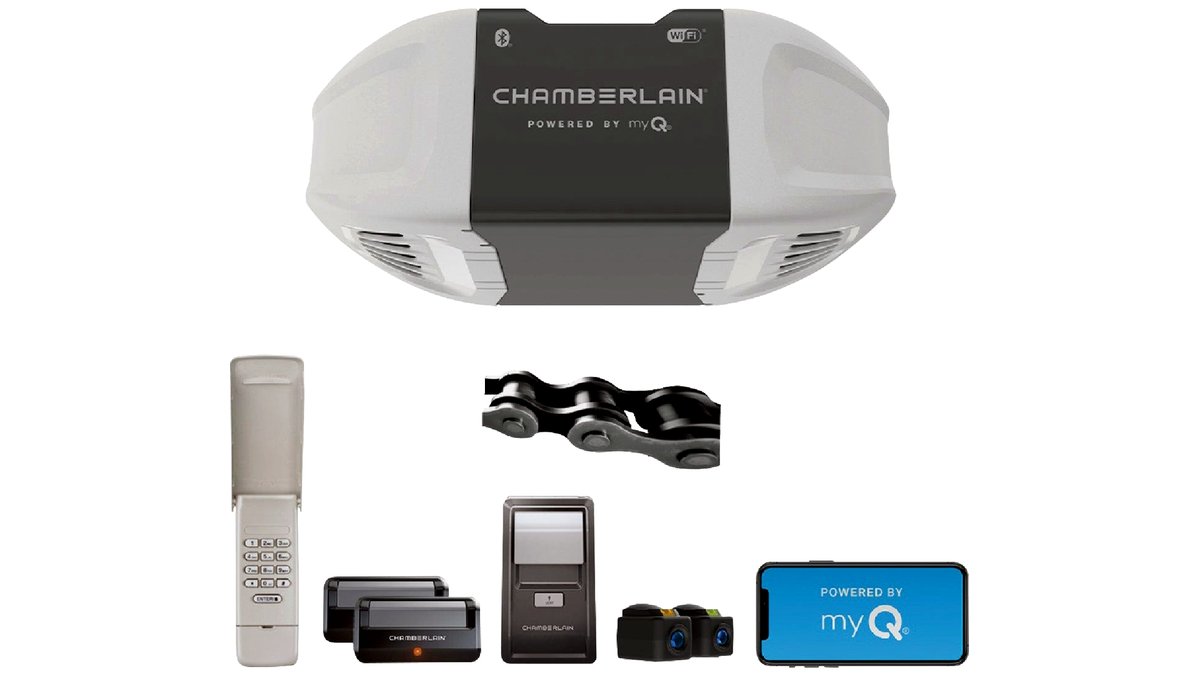
Chain-drive motors move a garage door by pulling a metal chain along a rail, a design that has stayed popular for decades because it is mechanically simple, generally the least expensive drive type, and capable of handling heavier doors reliably. The tradeoff for that durability and lower cost is vibration and noise transmitted through the rail and ceiling mount, which is the main reason buyers choose between chain, belt, and screw drive systems in the first place.
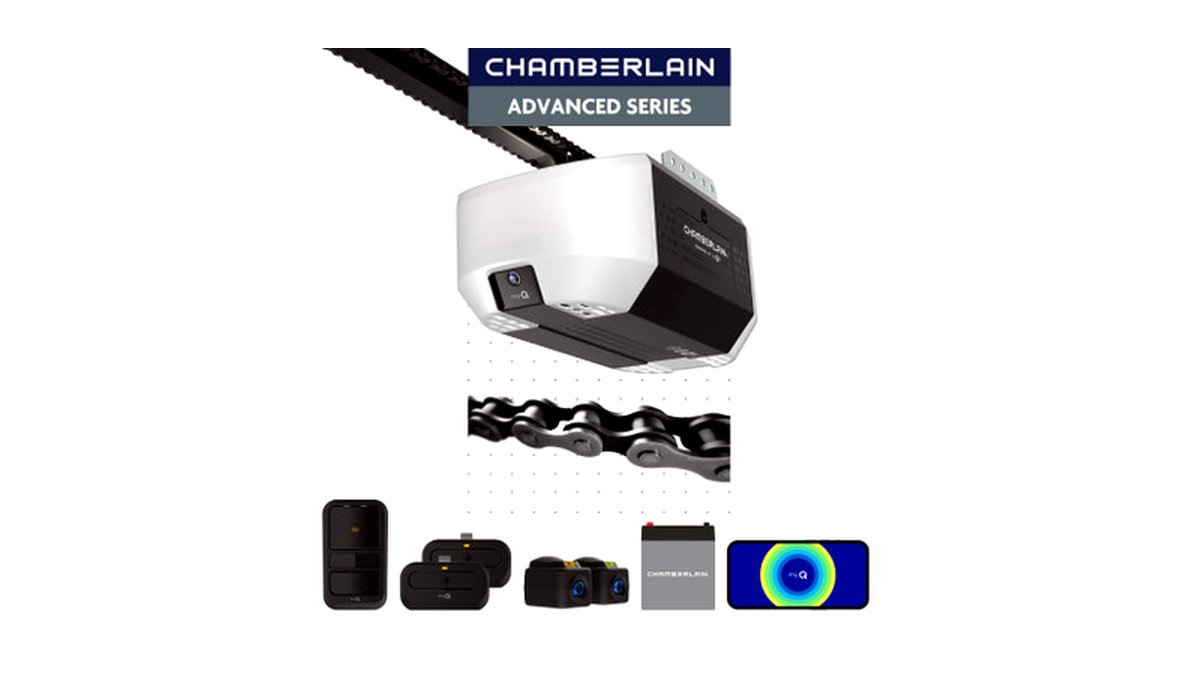
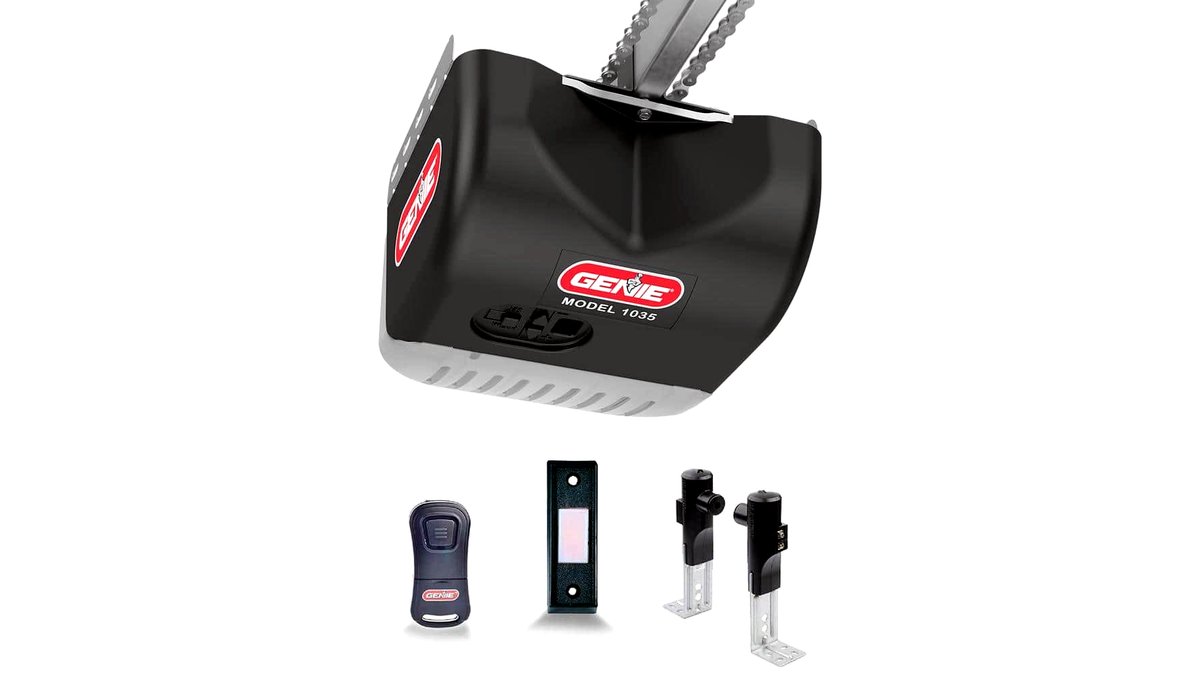
Quick picks at a glance
| Motor class | Best for | Key stated specs | Limits |
|---|---|---|---|
| Standard single-car chain drive | Lighter single doors, detached garages | 1/3 to 1/2 horsepower-class motor, standard rail length | Can struggle with heavier insulated doors |
| Heavy-duty two-car chain drive | Larger or heavier insulated double doors | 3/4 to 1 1/4 horsepower-class or comparable DC motor, reinforced rail | Higher cost and more noise than lighter-duty units |
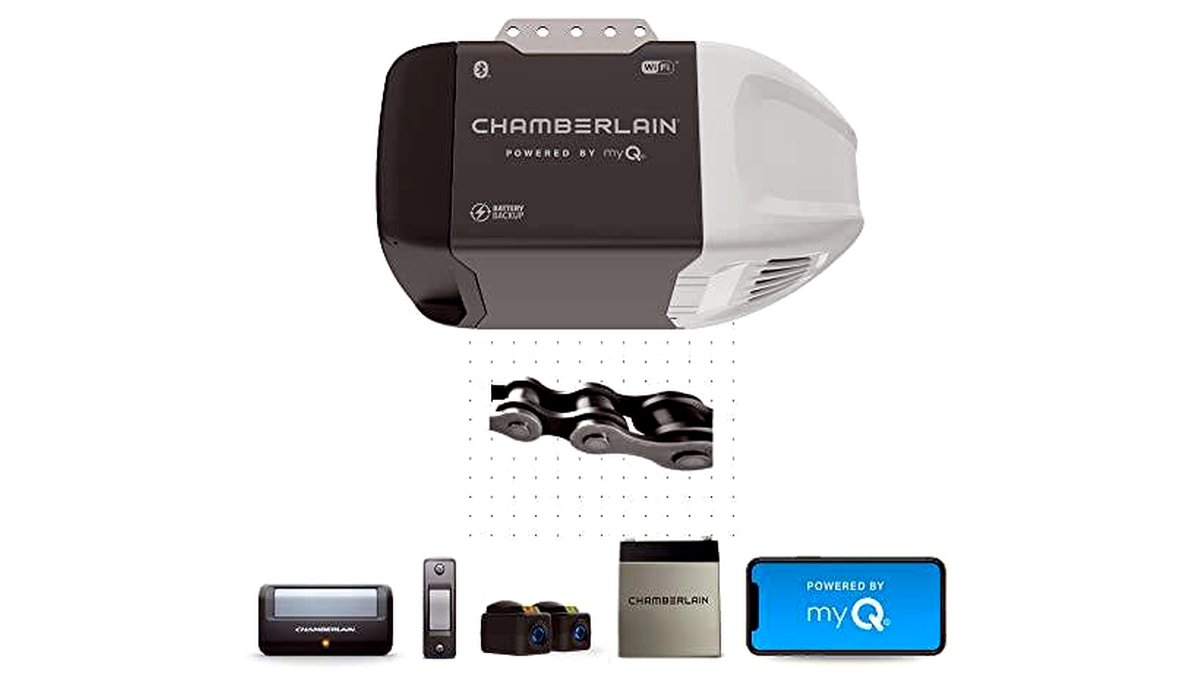
| DC motor chain drive with battery backup | Areas with frequent power outages | Battery backup module, soft start/stop motor control | Battery is a separate ongoing maintenance item |
| Smart-connected chain drive | Buyers who want app control and activity alerts | Wi-Fi or hub connectivity, smartphone app | Depends on home Wi-Fi reliability; some features need a subscription |
| Replacement chain and rail kit | Owners with a working motor but worn chain or rail | Chain and rail sized to match existing motor brand and model | Must match existing motor’s rail mounting system |
Matching motor power to your door
The main sizing decision is matching the motor’s rated power class to the door’s weight and size. Lighter single-car doors, especially non-insulated ones, are generally well served by a standard-duty chain drive. Heavier doors, particularly insulated double doors or doors with decorative overlay, put more load on the motor and benefit from a heavy-duty rated unit even though it costs more upfront. The maker’s documentation for any specific door should state a recommended opener weight class, and that figure should be checked against the motor’s rated capacity before buying rather than assuming a larger number is always better, since an oversized motor on a very light door can actually open and close faster than the track hardware is built to handle.
AC versus DC motor chain drives
Older and many budget chain-drive openers use an AC motor that runs at a fixed speed, which is simple and reliable but tends to start and stop more abruptly, adding to the noise and jolt felt through the chain. Newer chain-drive models increasingly use a DC motor with electronic speed control, which allows the door to start and stop more gradually. Reviewers generally note that this soft start and stop feature reduces perceived noise and wear even on a chain-drive system, narrowing some of the gap between chain and belt drives in day-to-day experience, though it does not eliminate the inherent mechanical noise of a chain moving along a rail.
Fit and compatibility notes
- Rail length must match the door’s track travel distance; most manufacturers offer an extension kit for taller doors, which should be checked separately from the base motor unit.
- Replacement chain and rail kits are generally brand- and sometimes model-specific, so confirm compatibility with the existing motor head before ordering a replacement rather than a full new unit.
- Battery backup modules add weight and a mounting location requirement; confirm the garage has suitable space and that the battery type is one that can be serviced or replaced locally over time.
- Smart-connected models typically require a stable home Wi-Fi signal reaching the garage; a detached garage with weak signal may need a range extender for reliable app control.
- Most residential garage door motors sold today include a photoelectric safety sensor pair required by current safety standards; confirm these are included and mounted per the manufacturer’s manual, since bypassing or removing them is not a safe substitute.
Pick this if…
| Situation | Recommended option |
|---|---|
| Standard single-car door, budget-conscious, detached garage | Standard single-car chain drive |
| Heavier insulated double door | Heavy-duty two-car chain drive |
| Frequent power outages in your area | DC motor chain drive with battery backup |
| Want remote monitoring and app alerts | Smart-connected chain drive |
| Bedroom or living space adjacent to the garage | Belt-drive motor instead of chain drive |
Alternatives worth considering
Buyers primarily concerned about noise should compare a belt-drive motor, which uses a reinforced rubber belt instead of a metal chain and runs noticeably quieter at a similar price range for comparable power classes. Screw-drive motors are a less common third option that use a threaded steel rod; they require less frequent lubrication than a chain but can transmit more vibration through the rail depending on the mounting. For very heavy commercial-style doors or jackshaft mounting situations where there is no room for an overhead rail, a wall-mounted jackshaft-style operator is a different category worth researching separately, since it is not a standard overhead chain-drive unit.
Installation and safety notes
Garage door motors involve a spring-loaded, heavy moving door and should be installed following the manufacturer’s manual precisely, including the required safety reversal sensors and emergency release mechanism. Buyers replacing an older motor themselves should confirm the existing door spring system is in good condition first, since a worn or damaged spring is a separate safety issue that a new motor will not fix and that can be dangerous to service without the right tools. Anyone uncertain about electrical wiring, spring tension, or mounting to the garage ceiling structure should have the installation done or checked by a qualified technician rather than relying solely on the included instructions.
Frequently Asked Questions
How do I know what horsepower rating I need?
The door manufacturer or the motor maker’s sizing chart is the right source, since it accounts for door weight, material, and size rather than horsepower alone, which can be measured differently between brands. As a general pattern, single lightweight doors need less power than heavier insulated double doors, but the specific door’s documentation should guide the final choice.
Is a chain drive too noisy for an attached garage?
It depends on tolerance and the specific motor. Older AC chain-drive motors tend to be the noisiest common option, while newer DC motor chain drives with soft start and stop features run noticeably quieter, though still generally louder than a belt drive. Buyers highly sensitive to noise near living spaces are usually better served by a belt-drive unit.
Can I replace just the chain and rail without buying a whole new motor?
Yes, if the motor head itself is still functioning well, a replacement chain and rail kit matched to that specific motor brand and model is usually available and is less expensive than a full unit replacement. Compatibility is generally brand- and often model-specific, so confirm the match before ordering.
Do I need battery backup on my garage door motor?
Battery backup is optional on most chain-drive motors and mainly useful in areas with frequent power outages, since it lets the door be opened and closed manually-assisted even without grid power. It is not a safety requirement, just a convenience feature, and it does add a component that needs occasional replacement.
What safety features should every chain-drive motor have?
A paired photoelectric sensor system that stops and reverses the door if something breaks the beam near the floor, and a manual emergency release are standard safety features on residential openers sold today. These should never be removed, disabled, or bypassed, and any malfunction in either system should be addressed before continuing to use the door.
How long does a typical chain-drive motor last?
Service life varies by usage frequency, door weight, and maintenance, but manufacturers generally design these units for many years of regular residential use. Keeping the chain lubricated per the manual and avoiding running the motor on a door with a failing spring or misaligned track are the main ways owners extend motor life.