Key takeaways
- T5 LED fixtures: A slightly smaller-diameter tube standard sometimes used in newer commercial fixtures; worth comparing if replacing a fixture entirely rather than matching an existing T8 housing.
- LED panel lights: Flat, flush-mounted LED panels are an alternative to linear tube fixtures in drop-ceiling applications, offering a different look without a visible tube.
- Smart or dimmable LED shop lights: Some integrated fixtures now offer app or switch-based dimming and color temperature adjustment, appealing to buyers who want more control than a fixed-output tube provides.
Garages, workshops, and basements being retrofitted from old fluorescent tubes generally do best with an LED T8 fixture that accepts standard plug-and-play tubes, while anyone replacing an entire fixture at once rather than just the tubes should consider an integrated LED T8-style strip fixture that skips the ballast entirely. T8 refers to a tube diameter (one inch, in eighths of an inch, hence “T8”), and buyers choosing a fixture need to decide between keeping the fluorescent-era hardware with LED tube replacements or moving to a fully integrated LED fixture built without a ballast at all.
As an Amazon Associate, we earn from qualifying purchases made through links on this page.
What “T8” Actually Describes
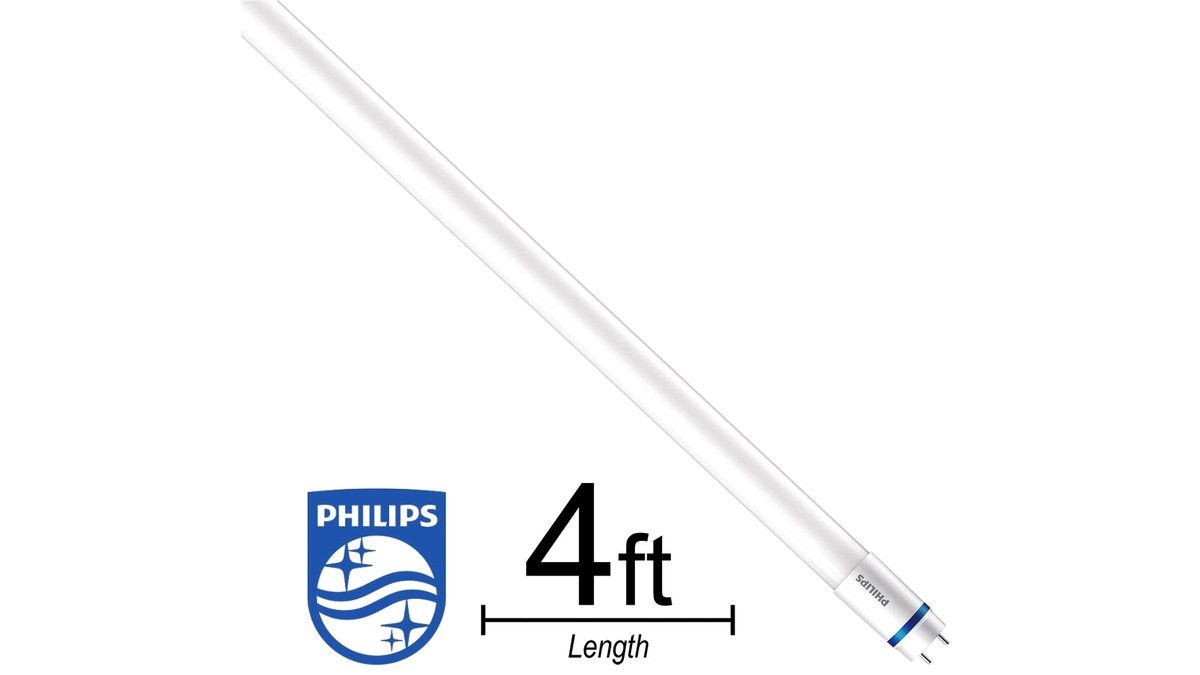
T8 is a sizing designation for the tube’s diameter, not the light source itself, which is why both fluorescent and LED tubes are sold in T8 dimensions. Older T8 fixtures were built around fluorescent tubes and a ballast, a component that regulates electrical current to the tube; newer LED T8 tubes are sold in a few different types depending on whether they are meant to work with the existing ballast, bypass it, or require a direct line-voltage connection. Buyers upgrading an old fixture need to know which type of LED tube matches their existing wiring, or whether to simplify by replacing the whole fixture with an integrated LED unit instead.
Plug-and-Play LED Tubes for Simple Fluorescent Replacement
Plug-and-play (sometimes called “ballast-compatible”) LED T8 tubes are designed to drop into an existing fluorescent fixture without rewiring, working with the fixture’s current ballast. This is the simplest upgrade path for anyone who just wants to swap failing fluorescent tubes for longer-lasting, more efficient LEDs without opening up the fixture’s wiring. The tradeoff is that the old ballast remains in the circuit, which means it can still fail over time and will eventually need replacing or bypassing, and ballast-compatible tubes are typically less efficient than direct-wire alternatives since some energy is still used by the ballast itself.
Ballast-Bypass LED Tubes for Better Efficiency
Ballast-bypass tubes require removing or disconnecting the fixture’s ballast and wiring the tube directly to line voltage, which a licensed electrician or a confident, qualified DIYer typically performs. Makers generally state these tubes run more efficiently than ballast-compatible versions since there is no ballast drawing extra power, and because the ballast is removed, there is no aging ballast left to fail later. This option suits buyers planning to keep their existing fixture housing long-term and willing to do, or pay for, the rewiring step once.
Integrated LED T8 Fixtures for a Complete Replacement
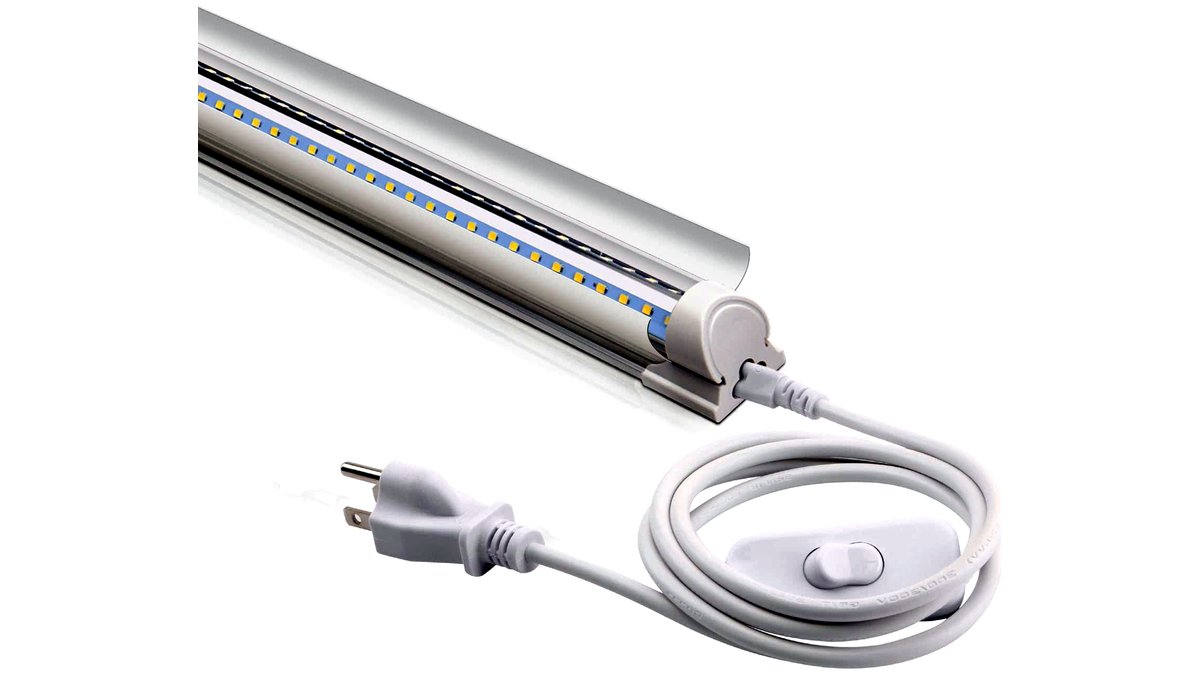
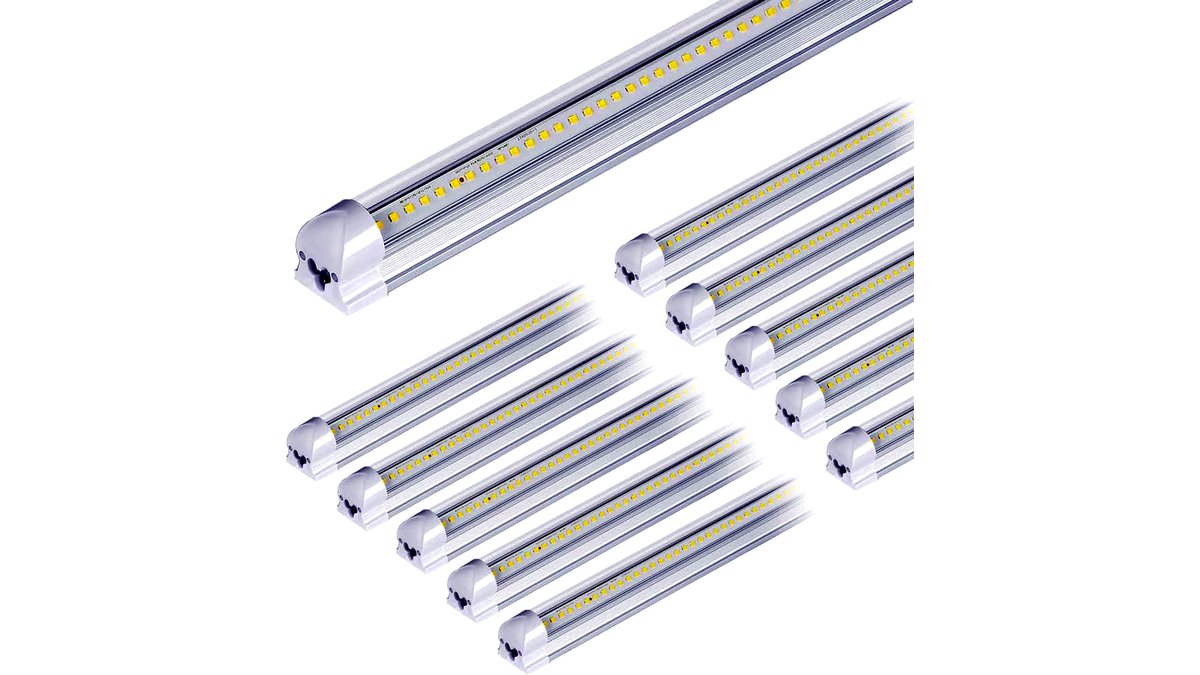
Integrated LED fixtures, often sold as linear shop lights or strip fixtures, build the LED light source directly into a new fixture with no separate tube or ballast at all. Brands commonly found in garages and workshops, including Lithonia, Hykolity, Barrina, and Sunco, sell these as complete units that typically just need mounting and a wiring connection, with no compatibility question about tubes or ballasts to sort out. This is usually the simplest option for a new installation or a full fixture replacement, though it means the whole fixture is discarded if the light source eventually fails, rather than just replacing a tube.
Choosing Between Tube Types in a Mixed Fixture
Many T8 fixtures hold two or four tubes, and mixing an old fluorescent tube with a new LED tube in the same fixture is not recommended, since the two light sources have different electrical requirements and the fluorescent tube will likely rely on a ballast the LED tube does not need. Reviewers and manufacturers both generally recommend replacing all tubes in a fixture at the same time to avoid inconsistent brightness, color temperature, or electrical issues.
At a Glance: T8 Fixture and Tube Options
| Option | Best For | Key Stated Traits | Limits |
|---|---|---|---|
| Plug-and-play LED tube | Simplest fluorescent-to-LED swap | Works with existing ballast, no rewiring needed | Ballast remains and can still fail; less efficient than bypass tubes |
| Ballast-bypass LED tube | Long-term efficiency in an existing fixture | Maker lists higher efficiency, no ballast to fail later | Needs rewiring by an electrician or qualified DIYer |
| Integrated LED fixture | New installs or full fixture replacement | No tube or ballast compatibility question, single unit | Entire fixture is replaced if the light source fails |
Pick X If…
| If You… | Choose |
|---|---|
| Want the quickest swap with no wiring changes | Plug-and-play LED tubes |
| Plan to keep the existing fixture housing for years | Ballast-bypass LED tubes installed by a qualified installer |
| Are installing lighting in a new or renovated space | An integrated LED T8-style fixture |
| Have an old fixture with a failing or already-removed ballast | Ballast-bypass tubes or an integrated fixture, not plug-and-play |
Fit, Sizing, and Compatibility Notes
T8 tubes commonly come in standard lengths tied to the number of tubes and fixture style, and buyers should measure their existing fixture or tube length before ordering rather than assuming a standard size, since fixtures also exist in less common lengths. Color temperature, measured in Kelvin, varies by product line and affects whether the light reads as warm, neutral, or daylight-toned; workshops and garages commonly favor cooler, daylight-range temperatures for task visibility, while some living spaces prefer warmer tones. Buyers should also confirm a fixture or tube’s damp- or wet-location rating before installing in a garage, basement, or any area exposed to moisture, since standard indoor-rated fixtures are not built for that exposure.
Alternatives Worth Considering
- T5 LED fixtures: A slightly smaller-diameter tube standard sometimes used in newer commercial fixtures; worth comparing if replacing a fixture entirely rather than matching an existing T8 housing.
- LED panel lights: Flat, flush-mounted LED panels are an alternative to linear tube fixtures in drop-ceiling applications, offering a different look without a visible tube.
- Smart or dimmable LED shop lights: Some integrated fixtures now offer app or switch-based dimming and color temperature adjustment, appealing to buyers who want more control than a fixed-output tube provides.
Frequently Asked Questions
Can LED T8 tubes be installed by a homeowner without an electrician?
Plug-and-play tubes generally only require removing the old fluorescent tube and inserting the new LED tube, a task most homeowners can do safely by following the product’s included instructions. Ballast-bypass installations involve altering the fixture’s internal wiring and working with line voltage, so anyone not confident working with electrical wiring should hire a licensed electrician for that step, and local electrical codes should always be followed.
How long do LED T8 tubes typically last compared to fluorescent tubes?
Manufacturers generally state LED tubes are rated for substantially longer operating life than fluorescent tubes, often citing tens of thousands of hours versus a fraction of that for fluorescents. Actual lifespan depends on usage patterns, fixture ventilation, and the specific product’s build quality, so checking the manufacturer’s stated rated-hours figure for a specific model is more reliable than a general industry average.
Will switching to LED T8 tubes reduce electricity costs?
LED tubes generally draw less power than fluorescent tubes of comparable brightness, and ballast-bypass or integrated fixtures remove the ballast’s additional power draw entirely, which manufacturers state improves efficiency further. The actual savings depend on local electricity rates and how many hours the fixture runs, so buyers wanting a specific cost comparison should check the wattage difference stated for their chosen tube versus their old fluorescent tube.
What happens if a ballast fails in a fixture still using fluorescent tubes?
A failed ballast typically causes flickering, dim, or non-functioning tubes even if the fluorescent tubes themselves are still good, and replacing just the ballast can be more involved than swapping a tube. This is often the point where buyers decide to switch to ballast-bypass LED tubes or an integrated fixture instead of sourcing a replacement ballast for an aging fixture.
Can T8 LED fixtures be used outdoors or in unheated garages?
Some T8 LED products are rated for damp or cold-weather locations, but this varies by specific model, and buyers should check the manufacturer’s stated temperature range and moisture rating before installing outdoors or in an unheated space. Using an indoor-only rated fixture in a damp or freezing environment can shorten its lifespan or create a safety hazard, so matching the rating to the location is important, and any outdoor electrical work should follow local code and ideally involve a licensed electrician.
Do all T8 LED tubes fit the same fixture sockets?
Most T8 tubes use a standard bi-pin socket at each end, but the tube’s internal wiring type (ballast-compatible, ballast-bypass, or hybrid) determines whether it will function correctly once installed, even if it physically fits the socket. Buyers should check the specific tube’s listed type against their fixture’s wiring before purchase, since a physical fit does not guarantee correct electrical operation.