Key takeaways
- Dynamic force rating — the load the actuator can move while extending or retracting, usually listed in pounds or newtons. For heavy-duty work, makers typically list ratings from around 150 lb up past 1,000 lb on their largest industrial units.
- Static (holding) force — how much weight the actuator can hold in a fixed position without the motor running. This is usually higher than the dynamic rating and matters for anything that has to stay put under load, like a lift platform.
- Duty cycle — the percentage of time the actuator can run continuously before it needs to cool down. Hobby-grade units often list a 10-20% duty cycle; actuators marketed as heavy-duty or industrial typically list 20-50%, which matters a lot for repetitive or automated use.
- Stroke length — the total travel distance, from a couple of inches to 40+ inches on long-travel industrial models.
- Speed — measured in millimeters or inches per second; higher force models tend to move slower, since the same motor and gearing trade speed for torque.
- IP rating — outdoor or wet-area use (gates, solar trackers, farm equipment) calls for at least IP65; indoor furniture or display mechanisms don’t need it.
A heavy-duty 12V linear actuator is the right call when a project needs to push or pull real weight — a camera jib counterweight, a TV lift, a solar panel tracker, a gate, or a DIY workbench lift — while a light-duty hobby actuator is enough only for small adjustable stands, model displays, or indoor furniture mechanisms under light load.
As an Amazon Associate, we earn from qualifying purchases made through links on this page.
What “Heavy Duty” Actually Means on a Spec Sheet
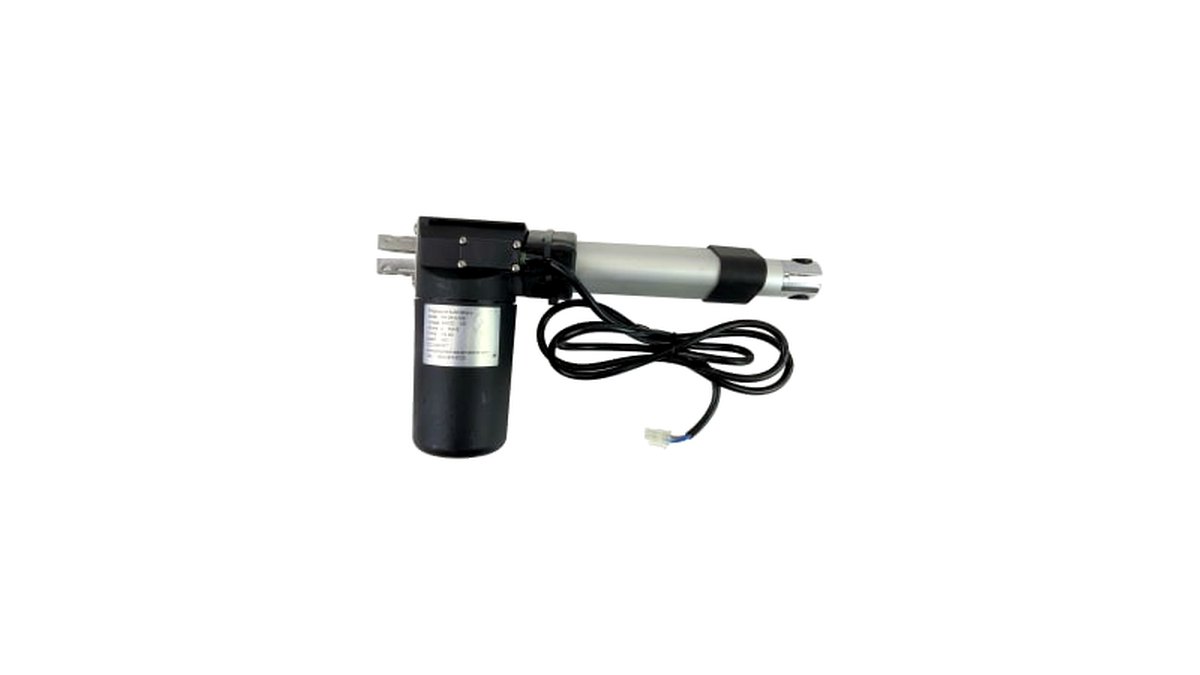
Linear actuator listings throw around a lot of numbers, and not all of them matter equally for a heavy-duty job. The ones worth checking first are force rating, duty cycle, stroke length, and ingress protection.
- Dynamic force rating — the load the actuator can move while extending or retracting, usually listed in pounds or newtons. For heavy-duty work, makers typically list ratings from around 150 lb up past 1,000 lb on their largest industrial units.
- Static (holding) force — how much weight the actuator can hold in a fixed position without the motor running. This is usually higher than the dynamic rating and matters for anything that has to stay put under load, like a lift platform.
- Duty cycle — the percentage of time the actuator can run continuously before it needs to cool down. Hobby-grade units often list a 10-20% duty cycle; actuators marketed as heavy-duty or industrial typically list 20-50%, which matters a lot for repetitive or automated use.
- Stroke length — the total travel distance, from a couple of inches to 40+ inches on long-travel industrial models.
- Speed — measured in millimeters or inches per second; higher force models tend to move slower, since the same motor and gearing trade speed for torque.
- IP rating — outdoor or wet-area use (gates, solar trackers, farm equipment) calls for at least IP65; indoor furniture or display mechanisms don’t need it.
Top Picks at a Glance
| Type / Tier | Best for | Key stated specs | Limits |
|---|---|---|---|
| Compact heavy-duty actuator (mid-range, ~6-12 in stroke) | Camera rigs, adjustable workbenches, TV lifts | Makers in this class commonly list dynamic force in the 150-225 lb range with a 25% duty cycle | Not rated for continuous industrial cycling; indoor-oriented housings on most models |
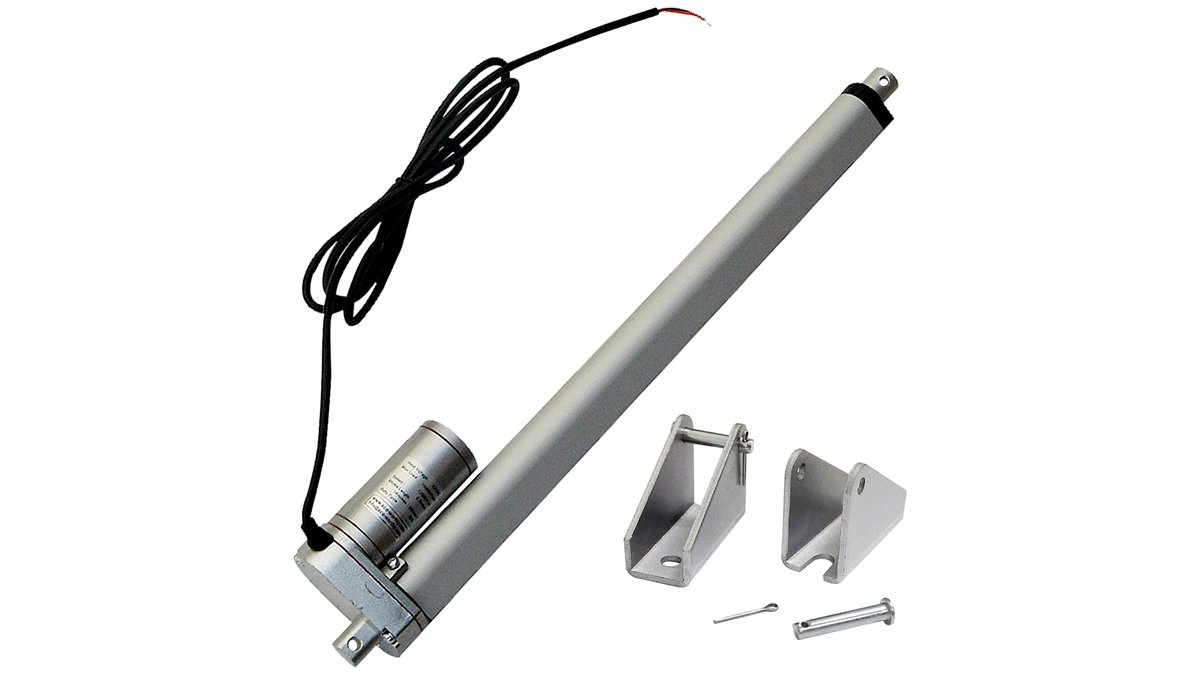
| High-force industrial actuator (premium) | Gate operators, platform lifts, agricultural equipment | Reviewers and spec sheets for this class report dynamic force from 450 lb up to 1,000+ lb with IP65 or IP66 housings | Slower extend/retract speed; higher current draw needs a properly sized 12V supply and wiring |
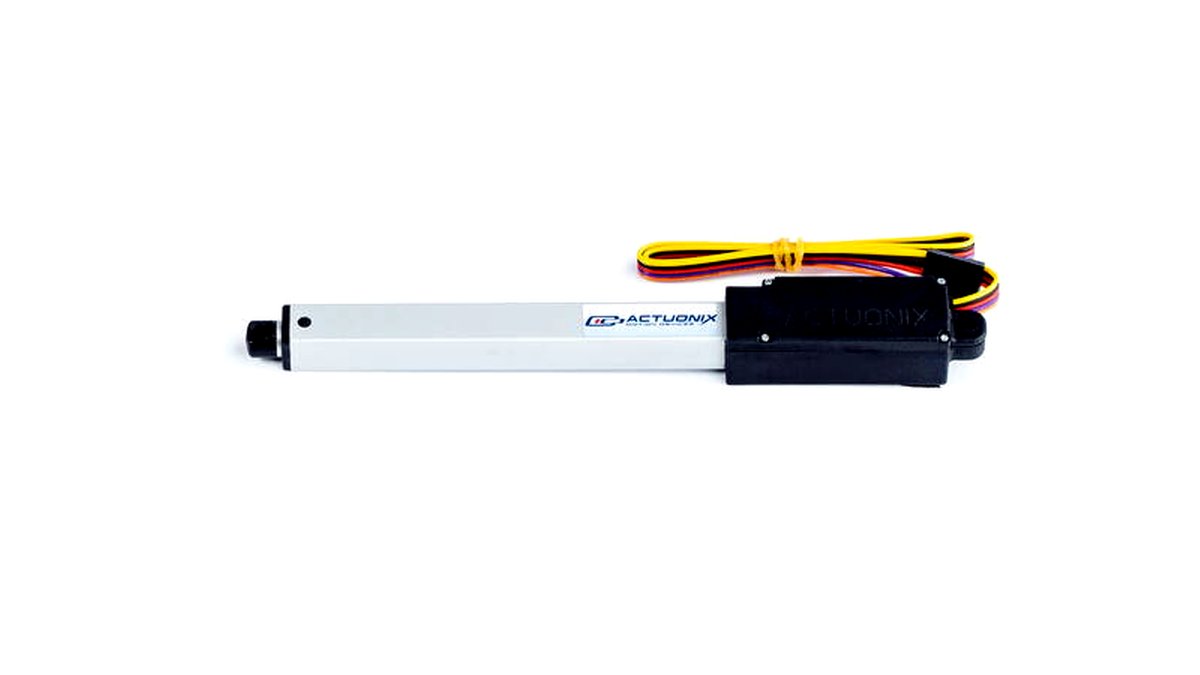
| Precision micro actuator (budget to mid-range) | Small photo/video rigs, pan-tilt heads, model automation | The maker typically lists force in the 10-50 lb range with fine positioning and optional feedback potentiometer | Not built for heavy loads; weatherproofing varies by model |
| Economy reciprocating actuator (budget) | Light furniture lift, hobby automation, indoor display mechanisms | Entry-level listings commonly state 12-15% duty cycle and modest force ratings | Shorter expected service life under frequent use; duty cycle limits repeated operation |
Fit, Mounting, and Wiring Notes
Stroke length should be chosen with a margin, not matched exactly to the travel needed — actuators are rated for their full stroke, and running one at the very end of travel repeatedly adds wear. Mounting brackets at both ends need to allow the actuator to pivot slightly as it extends, since most heavy loads don’t move in a perfectly straight line; a rigid, non-pivoting mount is a common cause of binding and premature failure.
On the electrical side, 12V actuators rated for higher force draw meaningfully more current, especially under load or stall. The maker’s listed current draw (often in the 2-8 amp range for mid-size units, higher for industrial ones) should be checked against the gauge of wire and the capacity of the power supply or battery being used — undersized wiring is a common reason an actuator “feels weak” even though the unit itself is fine. A separate fused circuit is worth it for anything drawing more than a couple of amps continuously.
For outdoor or exposed installs, check not just the actuator’s IP rating but also the end connectors and any control switches — a sealed actuator paired with an unsealed toggle switch still leaves a weak point for moisture.
Pick X If…
| Pick this if… | Recommended type |
|---|---|
| You’re building or counterweighting a camera rig or jib and need smooth, controllable travel | Compact heavy-duty actuator, 6-12 in stroke |
| You’re automating a gate, ramp, or platform that has to hold real weight outdoors | High-force industrial actuator with IP65/IP66 rating |
| You need fine, repeatable positioning rather than raw strength | Precision micro actuator with feedback potentiometer |
| Budget is the main constraint and use will be occasional, indoor, and light | Economy reciprocating actuator |
A Few Alternatives Worth Knowing About
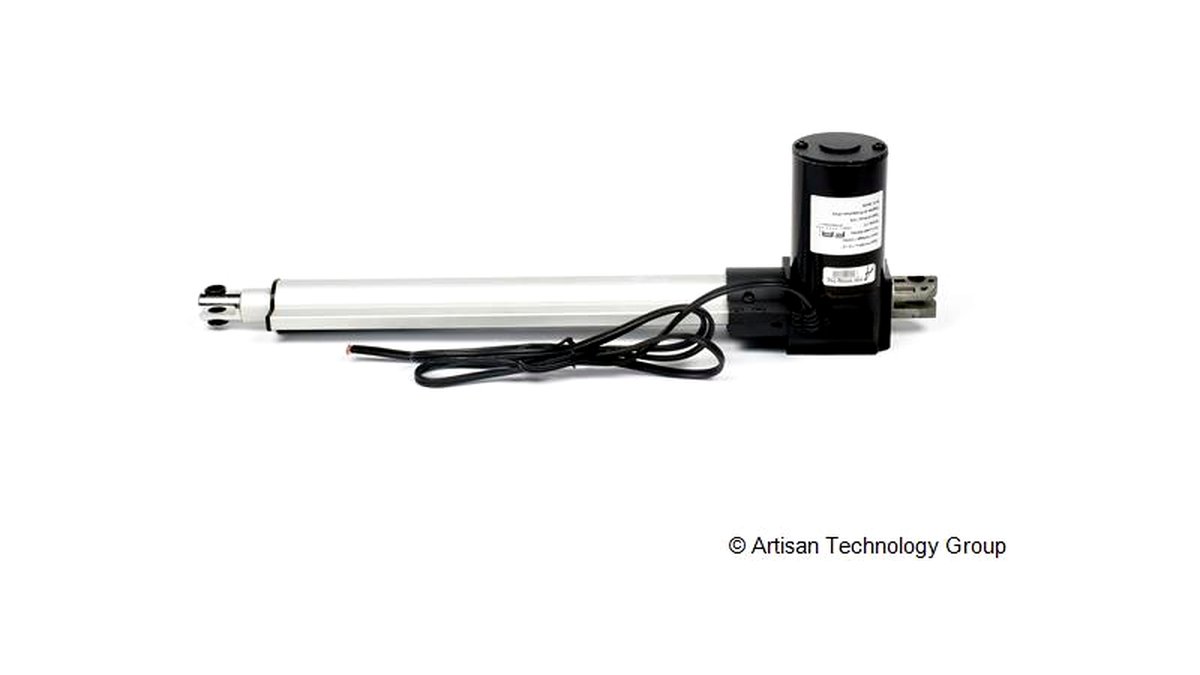
Progressive Automations-style heavy-duty linear actuators are a common reference point in this category — the maker’s published lines span from compact mid-force units up to track actuators rated for several hundred pounds, with optional limit switches and potentiometer feedback for position control. They’re frequently cited by reviewers as a solid middle ground between hobby-grade and true industrial actuators.
Actuonix-style micro linear actuators (the L12/L16 family and similar) are built for precision rather than brute force — small footprint, light force ratings, and feedback options that suit camera sliders, focus pullers, and small robotics rather than heavy lifting.
Generic 12V DC linear actuators sold by industrial automation suppliers fill the budget tier. Specs vary widely between sellers even at similar price points, so the duty cycle and static/dynamic force figures on the actual listing matter more than the category name.
Common Mistakes Buyers Make in This Category
The single most common mistake reviewers point to is sizing an actuator to the load it will move at rest, without accounting for friction, binding, or an uneven starting push. A load that seems light when lifted by hand can require noticeably more force to get moving from a dead stop through a mechanical linkage, so leaving headroom above the calculated load — rather than buying the actuator rated exactly to that number — avoids stalling and premature motor wear.
A second common mistake is ignoring duty cycle in applications that cycle frequently, such as automated gates or repeated lift-and-lower mechanisms. An actuator rated for a 20% duty cycle that’s asked to run near-continuously will overheat and may trigger an internal thermal cutoff, or simply wear out faster than its rated cycle life suggests. Matching the duty cycle rating to the actual frequency of use, not just the force needed, is what separates a reliable long-term installation from one that fails within the first year.
Finally, buyers sometimes overlook that stroke length and overall retracted length are different numbers — an actuator needs physical clearance for its full retracted body length plus mounting hardware at both ends, not just room for the stroke itself. Measuring the full installation envelope before ordering avoids a unit that technically has the right stroke but doesn’t physically fit the available space.
Frequently Asked Questions
What’s the difference between dynamic and static force ratings?
Dynamic force is how much weight the actuator can move while it’s actively extending or retracting. Static (holding) force is how much it can support once it stops moving, without the motor engaged. The static figure is usually higher, and it’s the one that matters for anything that needs to stay lifted or extended for a while.
Can I run a 12V actuator from a standard wall-wart power supply?
Only if the supply’s amperage matches or exceeds the actuator’s peak draw, which is usually well above its running current — stall current in particular can spike. The maker’s spec sheet lists both figures, and matching the supply to the stall current avoids voltage sag that makes the actuator stutter or stop under load.
Do I need limit switches?
Limit switches (built-in or external) stop the actuator automatically at the ends of its stroke, which protects the motor and gearing from running against a hard stop. Reviewers generally treat them as worth paying extra for on anything that will run unattended or cycle frequently.
How much shorter is the real service life under heavy use?
This varies a lot by brand and model, and most makers only publish a duty cycle figure rather than a total cycle-life number. As a general pattern, running an actuator near or above its stated duty cycle, or near its maximum rated force, is what reviewers and manufacturers point to as the main driver of early wear.
Is a higher IP rating always necessary?
No — IP65/IP66 sealing mainly matters for outdoor exposure, washdown environments, or dusty conditions. For an indoor camera rig or furniture mechanism, paying extra for high ingress protection usually doesn’t add value.
Can these actuators be wired to run in reverse automatically at the end of travel?
Some models support this through an included or compatible controller board, but it’s not universal — it depends on whether the actuator has built-in limit switches and whether the wiring setup includes a reversing relay or dedicated controller. The product listing or manual is the place to confirm this before assuming it’s supported.