Key takeaways
- A single high-output LED shop light or linkable bar fixture suits a one or two-car garage used for basic parking and storage, while a triple-head “deformable” LED fixture or several linked bars suit a garage used as a workshop where…
A single high-output LED shop light or linkable bar fixture suits a one or two-car garage used for basic parking and storage, while a triple-head “deformable” LED fixture or several linked bars suit a garage used as a workshop where even light across a workbench matters more than raw ceiling brightness.
As an Amazon Associate, we earn from qualifying purchases made through links on this page.
Why Garage Lighting Is a Different Problem Than Room Lighting
Garages are typically taller, less insulated, and less finished than living spaces, which changes what a fixture needs to tolerate. Cold temperatures affect some light sources more than others, dust and moisture are more common than in a finished room, and ceiling heights of 2.4 to 3 meters or more call for higher total light output to reach a comparable brightness at floor or workbench level. LED fixtures have mostly replaced fluorescent shop lights in this space because they reach full brightness instantly in cold conditions, where fluorescent tubes can dim or flicker, and because LED drivers generally have a longer rated life than fluorescent ballasts.
Buyers researching garage lighting are usually solving one of three problems: replacing a dim or dying incumbent fixture, adding work-focused task lighting over a bench or lift, or lighting an entire garage from scratch during a remodel or new build. The right fixture type and layout differ for each case.
Fixture Types to Choose From
Linkable LED Shop Light Bars
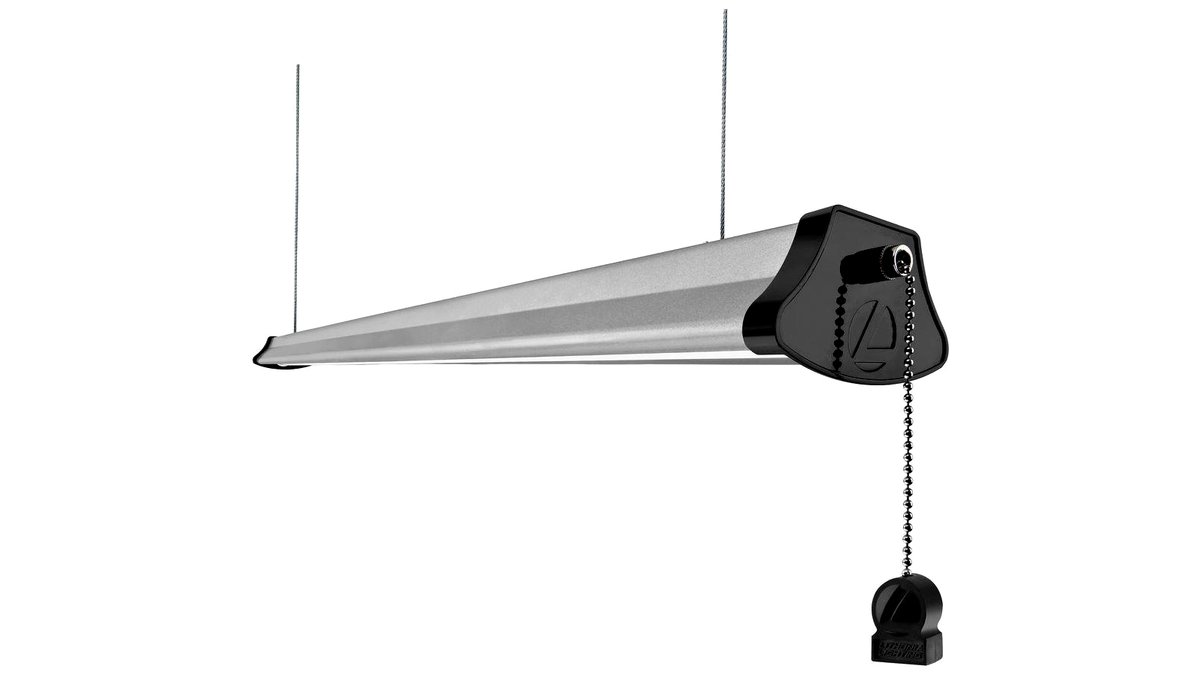
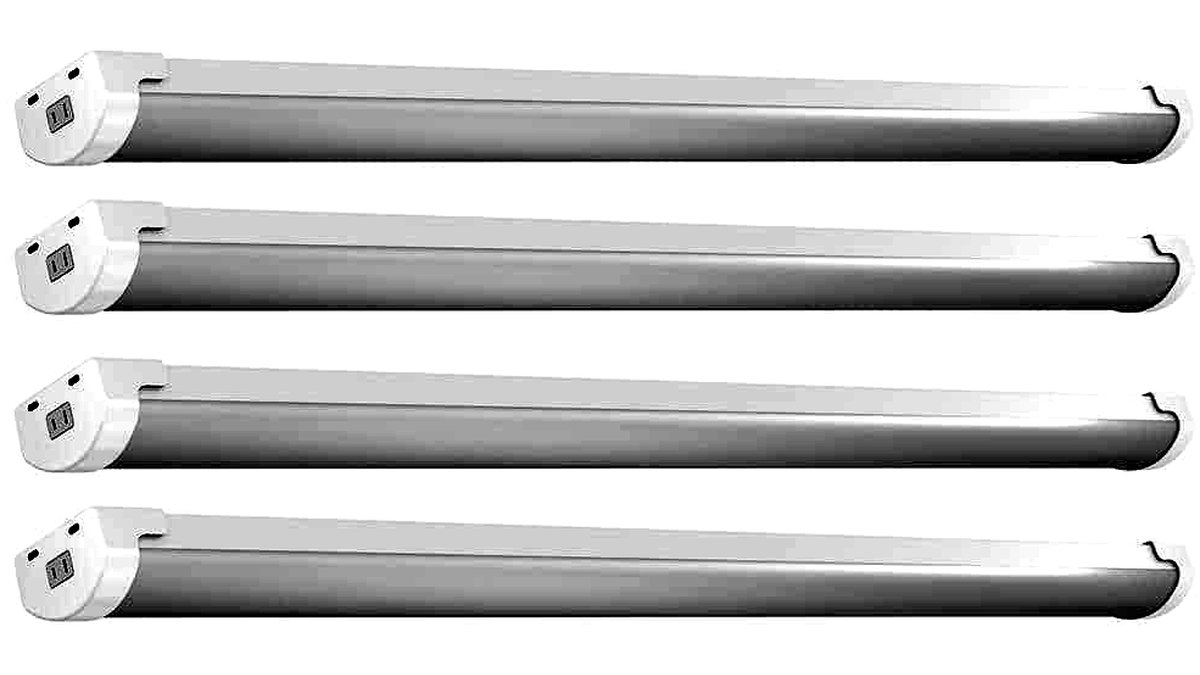
These are the most common entry point: linear fixtures, often in 4-foot lengths, that mount to the ceiling or hang from chains and can be daisy-chained so multiple fixtures run off one power connection. Makers such as Lithonia Lighting and Feit Electric sell versions of this format for garages and basements, typically listing lumen output and a frosted or clear lens option. Linkable bars are a practical choice for anyone who wants to light a whole garage ceiling evenly without running a separate circuit for each fixture.
Triple-Head or “Deformable” LED Fixtures
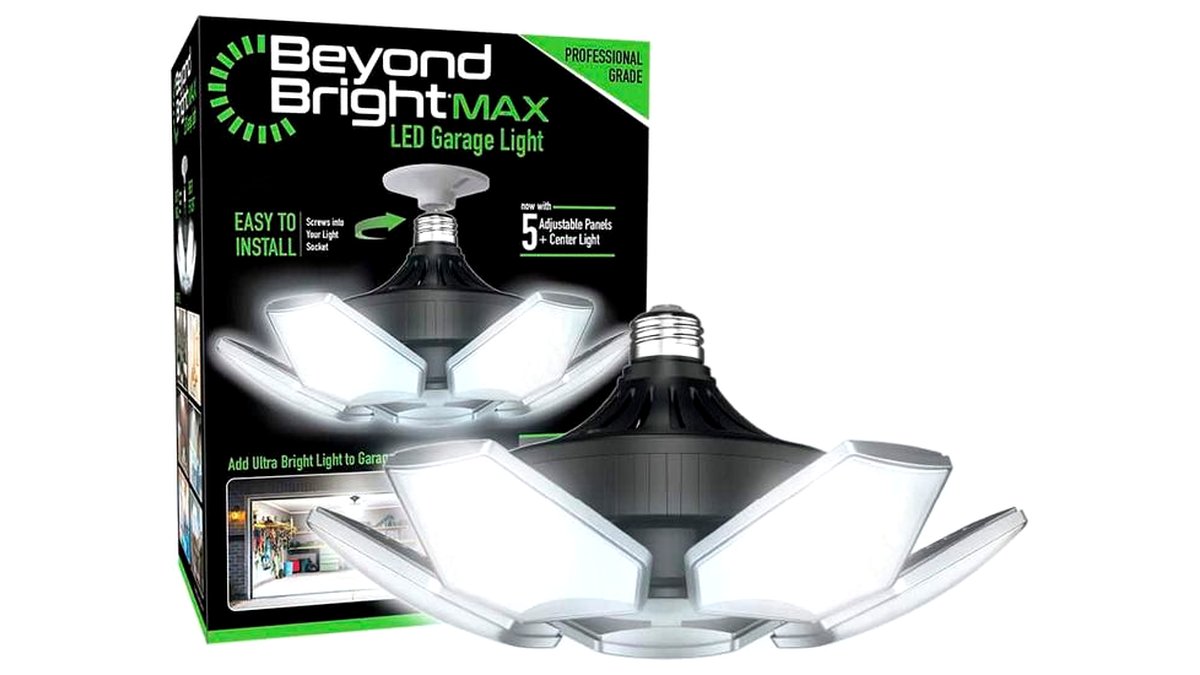
These fixtures use three (sometimes four) adjustable panel heads on a central body, letting the owner angle each head toward a specific work area, such as a workbench, a vehicle bay, or a storage shelf. This design suits garages with uneven lighting needs, where a single overhead fixture would leave shadows over a bench against a wall. They mount to a standard ceiling junction box in many cases, which makes retrofit installation simpler than running new wiring.
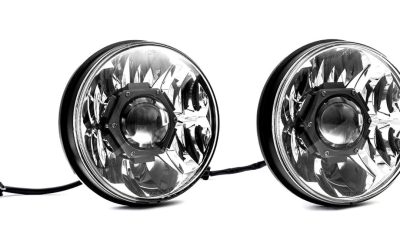
High-Bay and Round LED Fixtures
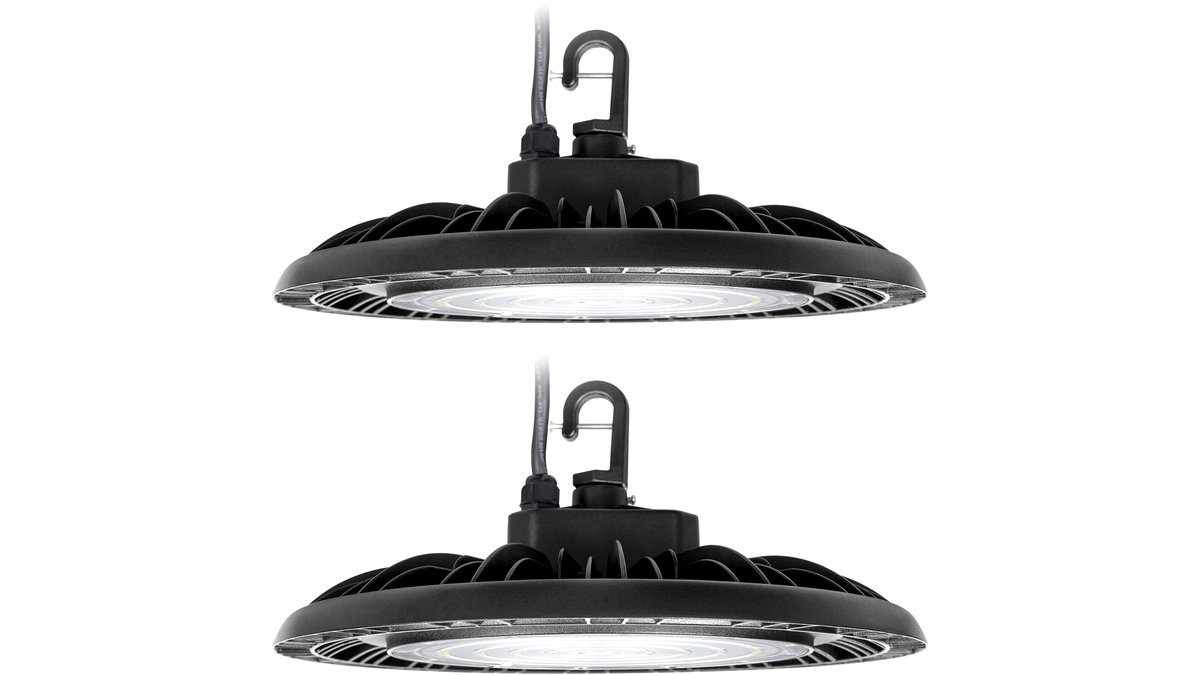
For taller garages or detached shops with ceilings above roughly 3 meters, round or high-bay style fixtures concentrate more output in a tighter beam so light still reaches the floor effectively. These are less common in standard attached garages but worth considering for pole barns, detached workshops, or garages with vaulted ceilings.
Motion-Sensor and Battery-Backup Fixtures
Some fixtures add an integrated motion sensor for hands-free operation near an entry door, or a battery backup that keeps a fixture lit briefly during a power outage. These add convenience and a safety margin but are not necessary for every garage, and the motion-sensing range and backup runtime stated by the maker should be checked against the actual space.
At a Glance Comparison
| Fixture Type | Best For | Key Stated Specs | Limits |
|---|---|---|---|
| Linkable LED shop bars | Whole-garage even ceiling light | High lumen-per-fixture output, daisy-chain linking, frosted lens options | Fixed beam direction, needs ceiling mounting points for each unit |
| Triple-head deformable fixture | Workbenches, mixed-use garages | Adjustable panel heads, single junction-box install | Narrower total coverage per fixture than a long bar |
| High-bay/round fixtures | Tall ceilings, detached shops | Concentrated beam angle, higher wattage options | Overkill and glare-prone in standard low-ceiling garages |
| Motion-sensor fixtures | Entryways, infrequently used bays | Built-in PIR sensor, adjustable sensitivity/timer on some models | Not ideal as the sole light source in an active work area |
Fit, Mounting, and Compatibility Notes
Most residential garage LED fixtures are designed to either hang from the existing ceiling fixture’s chains or pull-chain socket, or mount flush to a standard junction box; checking which mounting style a given model expects against the garage’s existing wiring saves a return. Fixtures that plug into a standard light socket (an “LED corn bulb” or screw-in retrofit) are the simplest upgrade path for anyone replacing an old incandescent or fluorescent fixture without rewiring, though they generally produce less total output than a dedicated linear or panel fixture built for the socket.
Cold-weather performance is worth checking for unheated garages in cold climates: the maker’s listed operating temperature range should cover the coldest nights the garage will see, since some drivers are rated only down to a certain threshold. Dust and moisture ratings, often listed as an IP (Ingress Protection) rating, matter more for garages that see road salt, sawdust, or open bay doors in wet weather; a higher first digit indicates better dust resistance and a higher second digit indicates better moisture resistance.
Color temperature, measured in Kelvin, changes how the space feels and how easy it is to spot flaws: cooler temperatures in the 5000K range (often labeled “daylight”) are common for garage work lighting because they make color and detail easier to judge, while warmer temperatures closer to 3000-4000K feel closer to typical household lighting. Buyers who also use the garage as a living or hobby space in the evening may prefer a fixture with switchable color temperature settings.
Pick X If…
| Choose This | If You… |
|---|---|
| Linkable LED shop bars | Want even, bright coverage across the whole garage ceiling |
| Triple-head deformable fixture | Need directional light over a bench, lift, or specific work zone |
| High-bay fixture | Have a tall or vaulted ceiling in a detached shop or barn |
| Motion-sensor fixture | Want hands-free light near an entry door or infrequently used area |
| Screw-in LED retrofit bulb | Want the simplest, lowest-effort upgrade from an old fixture |
Alternatives Worth Considering
Buyers who are not ready to replace fixtures outright can swap individual bulbs in existing sockets for high-output LED replacements, which is cheaper and faster but caps total brightness at what the existing fixture and socket count can support. For garages used heavily as workshops, dedicated task lamps or clamp lights aimed directly at a bench supplement overhead lighting without a rewiring project. Owners doing a full remodel might instead consider recessed LED ceiling lights on a dedicated circuit, which give a cleaner finished look than surface-mounted bars but cost more in labor and electrical work.
Wiring and Circuit Planning for Larger Projects
Garages being wired from scratch, or rewired as part of a larger remodel, benefit from planning the circuit before choosing fixtures rather than after. A dedicated 15 or 20-amp lighting circuit, separate from any circuit feeding power tools, a compressor, or an EV charger, avoids nuisance breaker trips when several high-draw devices run at once. Multiple linkable LED bars daisy-chained together draw more combined current than a single fixture, so totaling the wattage of every planned fixture and checking it against the circuit’s rated capacity, with reasonable headroom, is worth doing before finalizing a layout. Local electrical code may also dictate how many fixtures can share a switch leg or how outlets and lighting must be separated, which is another reason a licensed electrician is commonly brought in for anything beyond a direct fixture swap.
Switch placement and control zones are also worth planning ahead of installation. A garage used for both parking and detailed work often benefits from separate switches for general ceiling lighting and task-focused fixtures over a bench, so one zone can stay dark while the other runs during late-night projects. Smart switches or plug-in smart receptacles add scheduling and remote control to otherwise basic fixtures without needing a wifi-enabled bulb or fixture.
Frequently Asked Questions
How many lumens does a typical garage need?
Garage lighting needs vary with ceiling height, wall color, and how the space is used, but workshop-focused garages generally benefit from substantially more total lumen output than a garage used only for parking and storage. Checking the combined lumen rating of all planned fixtures against the square footage of the garage, and erring toward brighter for detailed work, is a more reliable approach than relying on a single fixed number.
Can LED garage fixtures be used outdoors or in unheated spaces?
Many garage LED fixtures are rated for indoor use only, while others carry a damp or wet-location rating suitable for unheated or semi-exposed areas; this should be confirmed on the specific product’s listed certifications before installing it anywhere exposed to moisture or temperature extremes outside the stated range. An attached, heated garage has very different requirements than a detached, unheated shop.
Do linkable shop lights require an electrician to install?
Fixtures designed to replace an existing fixture at the same junction box, using the same wiring, are often within reach of a comfortable DIY installer who follows the manufacturer’s instructions and local electrical code. Adding new circuits, new junction boxes, or wiring in a detached structure typically calls for a licensed electrician, and local code may require this regardless of skill level.
What color temperature is best for a garage workshop?
Many garage and shop fixtures are offered around 5000K, often marketed as daylight white, because that range makes it easier to judge color, detail, and surface condition during work. Buyers who want the garage to feel more like living space in the evening sometimes choose fixtures with a switchable or warmer color temperature instead.
Why do some LED garage lights flicker or hum?
Flickering or humming can come from an incompatible dimmer switch, a failing driver, or voltage fluctuations on a shared circuit, and manufacturers generally advise checking that the fixture is rated for use with any installed dimmer before troubleshooting further. Garages on older or shared circuits with heavy equipment, such as a compressor or welder, are more prone to this than a dedicated clean circuit.
How long do LED garage fixtures typically last?
Manufacturers commonly rate LED garage fixtures for tens of thousands of hours of use before output drops to a stated percentage of original brightness, which generally exceeds the practical lifespan of fluorescent tubes and incandescent bulbs by a wide margin under normal use. Actual lifespan can be shortened by poor ventilation, extreme heat, or operating outside the fixture’s rated temperature range.