Key takeaways
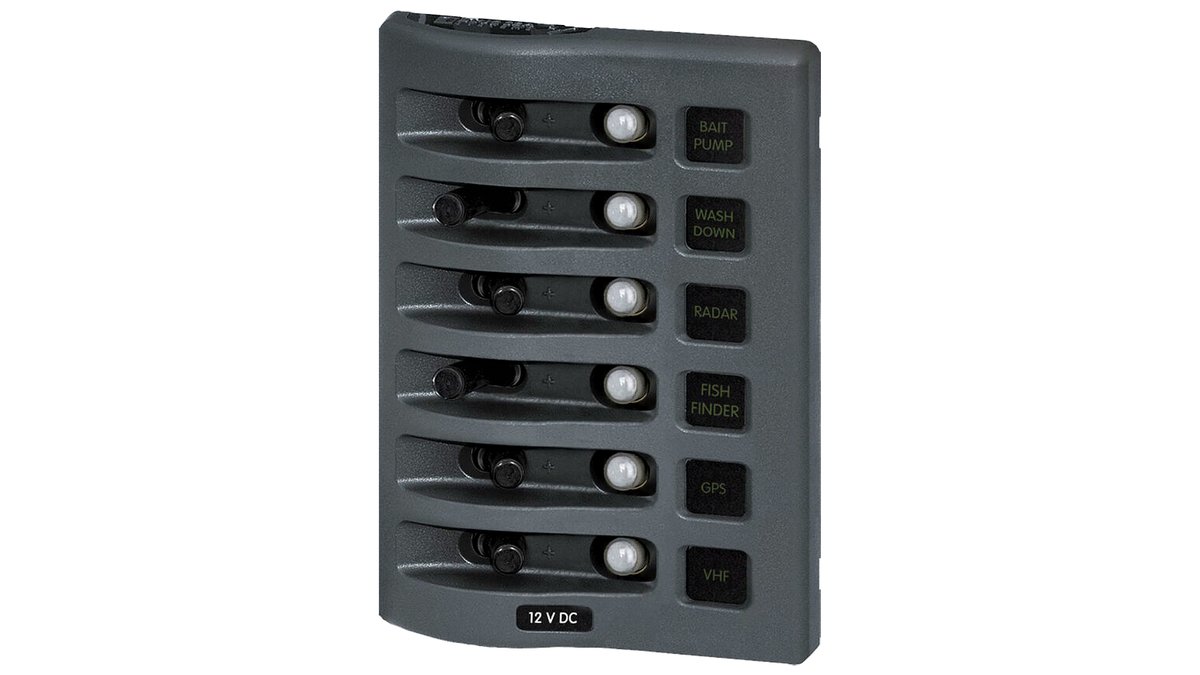
- Pre-printed laser-etched or engraved labels — text is cut into or printed under the switch’s lens so it won’t rub off or fade from sun exposure; common on higher-end marine panels and usually backlit so the label glows at night.
- Printed adhesive label sets — a sheet of pre-cut, common-function labels (bilge, lights, pump, wiper, horn, accessory) that stick onto blank rocker caps; flexible and cheap, but the maker typically states these are less durable against sun and saltwater spray than etched labels over time.
- Interchangeable snap-in label inserts — a clear cap over a paper or plastic label card that can be swapped out, letting you relabel a circuit without buying a new switch; useful on panels that get rewired as accessories change.
- Digital touch-panel labeling — a backlit LCD or LED display next to or behind each touch switch, with the label set or renamed through a configuration menu rather than printed at all; found on digital switching systems from brands like Blue Sea Systems and CZone.
A rocker switch panel with pre-printed, backlit labels suits most boaters who want a clean dashboard without a label maker, a blank-rocker panel with a included label kit suits boaters who want to customize circuit names exactly, and a digital switch panel with an on-screen labeled touch interface suits boaters rewiring a dash from scratch who want to cut down on physical switch count.
As an Amazon Associate, we earn from qualifying purchases made through links on this page.
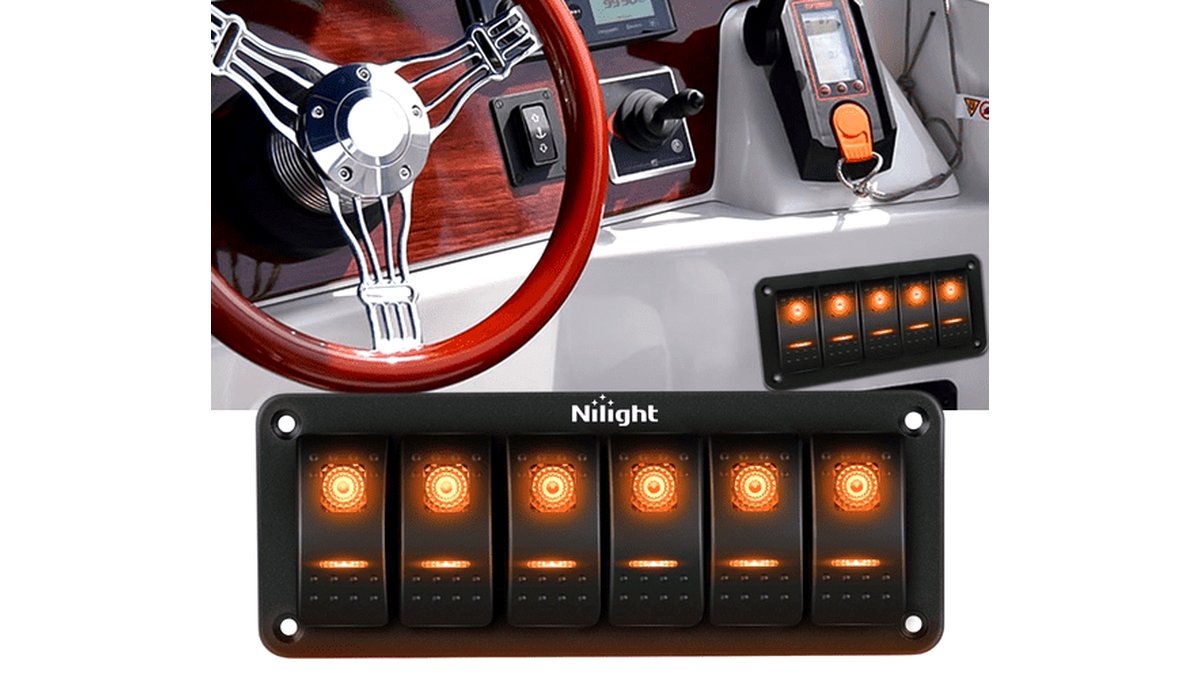
Labeled switches exist because a boat dash is usually dark, wet, and operated while watching the water rather than the panel — a backlit, clearly labeled rocker for “Bilge,” “Nav Lights,” “Horn,” or “Livewell” lets you find the right switch by feel and glance rather than trial and error. This guide compares the common label approaches and switch types rather than one specific product, since labeling style is often the deciding factor between otherwise similar marine switch panels.
Label styles compared
- Pre-printed laser-etched or engraved labels — text is cut into or printed under the switch’s lens so it won’t rub off or fade from sun exposure; common on higher-end marine panels and usually backlit so the label glows at night.
- Printed adhesive label sets — a sheet of pre-cut, common-function labels (bilge, lights, pump, wiper, horn, accessory) that stick onto blank rocker caps; flexible and cheap, but the maker typically states these are less durable against sun and saltwater spray than etched labels over time.
- Interchangeable snap-in label inserts — a clear cap over a paper or plastic label card that can be swapped out, letting you relabel a circuit without buying a new switch; useful on panels that get rewired as accessories change.
- Digital touch-panel labeling — a backlit LCD or LED display next to or behind each touch switch, with the label set or renamed through a configuration menu rather than printed at all; found on digital switching systems from brands like Blue Sea Systems and CZone.
Switch types behind the label
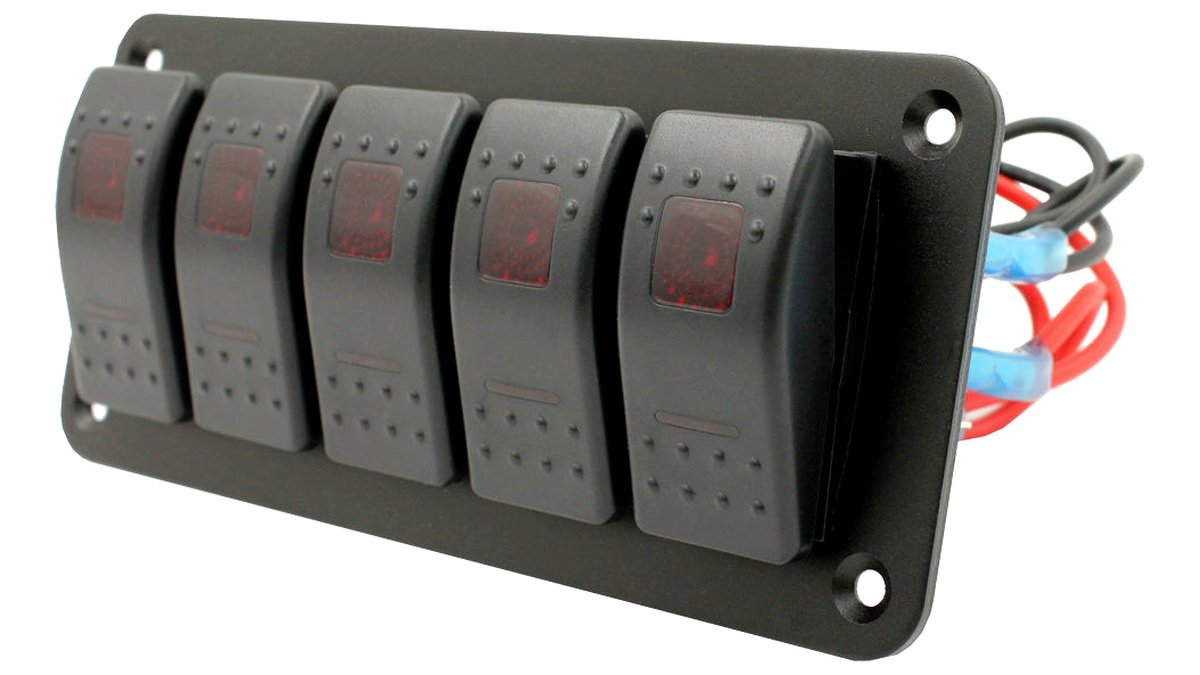
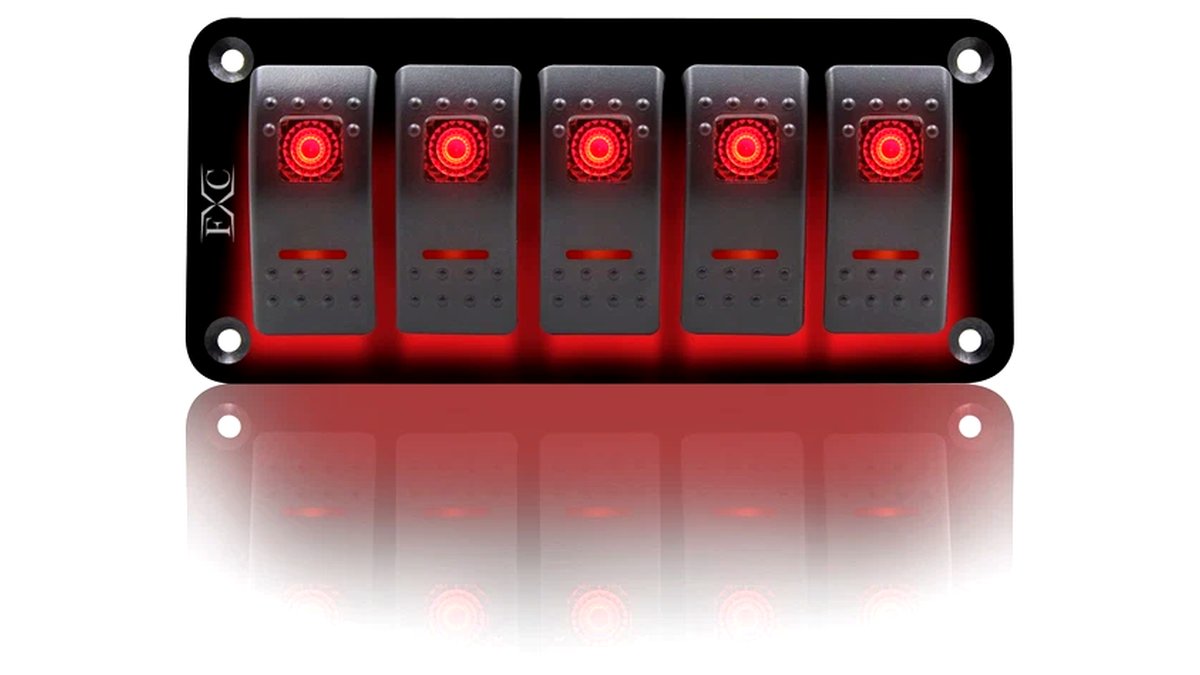
- Illuminated rocker switches — the most common marine switch type, often available in on/off or on/off/on configurations, with a backlight that doubles as a visual “circuit is live” indicator.
- Toggle switches — common on older or simpler boats, less prone to accidental bumps than a rocker but harder to label clearly since the labeling sits on a plate around the toggle rather than on the switch itself.
- Circuit-breaker rocker switches — combine the on/off switch and the circuit protection in a single rocker, which the maker typically lists with an amperage rating printed on the switch face; useful for simplifying a panel but means a tripped breaker needs a manual reset at that switch.
- Digital touch switches — part of a networked switching system rather than a standalone mechanical switch; these move circuit protection to a central module rather than the switch itself.
At a glance
| Type | Best for | Key stated specs | Limits |
|---|---|---|---|
| Pre-printed backlit rocker panel | Boaters who want a finished look without customizing labels | Panels typically ship with 6-12 common functions pre-labeled per the maker’s listing | Fixed label set; can’t rename a circuit without buying new rockers |
| Blank-rocker panel + adhesive label kit | Boaters who want to pick their own circuit names | Kits typically include dozens of common marine labels per the maker | Adhesive labels reported to wear faster in direct sun/spray than etched ones |
| Snap-in label insert switches | Boats whose accessory wiring changes over time | Clear cap over a replaceable label card, per the maker’s design | Fewer brands offer this format than standard rockers |
| Circuit-breaker combo rocker | Simplifying a panel by combining switch + protection | Amperage rating printed on the switch face per the maker | Manual reset at the switch after a trip; no remote reset |
| Digital touch-panel system | Full dash rewires wanting fewer physical switches and flexible labeling | On-screen or backlit labels configurable through software, per Blue Sea Systems’ and CZone’s product descriptions | Higher cost and installation complexity; needs power/network wiring to the switch module |
Fit and compatibility notes
Panel cutout size varies by brand and switch count, so measure the existing dash opening (or plan the new cutout) before ordering a pre-built panel — most makers list exact cutout dimensions for each panel size. Rocker switches from different brands are rarely interchangeable in another brand’s panel housing, since the clip and lens shape differ. For boats exposed to regular saltwater spray, look for switches the maker specifically rates for marine or waterproof use (commonly an IP or IP-equivalent rating stated in the listing) rather than general-purpose automotive switches, since unsealed switches are more prone to corrosion-related failure in a marine environment. If adding a digital switching system to a boat originally wired with mechanical switches, confirm the system is designed to integrate with your existing wiring or budget for a more involved rewire.
Pick this if…
| Situation | Pick |
|---|---|
| You want a finished dash fast with standard circuit names | Pre-printed backlit rocker panel |
| Your boat has non-standard accessories (livewell, outriggers, custom lighting) | Blank-rocker panel + adhesive or snap-in label kit |
| You expect to add or change accessories over the next few seasons | Snap-in label insert switches |
| You want fewer parts on the panel and simpler wiring | Circuit-breaker combo rockers |
| You’re doing a full dash rebuild and want maximum flexibility | Digital touch-panel switching system |
| Your boat sees regular saltwater spray | Switches the maker specifically rates for marine/waterproof use |
Alternatives worth knowing about
- Engraved placards above standard switches — instead of a labeled switch, mount a separate engraved placard strip above a row of unlabeled switches; more work to make but very durable against sun and spray.
- A dymo-style embossed label tape — a low-cost, DIY way to label existing unlabeled switches without buying new hardware, though it’s less weatherproof than factory etching over the long term.
- Color-coded switch caps — some boaters skip text labels entirely and use consistent switch colors (red for bilge, green for nav lights) matched to a printed key kept near the helm.
Safety notes
Any work on a boat’s DC electrical system should follow the switch and panel maker’s installation instructions, including correct fuse or breaker sizing for the wire gauge used, and marine wiring should meet applicable ABYC guidance where it applies to your vessel. Bilge pump circuits in particular are often wired to bypass the main switch panel (always-on) per the pump manufacturer’s recommendation, so check your pump’s documentation before assuming a bilge switch fully controls that circuit. If you’re not confident sizing breakers or wiring a new panel, have a marine electrician handle the installation.
Frequently Asked Questions
Will a switch panel from one brand fit another brand’s cutout?
Not reliably. Panel sizes, mounting screw spacing, and rocker housing shapes differ between manufacturers, so measure your existing cutout or confirm the new panel’s stated dimensions before ordering.
Are adhesive labels durable enough for a boat dash?
Makers generally position adhesive label kits as a flexible, affordable option but note they can fade or lift faster than etched or printed-under-lens labels when exposed to constant sun and saltwater spray. For heavy exposure, an etched or backlit pre-printed panel is typically the more durable choice.
Do I need waterproof-rated switches for a boat?
For switches mounted anywhere exposed to spray or weather, yes — look for a switch the maker specifically states is rated for marine or waterproof use rather than a general automotive switch, since unsealed designs are more prone to corrosion in a marine environment.
What’s the difference between a regular switch and a breaker switch?
A circuit-breaker rocker combines the on/off function with overcurrent protection in one unit, so an overload trips the switch itself rather than a separate fuse or breaker elsewhere in the system. The tradeoff is that resetting after a trip means flipping that specific switch rather than resetting a centralized breaker panel.
Can I rename a circuit on a digital switching system without new hardware?
Generally yes — digital switching systems from brands like Blue Sea Systems and CZone let you rename or relabel a circuit through the system’s configuration software or display, which is one of the main advantages over fixed physical labels.
Should my bilge pump switch be on the main panel?
Many bilge pump installations wire the pump to run automatically via a float switch independent of the main panel switch, with the panel switch acting as a manual override. Check your specific pump’s installation manual, since wiring conventions vary by product.