Key takeaways
- Total dynamic head (lift distance): This is the vertical distance water must travel from the pump to its discharge point, plus friction losses in piping; manufacturers publish a maximum head figure for each pump, and your well’s water level plus elevation to the storage point must fall within that rating.
- Flow rate at your actual head: Pump flow rate (commonly listed in gallons per hour or per minute) typically drops as head increases; look for the maker’s flow-vs-head chart rather than just the headline maximum flow number, which is usually measured at minimal lift.
- Panel wattage and pump voltage match: Confirm the included or specified panels supply enough wattage and voltage for the pump’s rated input; some kits are sold as matched sets, while others require you to size panels separately.
- Submersible vs surface design: Submersible pumps suit wells with the water table well below ground; surface pumps suit shallow wells, cisterns, or above-ground transfer tasks.
- Well casing diameter fit: Submersible pumps must fit inside your well casing with clearance; check the pump’s outer diameter against your casing’s inner diameter before ordering.
- Controller and dry-run protection: Running a pump dry can damage it; check whether the kit’s controller includes low-water or dry-run protection, or whether you’ll need to add a separate float switch or water-level sensor.
- Storage tank vs battery backup: Decide whether you’ll store pumped water in a tank for anytime use (simpler, no batteries) or add a battery bank for pumping on demand after sunset (more complex, higher cost).
A solar well pump kit built around a submersible DC pump suits deep wells supplying livestock troughs, remote cabins, or irrigation where grid power isn’t available, while a surface solar pump kit suits shallow wells or above-ground water transfer where the water source sits close to the surface; matching pump type, panel wattage, and well depth to your actual water need matters more than any single feature.
As an Amazon Associate, we earn from qualifying purchases made through links on this page.
How Solar Well Pump Kits Are Put Together
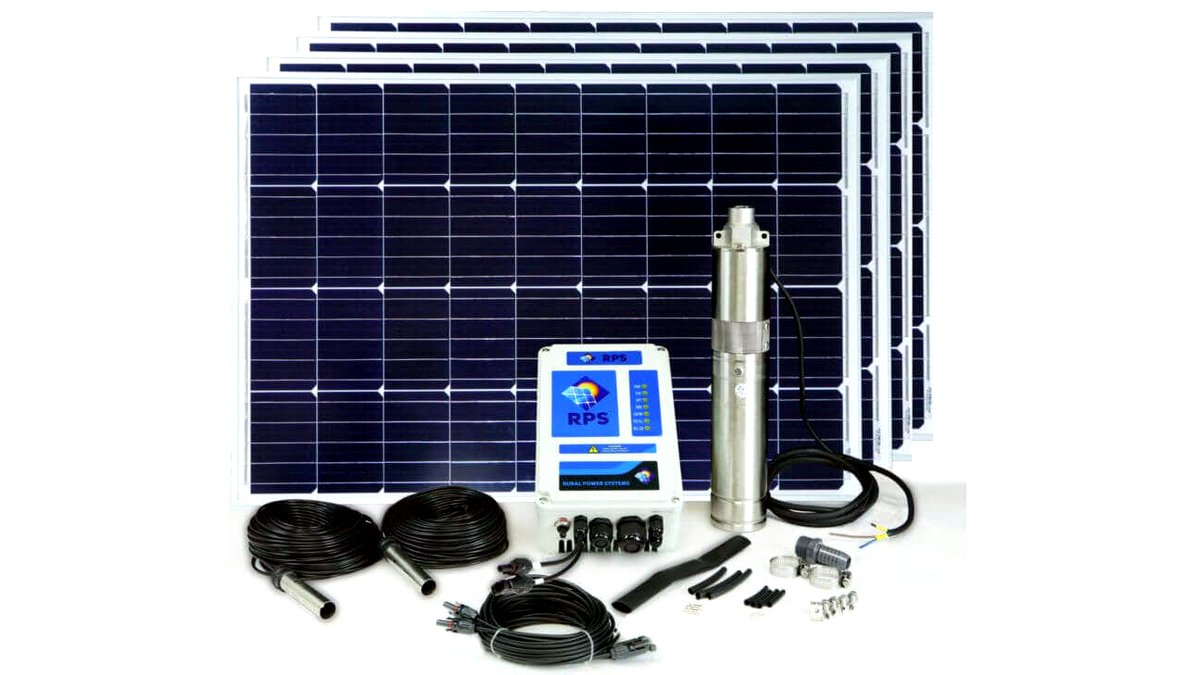
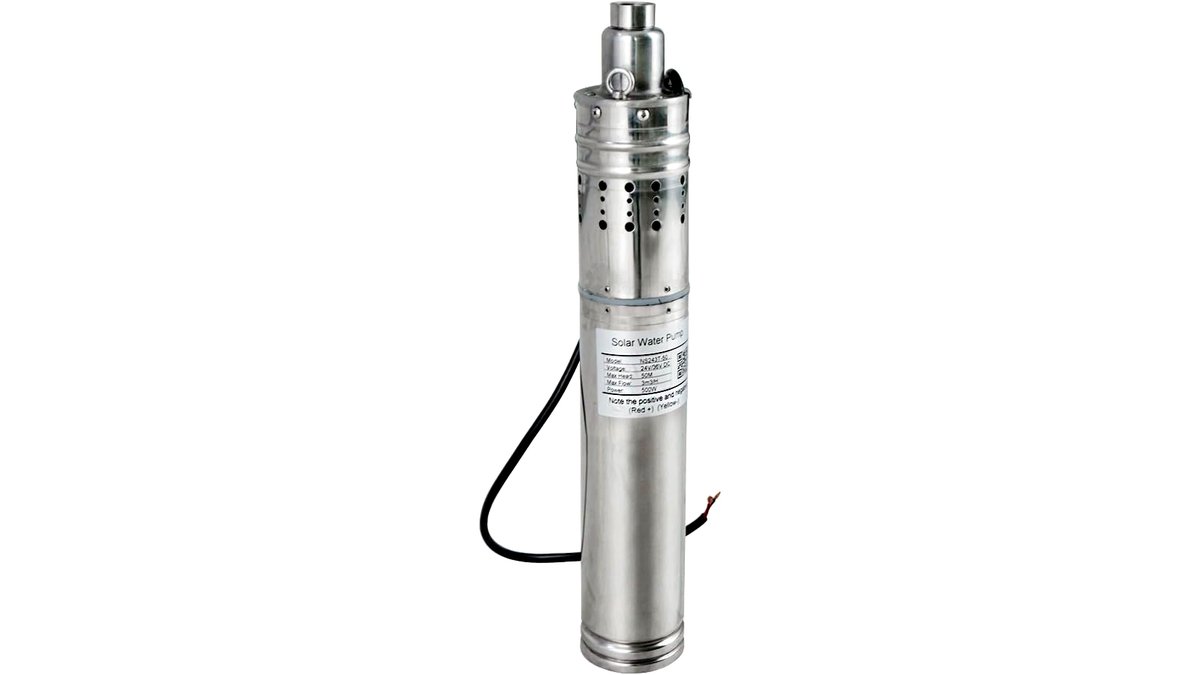
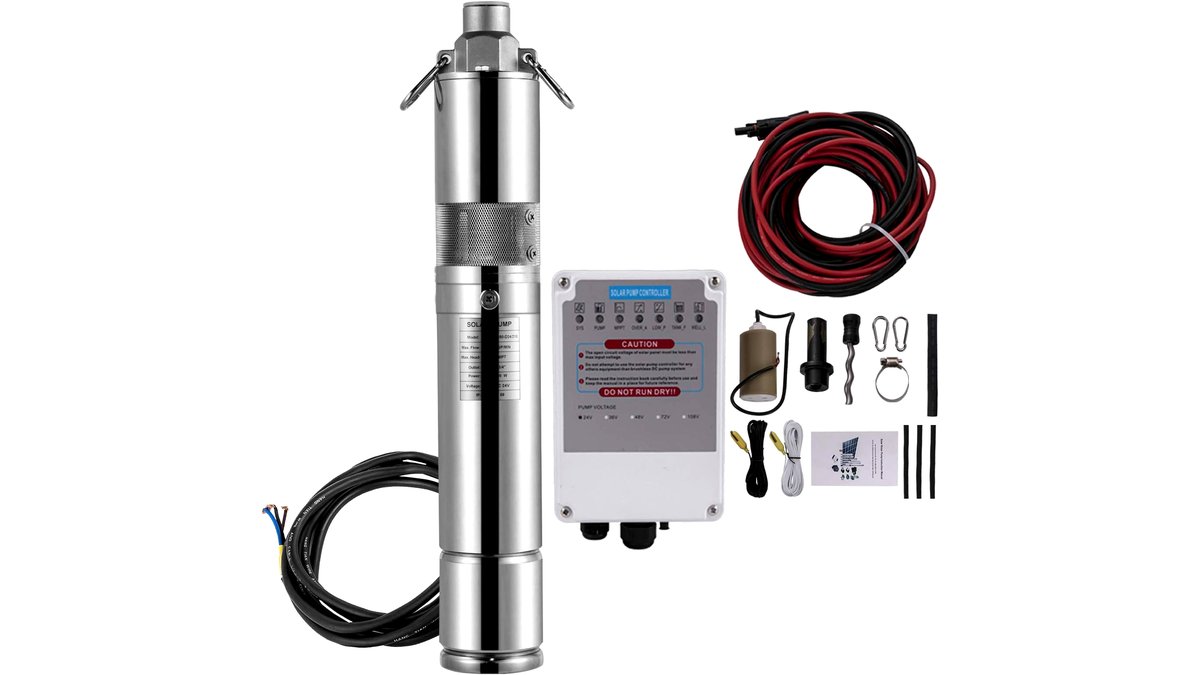
A solar well pump kit typically bundles a DC (or sometimes AC with an inverter) pump, one or more solar panels, mounting hardware, and a length of wiring with connectors; some kits add a controller that manages power from the panels to the pump and, in some designs, basic dry-run protection. Submersible kits lower the pump itself into the well casing below the water line, pushing water up and out, which suits deeper wells. Surface kits sit above ground and pull water through a suction line, which only works efficiently for shallow lift distances, generally well under the depths a submersible pump can handle.
Because solar output varies with sunlight, most kits either run directly off the panels during daylight (filling a storage tank for use anytime) or pair with a battery bank for operation after dark; check which setup a given kit is actually designed around before buying, since not every kit configuration supports battery operation out of the box.
What to Look For Before Buying
- Total dynamic head (lift distance): This is the vertical distance water must travel from the pump to its discharge point, plus friction losses in piping; manufacturers publish a maximum head figure for each pump, and your well’s water level plus elevation to the storage point must fall within that rating.
- Flow rate at your actual head: Pump flow rate (commonly listed in gallons per hour or per minute) typically drops as head increases; look for the maker’s flow-vs-head chart rather than just the headline maximum flow number, which is usually measured at minimal lift.
- Panel wattage and pump voltage match: Confirm the included or specified panels supply enough wattage and voltage for the pump’s rated input; some kits are sold as matched sets, while others require you to size panels separately.
- Submersible vs surface design: Submersible pumps suit wells with the water table well below ground; surface pumps suit shallow wells, cisterns, or above-ground transfer tasks.
- Well casing diameter fit: Submersible pumps must fit inside your well casing with clearance; check the pump’s outer diameter against your casing’s inner diameter before ordering.
- Controller and dry-run protection: Running a pump dry can damage it; check whether the kit’s controller includes low-water or dry-run protection, or whether you’ll need to add a separate float switch or water-level sensor.
- Storage tank vs battery backup: Decide whether you’ll store pumped water in a tank for anytime use (simpler, no batteries) or add a battery bank for pumping on demand after sunset (more complex, higher cost).
At a Glance: Solar Well Pump Kit Types
| Type | Best For | Key Stated Specs | Limits |
|---|---|---|---|
| Submersible DC solar well pump kit | Deep wells, livestock watering, remote off-grid cabins | Maker-stated max head often in the hundreds of feet range on larger kits; flow rate drops significantly at higher head | Higher cost; requires correct casing diameter fit; installation more involved |
| Surface solar pump kit | Shallow wells, cisterns, ponds, above-ground transfer | Lower max head/suction lift than submersible designs; often simpler plug-and-play setup | Not suitable for deep wells; suction lift limited versus submersible push |
| Direct-drive (no battery) kit | Filling a storage tank during daylight for use anytime | Pump runs only while panels receive adequate sunlight; simpler, fewer components | No pumping after dark or in heavy cloud cover without a tank buffer |
| Battery-backed kit | On-demand pumping needed regardless of sunlight or time of day | Includes or supports a battery bank and charge controller | Higher upfront cost and more components to maintain; battery has its own service life |
Pick X If…
| Choose This | If You… |
|---|---|
| Submersible DC kit | Have a deep well and water table well below ground level |
| Surface pump kit | Are pumping from a shallow well, cistern, or pond near the surface |
| Direct-drive kit with storage tank | Can rely on a tank to buffer water for use at any hour |
| Battery-backed kit | Need water on demand at night or during extended cloudy periods |
Sizing and Installation Notes
Before buying, measure or obtain your well’s static water level and drawdown level, plus the vertical and horizontal distance to wherever the water will be used or stored; add these together with an allowance for pipe friction to estimate total dynamic head. Compare that figure against each candidate pump’s flow-at-head chart rather than its single best-case flow number, since a pump can be rated for a given max head but deliver only a trickle at that extreme. Well casing diameter, typically 4 or 6 inches in residential wells but variable, must also clear the submersible pump’s outer diameter with room for the safety cable and wiring.
Panel placement matters for consistent output: panels need unobstructed southern (in the northern hemisphere) sun exposure for most of the day, and shading from trees or structures can meaningfully cut daily pumping volume. For off-grid livestock or irrigation setups, many installers pair the pump with a storage tank sized for at least a day or two of use, which smooths out day-to-day sunlight variation without needing a battery bank.
Alternatives Worth Considering
- AC well pump with a separate solar inverter setup: Lets you reuse an existing AC pump already installed in the well, though it adds inverter cost and complexity compared with a purpose-built DC solar kit.
- Grid-tied well pump with a generator backup: A more traditional option if grid power is available or nearly available, trading the solar kit’s off-grid independence for simpler year-round reliability.
- Wind-powered well pump: Worth considering in consistently windy, low-sun locations as a complement to or substitute for solar, though it is a different mechanical system entirely.
Frequently Asked Questions
How deep can a solar well pump kit actually pump water from?
This varies widely by pump model and panel wattage; some submersible kits are maker-rated for a few hundred feet of total head, while basic surface kits are limited to a few dozen feet of suction lift at most. Always check the specific pump’s flow-vs-head chart against your well’s actual water level rather than relying on a general depth claim.
Do solar well pump kits work on cloudy days?
Direct-drive kits without battery backup will produce reduced flow or stop entirely during heavy cloud cover, since output depends on real-time sunlight reaching the panels. A storage tank sized for a day or two of typical use, or a battery-backed kit, helps smooth over short periods of reduced sunlight.
Can I use a solar well pump kit for household drinking water?
Many solar pump kits are marketed primarily for livestock, irrigation, or non-potable transfer, so check the manufacturer’s stated intended use and materials before using one for drinking water. If potable use is the goal, confirm the pump’s wetted materials and any relevant water-contact certification with the maker, and consider having well water tested regardless of pump type.
What size solar panel do I need for a given pump?
Panel sizing depends on the pump’s rated voltage and wattage input, plus some safety margin for less-than-ideal sun angles and partial cloud cover; many kits are sold pre-matched, which removes the guesswork. If buying panels separately, follow the pump manufacturer’s recommended panel wattage range rather than estimating from unrelated solar sizing rules.
How do I protect a solar well pump from running dry?
Dry-running can damage many pump designs, so check whether your kit’s controller includes built-in low-water or dry-run protection; if not, a separate float switch or water-level sensor in the well can shut the pump off before it runs without water. Manufacturer installation guides typically detail recommended protection methods for their specific pump.
Do solar well pump kits need regular maintenance?
Submersible pumps generally need periodic inspection for wear, especially in sandy or sediment-heavy wells, while panels need occasional cleaning to maintain output and connections should be checked for corrosion. Follow the specific manufacturer’s maintenance schedule in the product manual, since service intervals vary by pump design and water conditions.