Key takeaways
- Confirm the required ampacity for your specific run length and voltage drop tolerance using the cable maker’s ampacity chart; 3/0 is a large gauge chosen for high-current runs, and using it does not automatically mean any length or load is safe without checking voltage drop over distance.
- Lugs, terminals, and crimping tools must be rated for 3/0 AWG specifically; a lug sized for a smaller gauge will not seat properly and can create a dangerous loose or high-resistance connection.
- Pre-made cables with lugs already attached need their lug size and bolt-hole diameter checked against the terminal they will connect to, such as a battery post, inverter lug, or bus bar.
- Fixed building wiring applications are governed by the National Electrical Code or local equivalent; this guide does not substitute for a licensed electrician’s determination of correct wire type, conduit, and installation method for permanent structures.
A buyer wiring a high-draw battery bank, inverter, or winch setup should look at flexible fine-stranded 3/0 AWG copper welding or battery cable, someone doing a marine installation should prioritize tinned-copper 3/0 cable rated for wet environments, and anyone working on fixed building wiring should treat 3/0 as a job for a licensed electrician using code-rated building wire rather than a general cable purchase, since permanent electrical installations are governed by local code in ways a buying guide cannot substitute for.
As an Amazon Associate, we earn from qualifying purchases made through links on this page.
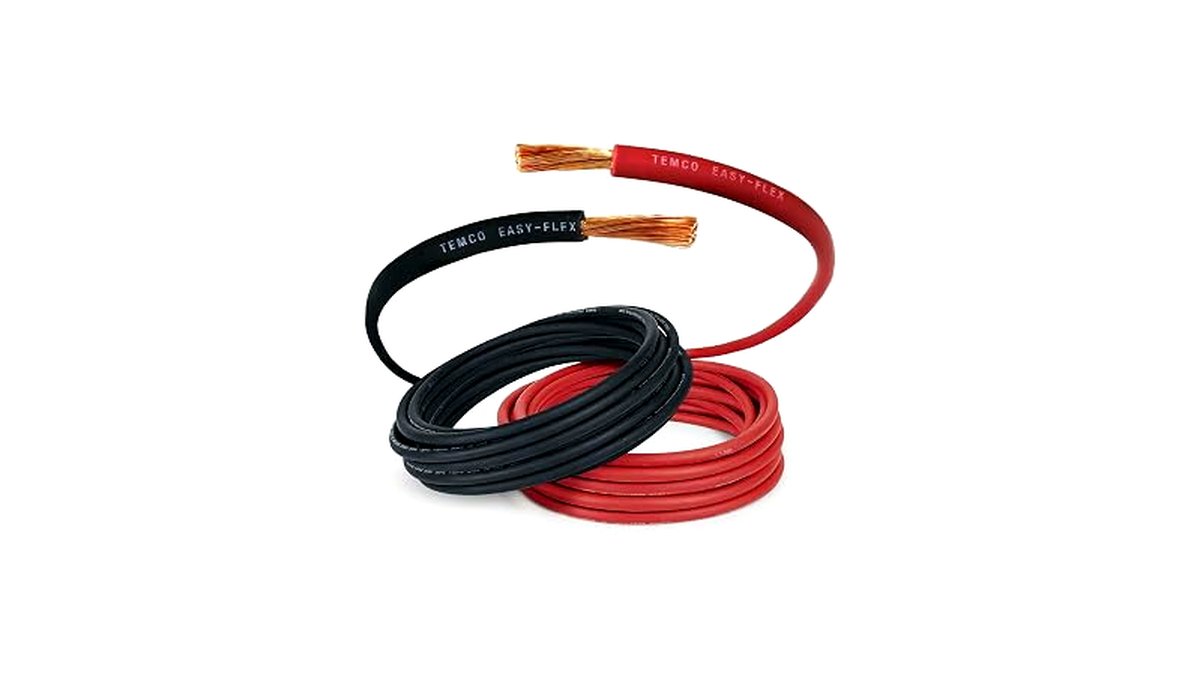
3/0 AWG, read as “three-aught,” is a heavy-gauge copper conductor size used where large amounts of current need to move over a cable run, commonly in solar and battery bank wiring, winch and off-road vehicle power runs, marine electrical systems, welding leads, and some high-amperage automotive or RV installations. At this gauge, the practical differences between products come down to stranding, insulation type and temperature rating, and whether the copper is bare or tinned, rather than the gauge number itself, which is standardized.
Quick picks at a glance
| Cable type | Best for | Key stated specs | Limits |
|---|---|---|---|
| Fine-stranded flexible battery/welding cable | Battery banks, inverters, winches, high-flex routing | Highly flexible fine copper strands, rubber or EPDM insulation rated for flexing | Not code-rated for fixed in-wall building wiring in most jurisdictions |
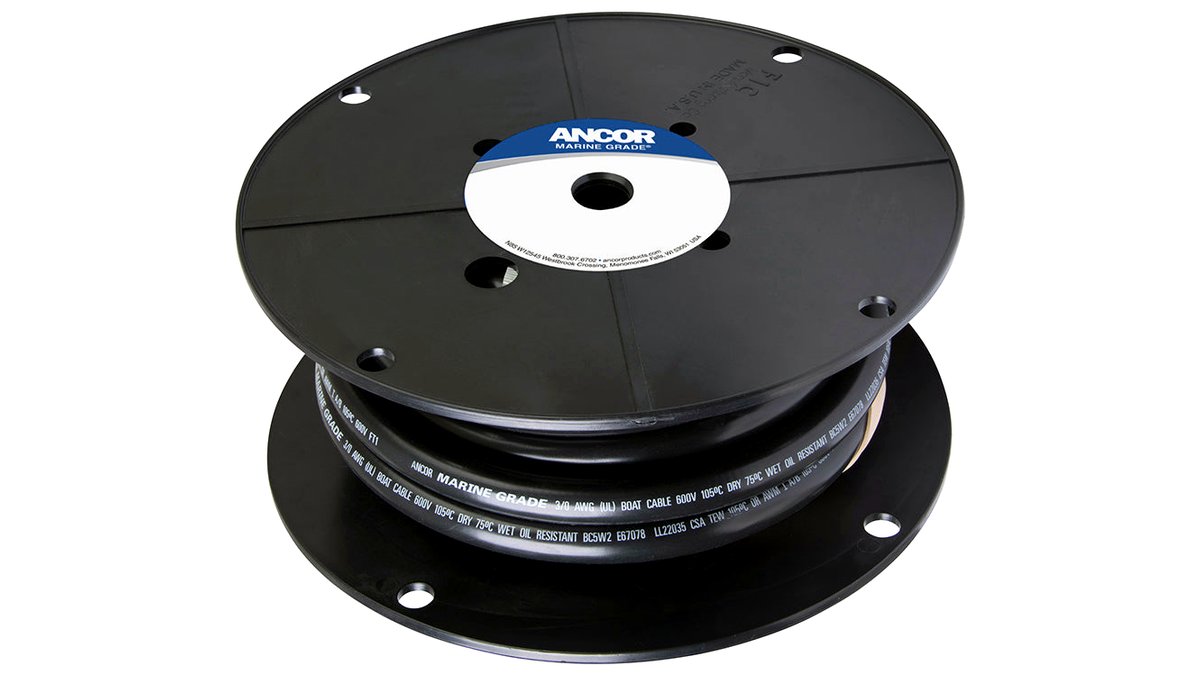
| Tinned-copper marine-grade cable | Boats and other wet or salt-exposure environments | Tinned strands for corrosion resistance, marine-rated insulation | Generally costs more than bare copper equivalents |
| THHN/THWN-style building wire | Fixed building electrical runs installed per code | Solid or stranded conductor, code-rated insulation and temperature rating | Less flexible than welding cable; installation governed by electrical code |
| Pre-made battery cable with lugs | Buyers who want a ready-to-install cable without separate crimping | Cable pre-cut to length with lugs attached | Fixed length and lug size; less flexible for custom runs |
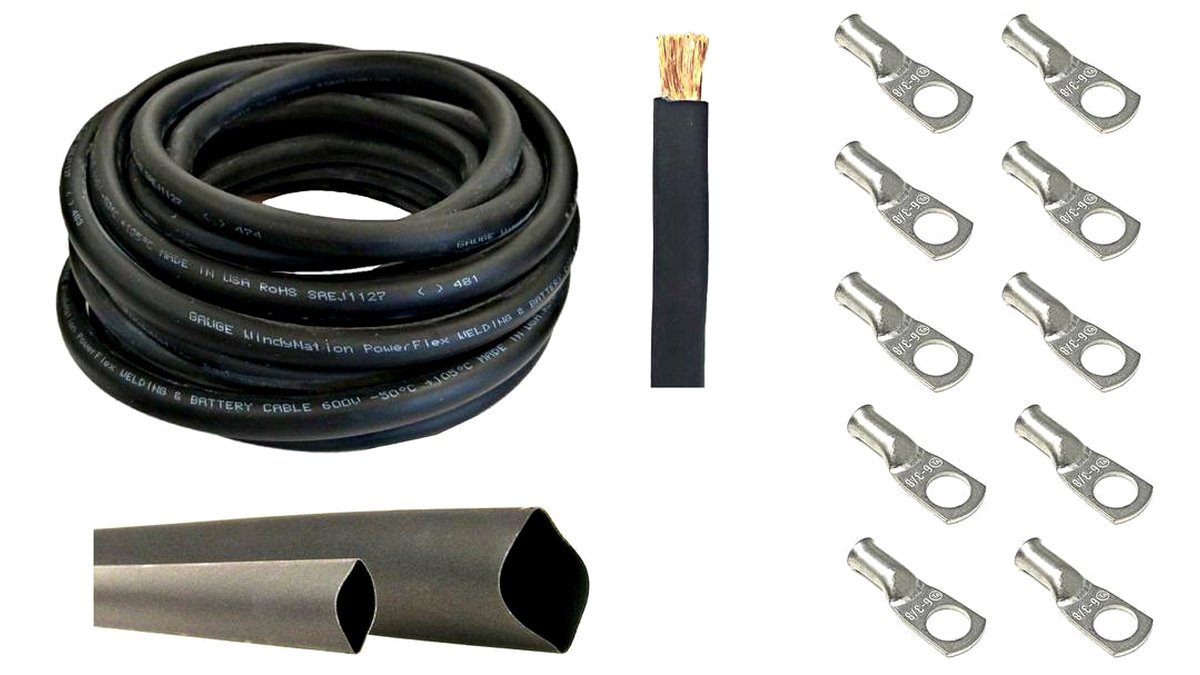
| Bulk cable sold by length with separate lugs | Custom installations needing specific run lengths | Cable sold by the foot, lugs and heat-shrink bought separately | Requires proper crimping tools and technique |
Why stranding and insulation matter more than the gauge number
Once 3/0 AWG is established as the right size for a given amperage and run length, the real buying decision is about stranding and insulation. Fine-stranded cable, often marketed as welding or battery cable, is built from many thin copper strands and stays flexible even at this large gauge, which matters for routing through tight engine bays, battery compartments, or around vehicle frames. Coarser-stranded or solid building wire in the same gauge is stiffer and intended for fixed runs rather than repeated flexing. Insulation type and temperature rating also vary: cable rated for a higher temperature generally tolerates more sustained current for a given size, and the maker’s data sheet states the rated ampacity at specific temperature and bundling conditions, which should be checked against the actual installation rather than assumed from gauge alone.
Bare copper versus tinned copper
Bare copper strands conduct slightly better and typically cost less, but they corrode when exposed to moisture, salt air, or humidity over time, which can increase resistance at connections and, in marine or outdoor environments, shorten cable life. Tinned copper has a thin protective coating on each strand that resists corrosion substantially better, which is why marine electrical codes and most boat builders specify tinned cable for onboard wiring. Buyers installing in a dry, climate-controlled space can reasonably choose bare copper for the cost savings, while anyone working near water, salt air, or high humidity should budget for tinned cable instead.
Fit and compatibility notes
- Confirm the required ampacity for your specific run length and voltage drop tolerance using the cable maker’s ampacity chart; 3/0 is a large gauge chosen for high-current runs, and using it does not automatically mean any length or load is safe without checking voltage drop over distance.
- Lugs, terminals, and crimping tools must be rated for 3/0 AWG specifically; a lug sized for a smaller gauge will not seat properly and can create a dangerous loose or high-resistance connection.
- Pre-made cables with lugs already attached need their lug size and bolt-hole diameter checked against the terminal they will connect to, such as a battery post, inverter lug, or bus bar.
- Fixed building wiring applications are governed by the National Electrical Code or local equivalent; this guide does not substitute for a licensed electrician’s determination of correct wire type, conduit, and installation method for permanent structures.
Pick this if…
| Situation | Recommended option |
|---|---|
| Battery bank, inverter, or winch wiring needing flexibility | Fine-stranded flexible battery/welding cable |
| Boat or other salt-air or wet-environment installation | Tinned-copper marine-grade cable |
| Fixed building electrical run under code | THHN/THWN-style building wire, installed by a licensed electrician |
| Want a ready-to-install cable without crimping tools | Pre-made battery cable with lugs already attached |
| Custom run length or specific lug requirements | Bulk cable sold by length with separate lugs and proper crimping tools |
Alternatives worth considering
Buyers whose calculated amperage and run length actually call for a different gauge should not default to 3/0 just because it is a common size discussed online; stepping up to 4/0 AWG or down to 1/0 or 2 AWG may be the correct choice depending on the specific load and distance, and a voltage drop calculator using the actual run length and current is the right way to confirm this before buying. For welding specifically, cable marketed explicitly for that use typically has insulation rated for the flexing and heat exposure welding leads see, and is generally preferable to generic battery cable even at the same gauge. Buyers unsure whether they need 3/0 at all should recalculate their load and run length first, since oversizing wastes money and undersizing creates a safety risk.
Electrical safety notes
Cable of this gauge carries enough current to cause serious injury, fire, or equipment damage if installed incorrectly, so connections should always be properly crimped or terminated, fused or breaker-protected appropriately for the circuit, and installed following the equipment manufacturer’s manual. Any fixed building wiring use should be reviewed against the National Electrical Code or local equivalent and, in most jurisdictions, performed or inspected by a licensed electrician. Buyers working on vehicle, marine, or off-grid battery systems who are unsure about fusing, grounding, or ampacity calculations should consult the equipment manufacturer’s documentation or a qualified installer rather than relying solely on general cable sizing charts found online.
Frequently Asked Questions
What is 3/0 AWG copper cable typically used for?
It is commonly used for high-current applications such as battery bank interconnects, inverter wiring, winch power runs, marine electrical systems, and welding leads. The specific use determines whether flexible welding-style cable, tinned marine cable, or code-rated building wire is the right choice.
Do I need tinned copper, or is bare copper fine?
Bare copper is generally fine for dry, climate-controlled installations and costs less. Tinned copper resists corrosion significantly better and is the standard choice for marine environments or any installation exposed to moisture, salt air, or high humidity.
Can I use welding cable for my home’s electrical wiring?
Generally no; welding and battery cable is typically not rated or listed for fixed building wiring under most electrical codes. Permanent structure wiring should use code-rated building wire such as THHN/THWN and be installed per the National Electrical Code or local equivalent, ideally by a licensed electrician.
How do I know if 3/0 AWG is the right size for my project?
The correct gauge depends on the total current draw, the one-way cable run length, and an acceptable voltage drop percentage, which are combined using a voltage drop calculator or the cable maker’s ampacity chart. Gauge should never be chosen by guesswork or by matching whatever size is most commonly discussed for a similar-sounding project.
What tools do I need to terminate 3/0 AWG cable myself?
A crimping tool rated for this gauge and the specific lug size, along with properly sized lugs and heat-shrink tubing, are the minimum requirements for a safe termination. Hand crimpers rated for smaller gauges will not produce a reliable connection at 3/0, and a poor crimp is a common cause of overheating at connection points.
Is pre-made cable with lugs better than buying bulk cable and crimping it myself?
Pre-made cable is more convenient and removes the need for crimping tools, but it only works if the length and lug size happen to match your installation exactly. Bulk cable with separately purchased lugs gives more flexibility for custom runs but requires the right crimping tool and some technique to terminate safely.