Key takeaways
- Compare the best collapsible backdrops for portraits and video, from 5x7 twist-fold panels and chroma screens to large pull-ups and a compact travel disc.
A collapsible backdrop solves the oldest problem in small-space photography: how to get a clean, controlled background without a permanent studio wall. These panels open in seconds, lean against a wall or hang from a stand, and fold back down into a flat disc that slides behind a sofa or into a car boot. For portrait photographers working in clients’ homes and video creators filming in spare rooms, that combination of speed and storage is hard to beat.
The category splits into a few clear families. Twist-fold panels in the 5×7 ft class are the mainstream choice, chroma blue and green panels serve anyone who keys backgrounds in software, pull-up screens trade portability for width, and printed texture panels imitate painted studio walls. The five picks below cover each family with a real, currently listed product, plus a compact travel option for video calls.
As an Amazon Associate, we earn from qualifying purchases.
Quick answer
For most portrait and video work, a 5×7 ft double-sided twist-fold panel is the sweet spot: big enough for headshots and three-quarter framing, small enough to store as a flat disc. Pick chroma blue and green if you key backgrounds in software, a printed texture panel for painted-style portraits, and a pull-up screen or chair-mounted disc when width or travel matters more than pack size.
Koopro 5×7 Collapsible Twist Background: the mainstream double-sided pick

Specs
- 5 x 7 ft open; black on one side, white on the other; photographic cloth stretched over a spring steel frame; twist-folds into a compact disc; zippered carry case and hanging loops included.
This is the template most collapsible backdrops follow, and it earns the lead spot by keeping things simple. The white side handles high-key headshots, product cutouts and bright interview setups, while the black side drops the background into shadow for low-key portraits and negative fill. Because the cloth is held under tension by the steel rim, the surface opens flatter than a draped muslin sheet, with none of the center seam or sag that fabric on a crossbar tends to show.
It suits portrait photographers who shoot in homes and offices, acting and audition self-tapes, and anyone who needs two neutral looks from one panel. Lean it against a wall for seated work, or clip it to a light stand for standing shots. The honest limitation is geometry: five feet of width covers one seated or standing subject comfortably, but full-length shots of a tall subject leave little margin at the edges, and the panel is not freestanding, so it always needs a wall, stand or clamp behind it.
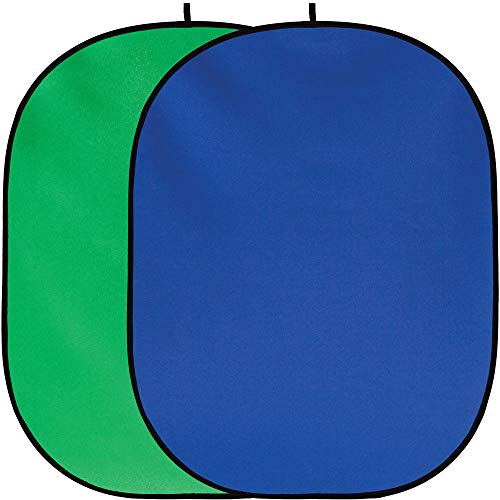
Fancierstudio RE2010 BG: the chroma blue and green panel
Specs
- 5 x 7 ft open; chroma green on one side, chroma blue on the other; spring steel twist-fold frame; about 4.8 lb; zippered carry bag and hanging loop included.
Chroma keying lives or dies on having the right key color behind your subject, and this panel carries both standard options. Green is the usual default for digital cameras, but a subject wearing green, or a product with green packaging, forces a switch to blue, and flipping the panel takes seconds. The matte cloth surface avoids the hot spots that glossy vinyl screens can throw back at the camera, which keeps keys cleaner at the edges of hair and shoulders.
It suits streamers, online tutors, video podcasters and photographers who cut subjects out for composite work. The honest limitation is scope: saturated green and blue are working colors, not portrait backgrounds, so this panel does nothing for a natural-looking headshot. Clean keys also demand even light across the whole surface, and any wrinkle shadow or uneven patch shows up as noise in the key, so lighting discipline matters more here than with any other pick.
RAUBAY Wider Collapsible White Backdrop Screen: the large-format option

Specs
- 78.7 in wide x 82.7 in high open, roughly 6.6 x 6.9 ft; wipeable PVC fabric surface; pneumatic X-frame with auto-locking height; aluminum alloy base case; about 22 lb, with the case running about 81.5 in long.
Every other pick here twists into a disc; this one takes the opposite route to the same problem. The screen pulls up out of its floor-standing case and locks at height, which delivers two things twist-fold panels cannot: genuine width for two-person framing, and a self-supporting setup that needs no wall or stand. The white PVC surface shrugs off scuffs and wipes clean, a real advantage for a screen that lives on the floor of a busy room.
It suits video creators filming seated pairs, teachers and presenters who want a permanent-feeling white wall that can still be packed away, and product demonstrators who need width. The honest limitation is portability: at about 22 lb in a case longer than most car boots are wide, this is a move-it-occasionally screen rather than a travel companion. It is also a single white surface, so there is no second color waiting on the reverse.
Kate 5×6.5 ft Collapsible Backdrop: the printed texture panel

Specs
- 5 x 6.5 ft (1.5 x 2 m) open; reversible printed design with a grey texture on one side and a blue texture on the other; microfiber surface; pop-up spring frame; folds down into a round carry case.
Solid colors are not always the goal. This panel prints a soft, mottled texture on both faces, imitating the painted canvas walls that portrait studios traditionally use, so headshots gain depth and a finished, deliberate look straight out of camera. The grey side reads as a neutral studio wall, while the blue side leans cooler and more formal, a useful pairing for corporate headshots one day and creative portraits the next. The microfiber face keeps reflections low and even.
It suits headshot and portrait photographers who want a painted-backdrop look without owning a wall, plus self-tape and video-meeting users who prefer a textured background to a flat color. The honest limitation is that the printed pattern is fixed at one scale: it convinces at headshot and half-body distances, but step back for full-length framing and the texture reads as what it is, a print sized for closer work. Printed tones can also shift slightly under different light sources, so a custom white balance is worth setting.
Webaround Big Shot 56-inch: the compact travel disc

Specs
- 56-inch diameter disc; solid blue wrinkle-resistant fabric; about 1.8 lb; straps to the back of a chair with an integrated stabilizer; folds into the included storage bag.
The smallest option here abandons the studio entirely. The Big Shot straps onto a chair back and opens into a round screen that fills the frame behind a seated person, which is all a video call, webinar or talking-head recording actually needs. At under two pounds, folded into its bag, it disappears into a carry-on or laptop bag in a way no 5×7 ft panel can match, and setup is measured in seconds rather than minutes.
It suits remote workers, traveling presenters, online teachers and anyone whose office is wherever they happen to be sitting. The honest limitation is coverage: 56 inches frames a head and shoulders and nothing more, so it cannot substitute for a photography backdrop, and it depends on a suitable chair back to mount to. The blue version listed here gives a plain professional field; it is a background, not a chroma tool, unless you choose the green variant instead.
How to choose
Begin with framing, because size decides more than any other factor. A 5×7 ft panel used vertically covers headshots and three-quarter portraits of one person; turn it sideways and it handles a seated pair at a desk, but full-body work with room to spare calls for the 6×7 ft class or a pull-up screen. Remember that the usable area is smaller than the headline size, since oval panels have rounded corners and you need margin between the subject and the panel edge.
Double-sided designs are the quiet bargain of this category. Two surfaces in one panel means two looks with no extra storage cost: black and white for neutral work, blue and green for keying, or two textures for portraits. A single-sided screen only makes sense when its size or mechanism is the whole point, as with the pull-up pick above.
Material shapes daily handling. Muslin and cotton cloth panels hang softly and photograph with a gentle, forgiving texture, but they crease in storage and those creases need steaming out before a shoot. Printed polyester and microfiber panels resist wrinkles far better and wipe clean, though a print is locked to one pattern and one scale forever. PVC pull-up screens are the toughest and easiest to clean, at the cost of weight.
Finally, respect the fold. Twist-fold panels collapse to roughly a third of their open size, landing as a disc around two feet across that stores almost anywhere, but the folding motion is a learned skill involving a firm twist and some confidence, and beginners often wrestle the first few attempts. Check the folded disc diameter against your storage spot and car before buying, and practice the fold at home rather than in front of a client.
Who should skip
Skip collapsible backdrops if you regularly shoot groups of three or more, full-length fashion, or anything that needs a seamless sweep onto the floor; a wide paper roll or a large fabric backdrop on a proper support system covers those jobs better. Skip them, too, if you need a background that stands entirely on its own in the middle of a room with nothing behind it, since most panels lean, hang or clamp rather than stand. And if your work is a fixed studio corner that never moves, a painted wall or a mounted paper roll gives a larger, cheaper surface with no folding at all.
Frequently Asked Questions
Can a 5×7 ft collapsible backdrop handle full-body portraits?
Only just, and only for shorter subjects shot carefully. The panel covers the height, but there is little margin at the sides or above the head once the subject steps away from the panel to avoid shadows, and the rounded corners narrow the usable area further. For reliable full-length work, choose the 6×7 ft class or larger.
How do you fold a twist-fold backdrop without damaging it?
Hold the panel vertically, grip two opposite sides, and twist one hand over the other so the frame buckles into overlapping loops, then let it settle into the carry case. The motion feels wrong the first time and easy by the fifth. Forcing the frame against its natural flex is what bends rims, so follow the maker’s folding diagram for your specific panel.
Do collapsible backdrops need a stand?
Most do not strictly need one. Panels lean against walls, hang from door tops or picture hooks using their loops, or clamp to a light stand with inexpensive spring clamps. A stand earns its keep outdoors, in open rooms with no wall behind the subject, and whenever the panel must sit at a precise distance from the subject.
How should collapsible backdrops be cleaned and stored?
Spot clean cloth and microfiber panels with a damp cloth and mild detergent, and let them dry fully before folding. Steam, rather than iron, to release storage creases on fabric panels, keeping the steamer moving so heat does not sit on printed surfaces. Store every panel folded in its case, away from damp, so the steel rim stays free of corrosion.
Final verdict
For most buyers, the Koopro 5×7 twist-fold panel is the right first collapsible backdrop: two neutral surfaces, a flat tensioned cloth, and storage that amounts to a flat disc. Add the Fancierstudio panel when keying becomes part of the workflow, choose the Kate when portraits deserve a textured, painted look, and look to the RAUBAY when width and a self-supporting screen matter most. The Webaround fills the remaining gap, a backdrop that travels in a laptop bag and turns any chair into a presentable video set.
Product and ASIN Reference
| Product | ASIN |
|---|---|
| Koopro 5×7 Collapsible Twist Background, Black and White | B091GRK2WH |
| Fancierstudio RE2010 BG 5×7 Chroma-Key Backdrop, Blue and Green | B00JSAOGWG |
| RAUBAY Wider Collapsible White Backdrop Screen, 78.7 x 82.7 in | B0B5CCHRPN |
| Kate 5×6.5 ft Collapsible Backdrop, Grey Blue Texture | B08HRTLKYJ |
| Webaround Big Shot 56 in Webcam Backdrop, Blue | B07KDYSHBG |