Key takeaways
- Find the best LED panel lights for studio portraits and video, from bi-color workhorses to RGB color panels and on-camera lights that travel anywhere.
A flat LED panel is the most forgiving light a photographer or video creator can own. Unlike a hard point source that throws sharp shadows across a face, a panel spreads its output over a broad surface, so skin tones stay smooth and the falloff from highlight to shadow feels natural. That soft quality makes panels the default choice for portraits, talking-head video, and product shots.
The differences between models matter more than the marketing suggests. A bi-color panel that shifts from warm tungsten to cool daylight replaces two lights and a stack of gels. An RGB panel adds full color for creative backgrounds and accent work. A pocket-sized panel rides on a camera hot shoe and turns a dim room into a usable set. The five panels below cover those jobs, each one chosen for a distinct role and verified against a real Amazon listing.
As an Amazon Associate, we earn from qualifying purchases.
Quick answer
The Neewer 660 LED Video Light is the best LED panel light for most studio and portrait work, with 660 bi-color LEDs, a 3200 to 5600K range, and a CRI of 96 or higher in a durable metal frame. Creators who want color effects should look at the Neewer 660 PRO RGB, while the Ulanzi VL49 RGB is the pocket pick for on-camera fill.
Neewer 660 LED Video Light

Specs
- 660 LED beads (330 white, 330 yellow); color temperature 3200-5600K; CRI 96+; dimmable output; metal frame; U bracket and barndoor included; AC adapter or NP-F battery power.
The Neewer 660 is the reference bi-color panel for home studios. Six hundred and sixty LEDs behind a diffuser produce a broad, even field of light that flatters faces without a softbox. The bi-color range runs from 3200K, warm enough to match household lamps and evening window light, up to 5600K daylight, so the same panel works for a golden-hour portrait and a neutral product shot. Dimming is smooth across the full range, which helps when balancing a key light against changing window light.
Color accuracy is where this panel earns its place at the top. A CRI of 96 or higher means skin tones render close to how they look under natural light, with none of the green or magenta cast that cheaper panels introduce. That accuracy saves time after a shoot, because white balance corrections stay small.
Build quality suits daily studio use. The metal frame resists the knocks that come with moving a light between stands, and the included U bracket mounts to a standard light stand while the barndoor shapes the beam and keeps spill off a background. Power comes from the included AC adapter for studio sessions, or from NP-F batteries for location work, though the batteries are sold separately. The panel has no fan, so it runs silent during video recording.
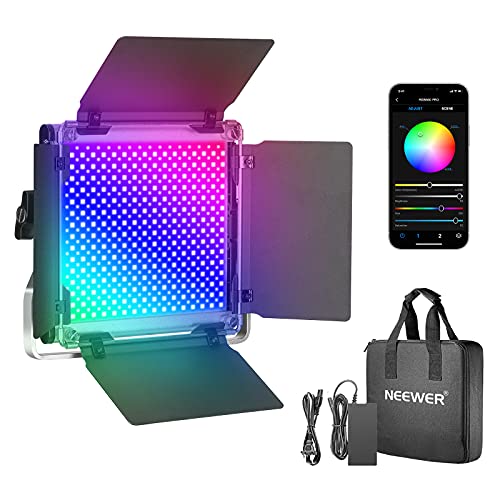
Neewer 660 PRO RGB LED Video Light
Specs
- 50W output; 360-degree full color; color temperature 3200-5600K; CRI 97+; app control; LCD screen; U bracket and barndoor included; AC adapter or NP-F battery power.
The 660 PRO RGB takes the same 660-bead panel format and adds full-color output, turning a workhorse key light into a creative tool. The full color range covers the complete color wheel, so the panel can wash a background in deep blue or add a warm amber rim. The companion app adjusts color, brightness, and temperature from a phone, which is useful when the light hangs high on a stand.
Color accuracy stays high even with the color features added. A CRI of 97 or higher applies to the white-light modes, so the panel still works as a conventional key light for portraits when the color effects stay off. The 50W output gives it more punch than the standard bi-color 660, which helps when the panel competes with daylight from a window. The LCD screen on the rear shows brightness, temperature, and color settings at a glance.
App control is the feature that separates this panel from simpler RGB lights. Adjusting color from across the room avoids walking into the frame during a video take, and saving favorite colors as presets speeds up repeat setups. This panel fits creators who want one light to cover both white light and color. It costs more than the bi-color model, and the color features add complexity that pure portrait photographers may never use.
Ulanzi VL49 RGB Video Light
Specs
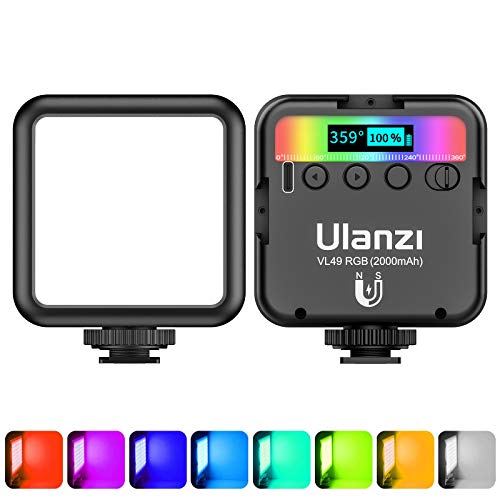
- 2000mAh rechargeable battery; color temperature 2500-9000K; CRI 95+; 360-degree full color; three cold shoe mounts; magnetic back; USB-C charging; pocket-sized panel.
The Ulanzi VL49 RGB is the smallest panel in this guide, and its size is the point. Roughly the size of a credit card, it mounts on a camera hot shoe and turns a camera into a self-contained rig for vlogging and fill light in tight spaces. The 2000mAh battery charges over USB-C and runs the panel without cables.
Despite its size, the VL49 RGB covers a wide creative range. The color temperature spans 2500K to 9000K, wider than the studio panels here, and the full RGB color wheel adds accent lighting for backgrounds and small subjects. A CRI of 95 or higher keeps skin tones believable at close range. Three cold shoe mounts let it stack with a microphone or a second VL49, and the magnetic back sticks to metal surfaces for improvised mounting.
Brightness is the honest limitation. A pocket panel cannot compete with a 50W studio light, so the VL49 RGB works best within arm’s reach of the subject: as a face fill for a vlogger, a catchlight for a portrait, or a small accent on a product. Beyond that distance, pair it with a larger key light. Battery life shortens at full brightness, so carrying a power bank on longer shoots is sensible. This is the panel for creators who shoot on the move. It lives in a camera bag without adding noticeable weight and mounts in seconds.
Neewer 660 LED Video Light 2-Pack Kit

Specs
- Two 660 LED panels; 3200-5600K bi-color; CRI 96+; dimmable output; U brackets and barndoors; two 75-inch light stands; AC adapters; carrying cases.
A two-light kit changes what a small studio can do. With two panels, a photographer can run a key and a fill, light a subject and a background separately, or set up a simple three-point arrangement with a third light borrowed from elsewhere in the kit. The Neewer 660 two-pack bundles that capability with two panels, two stands, and carrying cases.
Each panel matches the single 660 in output and color quality: 660 bi-color LEDs, a 3200 to 5600K range, and a CRI of 96 or higher. The included 75-inch stands raise the lights above head height for a flattering downward angle, and the U brackets and barndoors shape each beam independently. Two matched panels also keep color consistent, because both share the same temperature scale and CRI.
The kit format suits photographers who are building a studio from nothing, and video creators who need a repeatable two-light interview setup. The main trade-off is size: two panels, two stands, and two cases take up real space in a car and in a small room, and setup takes longer than a single light. Buy this kit when the plan calls for two lights from the start. It costs less than buying two panels and two stands separately.
Neewer 480 LED Video Light 2-Pack Kit

Specs
- Two 480 LED panels (240 white, 240 yellow per panel); color temperature 3200-5600K; CRI 96+; dimmable output; U brackets; two 75-inch tripod stands; AC adapters; carrying cases.
The Neewer 480 kit is the budget route into two-light studio work. Each panel carries 480 LEDs instead of 660, which trims output and size, but the core specifications stay familiar: a bi-color range from 3200 to 5600K, a CRI of 96 or higher, and smooth dimming. For portraits in a small room, where lights sit close to the subject, the lower output rarely matters.
What the 480 kit gives up is headroom. In a larger room, or when a panel has to compete with bright window light, the 660 panels hold their exposure better and need less help from camera settings. The 480 panels also lack the barndoor included with the 660 single, so shaping the beam relies more on distance and positioning.
The kit still includes two full stands and carrying cases, so the complete setup is ready to use out of the box. The panels run on AC power, and NP-F batteries are not included, so location work needs them added separately. This kit fits photographers starting a home studio on a tight budget. For a first studio kit, it delivers the essential two-light capability at the lowest entry point in this guide.
How to choose
Start with the job the light will do most often. Portrait and interview work needs accurate white light first, so a bi-color panel with a CRI of 96 or higher should come before any color effects. Check the color temperature range: 3200K to 5600K covers warm indoor light through daylight, and a wider range adds flexibility for mixed lighting. Brightness matters next, and panel size is a useful proxy, since a larger panel with more LEDs generally produces more light at the same distance.
Mounting and power decide how the light fits a real workflow. A panel with a U bracket mounts to any standard light stand, while a hot shoe mount or magnetic back suits camera-top use. AC power is the default for studio work, and battery support matters for location shoots, so check whether batteries are included or sold separately. RGB panels cost more and add controls that take time to learn, so they pay off for creators who light backgrounds or shoot video effects regularly. Buy the best bi-color panel the budget allows first, then add an RGB panel as a second light later.
Who should skip
LED panels are not the right light for every photographer. Anyone who works mainly outdoors in bright daylight will find even a 50W panel washed out by the sun, and a flash or a reflector serves that situation better. Photographers who need a hard, directional light with crisp shadows will get more from a point-source light with a modifier than from a soft panel.
A single quality panel with a stand costs more than a basic speedlight, and a two-light kit is a real investment for a hobbyist who shoots occasionally. If the subject is usually a family gathering rather than a planned shoot, a panel may sit unused. Learning to use window light and a reflector first will improve images more than new gear. Panels also need space: a 75-inch stand and a panel take up floor area, so a very small room may suit a compact on-camera light better than a full kit.
Frequently Asked Questions
What CRI should an LED panel have for portraits?
A CRI of 95 or higher is the practical minimum for portrait work, because lower values can shift skin tones toward green or magenta. All five panels in this guide meet that bar, with the studio panels reaching 96 or 97.
Do LED panels need a softbox?
Most flat panels already produce soft light because the LEDs spread across a wide surface, so a softbox is optional rather than required. A barndoor or a diffuser helps control spill and soften the output further, and the larger panels in this guide include a barndoor.
Can LED panels run on batteries?
Many panels accept NP-F batteries in addition to AC power, and the pocket panel in this guide has a built-in rechargeable battery. Check the listing before buying, because batteries are often sold separately and the battery type varies by model.
How far should an LED panel sit from the subject?
A common starting point is one to two meters for portraits, close enough for soft light and enough output, while leaving room for the camera. Moving the panel closer softens the light further and increases brightness, while moving it back hardens the light slightly and reduces output.
Final verdict
The Neewer 660 LED Video Light is the best LED panel light for most photographers and video creators, because it pairs accurate bi-color output with a durable metal frame and a complete mounting kit. It handles portraits, interviews, and product shots without fuss, and its silent, fan-free operation suits video as well as stills.
Creators who want color should step up to the Neewer 660 PRO RGB, which adds full-color output with app control. The Ulanzi VL49 RGB is the right companion for anyone who shoots on the move, and the two Neewer kits serve photographers building a studio: the 660 two-pack for maximum capability, and the 480 two-pack for the lowest entry into two-light work. Choose the panel that matches the next shoot, and the light will earn its place in the bag.
Product and ASIN Reference
| Product | ASIN |
|---|---|
| Neewer 660 LED Video Light | B01NCJSK5V |
| Neewer 660 PRO RGB LED Video Light | B08MLHG5CP |
| Ulanzi VL49 RGB Video Light | B08MDQ3CJY |
| Neewer 660 LED Video Light 2-Pack Kit | B06XW3B81V |
| Neewer 480 LED Video Light 2-Pack Kit | B072Q42GXQ |