Key takeaways
- Find the best lenses for wildlife photography, from super-telephoto zooms to lightweight birding glass, with the reach and autofocus field work demands.
Wildlife photography is a game of distance. Animals keep their space, birds flush at the first sudden movement, and the difference between a frame-filling portrait and a tiny speck in the frame is usually focal length. A good wildlife lens brings the subject close without forcing the photographer closer, while keeping autofocus fast enough to track a bird in flight and stabilization steady enough to shoot handheld at dawn.
This guide covers five lenses that span the main ways into wildlife work: a flagship super-telephoto zoom, a compact fixed-aperture prime, a versatile professional zoom, a budget-friendly DSLR-era zoom, and a lightweight travel option. They cover Sony E, Canon RF and Canon EF mounts, and every lens below was checked against a live Amazon listing.
As an Amazon Associate, we earn from qualifying purchases.
Quick answer
The Sony FE 200-600mm f/5.6-6.3 G OSS is the top pick for most wildlife photographers, pairing a huge 200-600mm range with internal zooming, fast autofocus and a sensible weight. Canon RF shooters should choose the RF 100-500mm instead, while the Sigma 150-600mm Contemporary is the best value route to 600mm and the Canon RF 100-400mm is the one for long hikes.
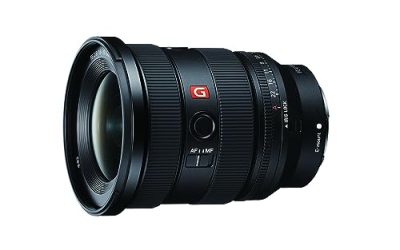
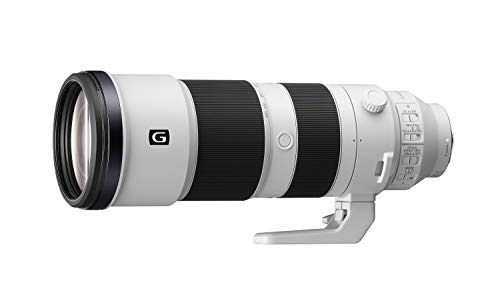
Sony FE 200-600mm f/5.6-6.3 G OSS Super Telephoto Zoom Lens
Specs
- Focal length: 200-600mm; Maximum aperture: f/5.6-6.3; Mount: Sony E; Weight: 2,115 g; Minimum focus distance: 2.4 m; Filter thread: 95 mm; Image stabilization: Optical SteadyShot, 5.5 stops.
The Sony FE 200-600mm is the lens that made long wildlife zooms feel normal. Its headline feature is the internal zoom: the barrel never extends, so the balance stays constant and the lens stays sealed against dust and moisture while zooming.
Five extra-low dispersion elements and one aspherical element, with a Nano AR coating, keep contrast high when shooting toward the light. Autofocus uses a direct drive SSM motor, and on recent Sony bodies it locks onto birds and animals quickly and holds focus through erratic flight. The lens accepts Sony 1.4x and 2x teleconverters, pushing the long end to 840mm or 1200mm, though the maximum aperture drops and autofocus slows a little.
At 2,115 g it is not light, but it is lighter than most 600mm primes and it replaces two lenses in the bag. The main compromise is the variable aperture: at 600mm the lens sits at f/6.3, so low-light shooting calls for higher ISO settings. For daylight birding, safari work and general wildlife, it is the most complete package in this roundup.
Canon RF 600mm f/11 IS STM Super Telephoto Prime Lens

Specs
- Focal length: 600mm; Maximum aperture: f/11 (fixed); Mount: Canon RF; Weight: 930 g; Minimum focus distance: 4.5 m; Filter thread: 82 mm; Image stabilization: 5 stops.
The Canon RF 600mm f/11 is the most unusual lens here, and it exists to solve one problem: reaching 600mm without carrying a heavy, expensive prime. Gapless dual-layer diffractive optics fold a 600mm focal length into a barrel that weighs only 930 g, less than half the weight of a conventional 600mm prime. It collapses for transport and extends with a twist, so it packs small and deploys in seconds.
The trade-off is the fixed f/11 aperture. There is no aperture ring and no way to open up, so this lens wants bright light. In open daylight it performs well, with sharp results and five stops of stabilization that make handheld shooting practical. In deep shade, dawn light or dense forest, the fixed aperture forces higher ISO settings, and autofocus on some bodies is limited to the center area at f/11.
This is a specialist lens. It suits photographers who shoot mostly in open country, wetlands and coastal light, and who want genuine 600mm reach in a package that fits a daypack. It is not the lens for dawn work under a forest canopy, and anyone who regularly shoots in poor light should choose a zoom with a wider aperture instead.
Canon RF 100-500mm f/4.5-7.1L IS USM Super Telephoto Zoom Lens

Specs
- Focal length: 100-500mm; Maximum aperture: f/4.5-7.1; Mount: Canon RF; Weight: 1,370 g; Minimum focus distance: 0.9 m; Filter thread: 67 mm; Image stabilization: 5 stops.
The Canon RF 100-500mm is the professional all-rounder of this roundup. As an L-series lens it carries weather sealing, a fluorine coating on the front element and top-line build quality, and its 100-500mm range covers everything from environmental wildlife portraits to tight bird frames. At 1,370 g it is noticeably lighter than the Sony 200-600mm and balances on EOS R bodies.
Its most surprising strength is close focus. At 100mm the lens focuses down to 0.9 m, which opens up dragonflies, frogs and flowers as secondary subjects on a wildlife walk, and at 500mm it focuses close enough for frame-filling small birds. The variable aperture reaches f/7.1 at the long end, so low light is again the weak point, but the five stops of stabilization compensate well.
This lens suits Canon RF shooters who want one lens for most wildlife situations rather than a dedicated long prime. It is the best blend of reach, versatility and portability in the Canon system, and the only real gap is the missing 100mm of reach compared with a 600mm lens, which matters most for small, distant birds.
Sigma 150-600mm f/5-6.3 DG OS HSM Contemporary Telephoto Zoom Lens (Canon EF)

Specs
- Focal length: 150-600mm; Maximum aperture: f/5-6.3; Mount: Canon EF; Weight: 1,930 g; Minimum focus distance: 2.8 m; Filter thread: 95 mm; Image stabilization: Optical Stabilizer with two modes.
The Sigma 150-600mm Contemporary is the value pick, bringing 600mm reach to photographers who shoot Canon DSLRs or adapted mirrorless bodies. It is a full-frame EF-mount lens, so it mounts on Canon DSLRs and works on EOS R mirrorless bodies through the EF-EOS R adapter, where autofocus and stabilization continue to function normally.
Its Optical Stabilizer offers a standard mode and a panning mode for birds in flight. Dust and splash-proof construction, a zoom lock at every marked focal length and a removable tripod collar round out a practical field design. Image quality is strong through the middle of the range, with some softening at 600mm wide open that clears up when the aperture is closed down a stop.
At 1,930 g it is the heaviest zoom here, and the extending barrel shifts the balance as the focal length changes. Even so, for the reach on offer this lens remains the most affordable way to photograph wildlife at 600mm, and it is the natural choice for DSLR owners and for anyone building a wildlife kit on a tighter budget.
Canon RF 100-400mm f/5.6-8 IS USM Telephoto Zoom Lens

Specs
- Focal length: 100-400mm; Maximum aperture: f/5.6-8; Mount: Canon RF; Weight: 635 g; Minimum focus distance: 0.88 m; Filter thread: 67 mm; Image stabilization: 5.5 stops.
The Canon RF 100-400mm is the lightweight option, and at 635 g it changes how a wildlife day feels. It is the lens to carry on a long hike or a trip where every gram counts, and it retracts to a compact size that fits in a small bag. Its 5.5 stops of stabilization make handheld shooting at 400mm realistic in good light.
The compromise is aperture. At f/8 on the long end, this is a fair-weather lens: it shines in open daylight and struggles as light fades. The close focus distance of 0.88 m is a genuine strength, giving near-macro framing of insects and small subjects, and on APS-C EOS R bodies the effective field of view reaches 640mm, which turns this modest lens into a serious birding tool for R7 and R10 owners.
It is not a replacement for a 600mm lens when the subject is small and distant. But as a first wildlife lens, a travel companion or a second body lens, it is hard to beat for the weight and the flexibility it offers.
How to choose
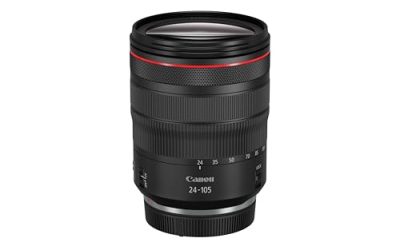
Reach comes first. For birds, 400mm is the practical minimum and 600mm is the comfortable standard, while larger mammals can be photographed well at 300-400mm. Decide what you photograph most and choose the long end to match, remembering that a teleconverter adds reach at the cost of aperture and autofocus speed.
Next, weigh aperture against weight. A wider aperture helps in dawn and dusk light and gives cleaner backgrounds, but it adds glass, size and cost. A fixed f/11 prime or a slow f/8 zoom is fine for open-country daylight work and poor for forest interiors. If you shoot mostly in bright, open habitats, the lighter slow lens is the smarter buy; if you shoot in woods and at the edges of the day, aperture matters more than reach.
Autofocus and stabilization are the third consideration. Look for a fast, quiet focus motor and a stabilization system rated at five stops or better, since long lenses magnify every tremor. Check that the lens works with your body’s animal and bird detection modes, and confirm teleconverter compatibility before buying, because not every lens accepts extenders.
Finally, check the mount and the handling. A lens that does not fit your camera is useless, and a lens that is too heavy to carry all day will stay in the bag. Confirm the tripod foot is removable, and make sure the zoom action suits the way you work.
Who should skip
Wildlife lenses are specialized tools, and several kinds of photographer should look elsewhere. Portrait and studio photographers gain nothing from 600mm of reach and will find the slow apertures and long minimum focus distances frustrating. Street and travel photographers who value compactness should choose a standard zoom instead, since even the lightest lens here is a large piece of glass.
Low-light specialists should also be cautious. If most of your shooting happens before sunrise, after sunset or under a forest canopy, a fixed f/11 prime or an f/8 zoom will fight you at every frame, and a faster prime or a shorter, brighter zoom is the better investment. Landscape photographers should also look elsewhere: a super-telephoto compresses the scene and removes context.
Budget is the last filter. A 600mm lens is a serious purchase, and it makes little sense to buy one before owning a capable body and a sturdy support. If funds are tight, begin with the budget zoom in this guide and add support gear first, then move up the range as your field time grows.
Frequently Asked Questions
How much reach do I need for bird photography?
For most birds, 400mm is the minimum and 600mm is the comfortable working length. Small, wary species need 500-600mm, while larger birds can be photographed well at 300-400mm.
Can I use a teleconverter with these lenses?
The Sony 200-600mm, Canon RF 100-500mm and Canon RF 600mm f/11 all accept their maker’s 1.4x and 2x teleconverters, and the Sigma 150-600mm works with Sigma teleconverters on compatible bodies. Expect a loss of one stop with a 1.4x converter and two stops with a 2x converter, plus slower autofocus.
Is a fixed f/11 aperture usable for wildlife photography?
Yes, in bright, open light. The Canon RF 600mm f/11 produces sharp images in daylight and its stabilization makes handheld shooting practical. In shade, forest or dawn light the fixed aperture forces high ISO settings, and some camera bodies limit autofocus coverage at f/11. Treat it as a fair-weather specialist rather than an all-conditions lens.
Do I need a tripod for a 600mm lens?
A tripod or monopod helps, but it is not always required. Lenses in this guide with five or more stops of stabilization can be shot handheld in good light, especially at higher shutter speeds. For long waits at a hide, a gimbal head on a tripod is the most comfortable setup.
Final verdict
The Sony FE 200-600mm f/5.6-6.3 G OSS takes the top spot for its combination of reach, internal zooming, autofocus and handling, and it is the lens wildlife photographers should buy first if they shoot Sony. Canon RF owners get the same versatility from the RF 100-500mm, which adds L-series build and close focus in a lighter package.
For photographers watching their budget, the Sigma 150-600mm Contemporary remains the best value route to 600mm, especially for DSLR owners and those adapting EF glass. The Canon RF 600mm f/11 suits open-light shooting at minimum weight, while the Canon RF 100-400mm is the one to pack for long walks.
Product and ASIN Reference
| Product | ASIN |
|---|---|
| Sony FE 200-600mm f/5.6-6.3 G OSS Super Telephoto Zoom Lens | B07SZXDN9X |
| Canon RF 600mm f/11 IS STM Super Telephoto Prime Lens | B08C6Z5F2L |
| Canon RF 100-500mm f/4.5-7.1L IS USM Super Telephoto Zoom Lens | B08C6ZRVC5 |
| Sigma 150-600mm f/5-6.3 DG OS HSM Contemporary Telephoto Zoom Lens (Canon EF) | B00THOYRN6 |
| Canon RF 100-400mm f/5.6-8 IS USM Telephoto Zoom Lens | B09FFV6WF5 |