Our Short List of 3
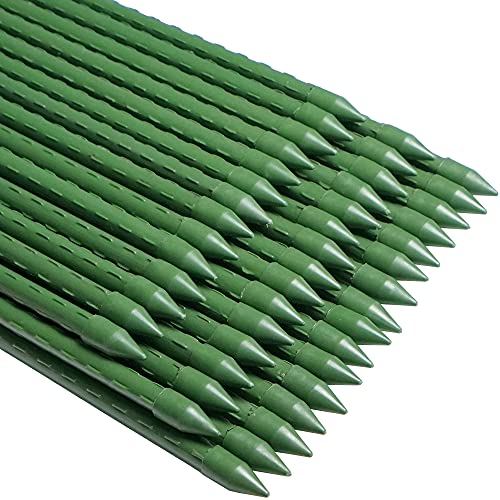
- Best for: Gardeners building teepees, rows and custom frames for tall climbers.
- Height: 72 inches (6 feet)
- Diameter: 0.43 inch
- Material: Plastic-coated steel
- Pack size: 25 stakes

- Best for: Tall flowering vines that need a decorative, long-term structure.
- Height: 6.3 feet (75.6 inches)
- Diameter: 1.15 feet
- Material: Metal (iron tubing)
- Finish: Weather-resistant epoxy coating

- Best for: Tall tomato plants in beds, raised beds and large pots.
- Maximum height: 68 inches
- Size listed: 1 Pack, 68 Inches
- Construction: Steel core with thick plastic coating
- Finish: Powder coated
All 4 Picks at a Glance
| Product | Specs | Action |
|---|---|---|
| WAENLIR Garden Stakes 72 Inch, Pack of 25 |
| Check price on Amazon |
| LeJoy Garden Metal Obelisk Garden Trellis, 6.3 Feet |
| Check price on Amazon |
| K-Brands Tomato Cage, Up to 68 Inches |
| Check price on Amazon |
 ZeeDix 65 Inch Tall Tomato Cages, 2 Pack |
| Check price on Amazon |
Key takeaways
- Tall plants need tall support: compare 72-inch stakes, a 6.3-foot metal obelisk and adjustable cages reaching 65 to 69 inches for vines and tomatoes.
A support that looks tall enough in the box often ends up a foot shorter once its legs are buried, and that gap is exactly where indeterminate tomatoes, climbing roses and pole beans run out of room in midsummer. Choosing for tall plants means working backwards from mature height: how much support stays above ground, whether the frame can be extended as stems climb, and whether the material will hold a loaded vine in wind without bending or snapping at the joints.
This guide is for gardeners growing genuinely tall plants in beds, rows and large pots, and it compares five supports that reach at least 65 inches. The WAENLIR 72-inch stakes suit do-it-yourself frames, the LeJoy Garden metal obelisk brings 6.3 feet of all-metal height, the K-Brands cage adjusts up to 68 inches, the ZeeDix cages top out at 65 inches, and the Miuwauer obelisk fits pots at 69 inches.
Quick Picks
As an Amazon Associate we earn from qualifying purchases
| Product | Best for | Key spec from title |
|---|---|---|
| WAENLIR Garden Stakes 72 Inch, Pack of 25 | Building custom frames and teepees | 72-inch plastic-coated steel stakes |
| LeJoy Garden Metal Obelisk Garden Trellis, 6.3 Feet | Decorative height for flowering vines | 6.3-foot all-metal obelisk, epoxy coated |
| K-Brands Tomato Cage, Up to 68 Inches | Tall tomatoes in beds and pots | Adjustable cage up to 68 inches |
| ZeeDix 65 Inch Tall Tomato Cages, 2 Pack | Heavy climbing vegetables in raised beds | 65-inch triangular cage, height adjustable |
| Miuwauer Garden Obelisk Trellis, 6 Ft | Climbers growing in pots | 69-inch obelisk, 12 inches wide |
How to Choose
Match the Support Height to the Mature Plant
Start from the plant’s finished height, not its size at transplanting. Indeterminate tomatoes and pole beans routinely pass six feet, while determinate tomatoes and many peppers stop far lower. Part of any support disappears underground or into the pot, so a frame listed at 65 inches delivers less than that above the soil line. The picks here start at 65 inches and run to 75.6 inches for the LeJoy Garden obelisk, which leaves working room above ground. If a variety is known to climb past the frame, choose an adjustable design that accepts extra tiers instead of replacing the whole support mid-season.
Pick a Frame Style That Suits the Growth Habit
Stakes, cages and obelisks control plants in different ways. Single stakes, such as the WAENLIR 72-inch set, ask the gardener to tie the main stem at intervals and work well in rows or as teepee poles. Cages like the K-Brands and ZeeDix models surround the plant, so branches rest on the frame as they grow outward. Obelisks give vines a tapered tower to twine around, which suits clematis, jasmine and climbing roses. Bushy plants with many fruiting stems usually need the all-around containment of a cage, while a single-stemmed climber can be trained up one strong vertical line.
Check Materials and Coatings for Outdoor Use
A tall support carries more wind load than a short one, so the core material matters. Steel-core stakes and cages carry heavy, fruit-laden vines without flexing much, and the listings here pair those cores with plastic coatings that keep bare metal off tender stems. The LeJoy Garden obelisk uses metal tubing with a weather-resistant epoxy coating instead. Plastic sleeves and coatings can crack after repeated seasons of sun, and thin hollow tubes bend where solid cores hold. Gardeners in exposed, windy plots should favor the heaviest construction on offer, while sheltered patios can make do with lighter frames.
Plan Anchoring and Assembly Before Planting
Tall frames act like sails once foliage fills them in, so anchoring decides whether a support finishes the season upright. Obelisks such as the Miuwauer list staking into the ground for the best stability, and its description suggests pre-drilling holes in hard soil. Modular cages from ZeeDix and K-Brands snap or connect together and can be built up as the plant grows, which spreads the work out. Whatever the style, set the support at planting time: pushing legs down beside an established root ball risks tearing roots, and threading a large plant into a cage after the fact breaks stems.
The 5 Best Options
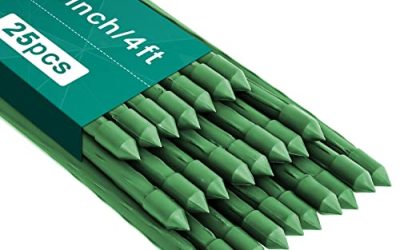
WAENLIR Garden Stakes 72 Inch, Pack of 25
- Best for: Gardeners building teepees, rows and custom frames for tall climbers.
- Height: 72 inches (6 feet)
- Diameter: 0.43 inch
- Material: Plastic-coated steel
- Pack size: 25 stakes
Gardeners building teepees, rows and custom frames for tall climbers.
Stakes alone do not contain a bushy plant; ties or twine are needed and are not the support itself.
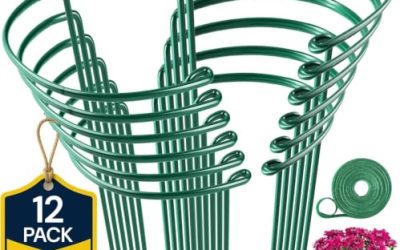
Gardeners who build their own frames get the most raw material from this set: twenty-five individual stakes, each a full 72 inches long, with a steel core inside a green plastic coating. A single stake tied along a tomato cordon or sunflower stem gives straight vertical support, and several lashed together form teepees for pole beans or long runs for peas and cucumbers. The ridged surface listed by WAENLIR helps ties and climbing stems grip instead of sliding down smooth plastic. Because the stakes are separate pieces, one purchase can cover a whole row rather than a single plant.
LeJoy Garden Metal Obelisk Garden Trellis, 6.3 Feet
- Best for: Tall flowering vines that need a decorative, long-term structure.
- Height: 6.3 feet (75.6 inches)
- Diameter: 1.15 feet
- Material: Metal (iron tubing)
- Finish: Weather-resistant epoxy coating
Tall flowering vines that need a decorative, long-term structure.
The listing gives a 1.15-foot diameter, so it fits one main vine rather than a wide, multi-stemmed plant.
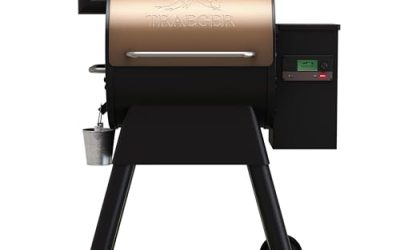
At 6.3 feet, the LeJoy Garden obelisk is the tallest support in this guide, and its round tower shape doubles as a garden feature before any plant covers it. The frame is metal tubing with a weather-resistant epoxy coating, finished in bronze on this listing, and four legs stake into the ground for stability. That combination suits climbing roses, clematis and other flowering vines that need a permanent-looking structure at the back of a border or beside a path. The listing notes the frame grows steadier once plants weave through it, so early tying matters while stems are short.
K-Brands Tomato Cage, Up to 68 Inches
- Best for: Tall tomato plants in beds, raised beds and large pots.
- Maximum height: 68 inches
- Size listed: 1 Pack, 68 Inches
- Construction: Steel core with thick plastic coating
- Finish: Powder coated
Tall tomato plants in beds, raised beds and large pots.
The stated 10-pound plant limit is modest for a fully loaded heirloom vine, so heavy plants may need added staking.
The K-Brands cage is built around coated steel stakes that connect into a cage reaching up to 68 inches, and the listing offers a shorter 48-inch configuration as well. That adjustability lets a gardener start low around a young transplant and add height as an indeterminate tomato or cucumber vine extends. K-Brands describes a durable steel core under a thick plastic coating, and the powder-coated finish is listed for the frame. The cage works in garden beds and in pots, and the maker states a clear limit: the cage is designed to support tomato plants up to 10 pounds.
ZeeDix 65 Inch Tall Tomato Cages, 2 Pack
- Best for: Heavy climbing vegetables in raised beds and outdoor pots.
- Height: 65 inches, adjustable from 16.1 inches
- Dimensions: 17.7 inches wide x 65 inches high
- Shape: Triangular
- Material: Plastic and stainless steel, plastic-coated finish
Heavy climbing vegetables in raised beds and outdoor pots.
The kit uses many rods and connectors, so the first build takes longer than a one-piece cage.
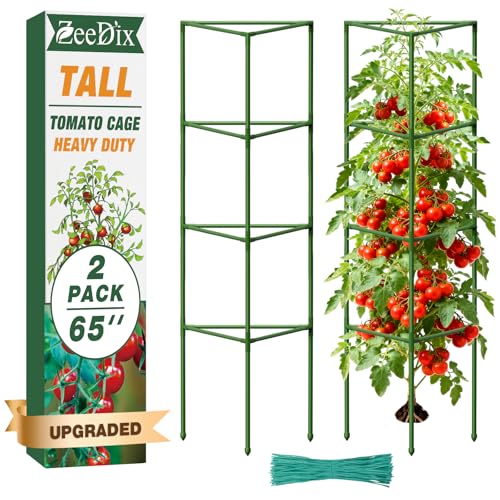
ZeeDix shapes its cage as a triangle, a geometry the listing presents as the source of its stability, and each of the two cages adjusts from 16.1 inches up to a full 65 inches. At 17.7 inches wide, the frame leaves room for a substantial plant while still fitting into raised beds and large pots. The material is listed as plastic and stainless steel with a plastic-coated finish, and the cage is aimed at heavy climbing vegetables such as tomatoes, cucumbers and peppers. Assembly is required, and the modular rods and connectors break down again for storage at the end of the season.
Miuwauer Garden Obelisk Trellis, 6 Ft
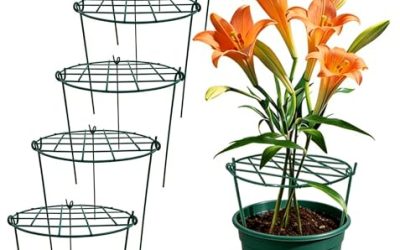
The Miuwauer obelisk is sized for containers: 69 inches tall but only 12 inches wide, so it drops into a large pot or a narrow bed without crowding neighbors. Its steel pipe carries a PE plastic coating, the height can be adjusted to follow the plant’s growth, and adjustable plastic support rings help position stems against the frame. Miuwauer lists it for clematis, jasmine, roses and similar climbers, indoors or outdoors, and recommends staking it into the ground for the best stability. This is a light frame at 2.57 pounds, and the listing is frank that it suits light plants rather than heavy ones.
Specs
- Height: 69 inches (6 Ft size)
- Width: 12 inches
- Material: Steel pipe with PE plastic coating
- Color: Black
- Item weight: 2.57 pounds
- Model number: GT-black-1Pcs-180x30cm
- Features: Adjustable height, adjustable support rings
- Assembly: Listed as not required
Best for: Potted clematis, jasmine and other light climbers on patios.
Watch out for: The listing states it is not recommended for overly large and heavy plants.
ASIN: B0B4SBY6QD
Which One Fits Your Situation
Indeterminate Tomatoes in Open Beds
Indeterminate vines keep climbing until frost, so they need the tallest cage that can be extended as they grow. The K-Brands cage reaches 68 inches and can be built up in stages, which matches a tomato’s pace better than a fixed short frame. Where several plants run down a bed, the WAENLIR stakes offer a cheaper geometry: one stake per plant, tied at intervals, with spares left over for the rest of the row.
Flowering Vines That Double as Garden Features
A climbing rose or clematis at the front of a house is on display all season, so the support itself has to look intentional. The LeJoy Garden obelisk answers with 6.3 feet of epoxy-coated metal in a bronze finish, a structure that reads as garden furniture even in winter. Its round tower gives twining stems something to wrap at every level, and the four ground stakes keep the tall frame planted when the vine leafs out and catches wind.
Tall Plants Growing in Large Pots
Containers limit how deep a support can anchor, so width and weight matter as much as height. The Miuwauer obelisk was designed for this job: a 12-inch footprint that sits inside a pot, adjustable rings, and a listed height of 69 inches for clematis or jasmine on a patio. The ZeeDix cage is the alternative for a potted tomato, since its triangular base spreads the load across the container and its height adjusts as the plant fills in.
Long Rows of Beans and Cucumbers
Climbing vegetables in rows reward simple, repeatable hardware. WAENLIR’s 25-pack of 72-inch stakes can be crossed into teepees at each planting station or run as a line of single poles with string between them, and the plastic-coated steel shrugs off a season of watering. When the row ends, the stakes pull out, bundle together and store flat against a wall, ready to be rebuilt at whatever spacing next year’s crop needs.
Common Mistakes
- Buying by listed height alone, without subtracting the section that sits underground or inside the pot.
- Installing the support after the plant is already tall, which bends stems and disturbs roots.
- Tying stems tightly to stakes with no slack, so the tie cuts in as the stem thickens.
- Putting a heavy, fruit-laden vine on a light frame the listing rates only for small plants.
- Leaving a tall, leafy cage unanchored in an exposed plot where wind can push it over.
Frequently Asked Questions
How tall should a support be for indeterminate tomatoes?
Indeterminate tomatoes commonly grow past six feet, so the support should reach at least 65 inches before any of it is buried. The K-Brands cage adjusts up to 68 inches and the WAENLIR stakes stand 72 inches, both of which leave useful height above ground. Gardeners in long-season climates often prune to a single stem so the vine’s height stays manageable against the frame.
Are metal obelisks strong enough for climbing roses?
A metal obelisk such as the LeJoy Garden model, built from metal tubing with an epoxy coating and four ground stakes, is designed for vines including roses, clematis and jasmine. Its listing puts the height at 6.3 feet and notes the frame steadies once plants grow over it. Very old, woody climbers with thick stems may still need a wall or fence fixing in addition to a freestanding tower.
Can tall plant supports be used in pots?
Yes, provided the pot is wide and heavy enough to balance the frame. The Miuwauer obelisk is listed for pots at 69 inches tall and 12 inches wide, and the ZeeDix and K-Brands cages are both listed for use in pots as well as beds. A tall support in a light container can tip in wind, so a bigger pot, or sinking the legs deeply, keeps the arrangement stable.
When is the best time to install a tall support?
Install the support at planting time, while the plant is small enough to position without forcing stems. Modular cages from K-Brands and ZeeDix can start at a low setting and gain tiers as growth demands, which avoids handling a full-height frame around a young transplant. Retrofitting a cage around a mature, branching plant usually means cut stems and a support that never sits squarely over the root zone.