Our Short List of 3

- Best for: Range shooters who shoulder a rifle and need stock clearance.
- NRR 23 dB
- Ultra low-profile earcups
- Omnidirectional microphones with sound amplification
- Folds for storage

- Best for: Shooters who want Bluetooth audio and the strongest electronic rating here.
- NRR 26 dB
- Bluetooth wireless audio
- Clear Voice Tracking technology
- Dynamic suppression time

- Best for: Workshop and jobsite work where steady loud noise never lets up.
- NRR 31 dB
- Passive over-the-head design
- Twin headband with stainless steel wire coated in plastic
- Electrically insulated (dielectric), no exposed metal
All 4 Picks at a Glance
| Product | Specs | Action |
|---|---|---|
| Walker’s Razor Slim Electronic Earmuffs |
| Check price on Amazon |
| 3M Peltor Sport Tactical 500 |
| Check price on Amazon |
| 3M Peltor X5A Over-the-Head Earmuffs |
| Check price on Amazon |
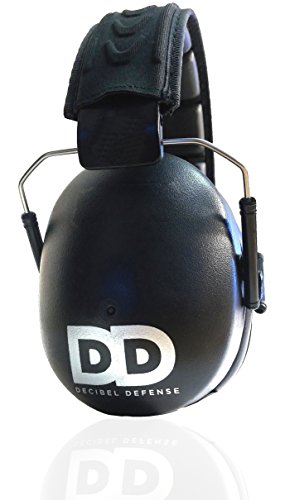 Decibel Defense 37 dB NRR Safety Ear Muffs |
| Check price on Amazon |
Key takeaways
- Compare the best ear muff hearing protection for shooting, hunting and loud work: five electronic and passive earmuffs ranked by NRR, fit and comfort.
A gunshot peaks above 140 decibels, a circular saw runs near 110, and hearing damage from either is permanent, so the real choice is not whether to wear protection but which kind still lets you hear what matters. Electronic muffs amplify voices and range commands while cutting gunfire, passive muffs block everything with no batteries to die, and the wrong pick either leaves your ears exposed or seals you off from the people and sounds around you.
This guide is for range shooters, hunters, and anyone working around loud tools who needs protection that fits their day, not a lab bench. The five earmuffs below were chosen from names and specs on Amazon product pages, covering slim electronic models for the range and high-NRR passive models for the workshop, so you can match the rating, fit, and features to the noise you actually face.
Quick Picks
As an Amazon Associate we earn from qualifying purchases
| Product | Best for | Key spec from title |
|---|---|---|
| Walker’s Razor Slim Electronic | Range shooters who shoulder a rifle | NRR 23 dB, slim low-profile cups |
| Howard Leight Impact Sport | All-day range sessions on one battery set | NRR 22 dB, about 350 hours of battery life |
| 3M Peltor Sport Tactical 500 | Shooters who want Bluetooth and voice clarity | NRR 26 dB, Bluetooth wireless audio |
| 3M Peltor X5A | Loud workshops and jobsites | NRR 31 dB, passive over-the-head design |
| Decibel Defense 37 dB | Maximum passive attenuation | NRR 37 dB, foldable with memory foam pads |
How to Choose
Noise Reduction Rating Comes First
NRR is the single number that tells you how much sound a muff blocks, measured in decibels under a lab standard, and every extra few decibels matters because the scale is logarithmic. A 22 dB muff suits a quiet outdoor range, a 26 dB muff handles indoor ranges better, and a 31 or 37 dB passive muff is the pick for a saw, a mower, or a rifle indoors. Check the NRR on the listing itself, since some sellers quote the European SNR figure instead, and remember that a muff only delivers its rating when the ear cushions seal fully around your ears.
Electronic or Passive Changes What You Hear
Electronic muffs use microphones to amplify quiet sounds such as voices, range commands, and footsteps, then cut the amplification the instant a gunshot or other impulse noise crosses a set threshold. That keeps you aware of your surroundings, which matters on a hunt or a busy range. Passive muffs have no electronics at all, so nothing can run flat or fail mid-session, and they usually post the highest NRR figures. The trade is simple: electronics buy awareness and cost batteries, while passive muffs buy silence and the highest protection, so pick the type that matches where you will wear them most.
Fit and Seal Decide the Real Protection
A muff with a strong NRR on paper protects nothing if the cushions gap around glasses, a hat brim, or thick hair, because sound leaks straight through the break in the seal. Look for a padded headband that spreads the clamping force, ear cushions deep enough to clear your ears without pressing the edges, and a headband that adjusts in small steps rather than jumping between sizes. Slim cups matter if you shoulder a rifle, since wide cups knock against the stock and break the seal at the worst moment. Try the fit with the glasses and cap you actually wear, and replace flattened cushions before they start leaking sound.
Batteries, Bluetooth, and Extras Worth Paying For
Electronic muffs live or die on their power source, so check the battery type, the stated run time, and whether the muff shuts itself off when you forget it in your range bag. A model that runs on common AAA or AA cells is easy to feed, while a rechargeable pack saves money over time but needs a charging habit. Bluetooth lets you take calls or listen to audio without removing protection, and an AUX jack does the same with a cable. Recessed microphones cut wind noise outdoors, folding cups pack smaller, and a carry bag keeps dust out of the cushions between sessions.
The 5 Best Options
Walker’s Razor Slim Electronic Earmuffs
- Best for: Range shooters who shoulder a rifle and need stock clearance.
- NRR 23 dB
- Ultra low-profile earcups
- Omnidirectional microphones with sound amplification
- Folds for storage
Range shooters who shoulder a rifle and need stock clearance.
The 23 dB rating is modest for indoor ranges; pair it with earplugs under the cups for the loudest bays.
The Razor Slim is the muff most range shooters reach for first, and the reason is the slim cup profile that clears a rifle stock without forcing your head into an awkward angle. Omnidirectional microphones pick up voices and range commands, then the electronics cut the sound the moment a shot fires, so you can talk between strings without lifting a cup. It folds flat for a range bag, runs on two AAA batteries, and includes an audio input jack for a phone or scanner. The 23 dB rating sits in the middle of this list, so it suits outdoor ranges and hunting more than a loud indoor bay.
Watch out for: The 23 dB rating is modest for indoor ranges; pair it with earplugs under the cups for the loudest bays.
Howard Leight Impact Sport Electronic Earmuff
The Impact Sport has been the default electronic muff on American ranges for years, and the draw is a long battery life that stretches to about 350 hours from two AAA cells, with an automatic shut-off after four hours that saves the batteries when you forget to switch it off. Two directional microphones amplify quiet sounds up to four times, then stop amplification when noise crosses 82 dB. The earcups are cut low at the bottom for stock clearance, the headband folds for storage, and an AUX cord is included for audio.
Specs
- NRR 22 dB in on and off modes
- 4x sound amplification up to 82 dB
- About 350 hours of battery life, 2 AAA batteries included
- Automatic shut-off after 4 hours
- AUX input with 3.5 mm connection cord included
- Compact folding design
Best for: Shooters who want long battery life and clear range commands.
Watch out for: The 22 dB rating is the lowest here; check the listing for the green R-01526 style, since other colors sit on separate listings.
3M Peltor Sport Tactical 500
- Best for: Shooters who want Bluetooth audio and the strongest electronic rating here.
- NRR 26 dB
- Bluetooth wireless audio
- Clear Voice Tracking technology
- Dynamic suppression time
Shooters who want Bluetooth audio and the strongest electronic rating here.
Batteries are not included, and the rechargeable pack is sold separately; confirm the black TAC500 style on the listing before ordering.
The Tactical 500 is the pick for shooters who want their muffs to do more than amplify voices, because it adds Bluetooth wireless audio and voice tracking that keeps conversation clear while cutting wind and background noise. Dynamic suppression adjusts to each gunshot, the recessed microphones sit out of the wind, and the 26 dB rating is the strongest of the electronic models in this list. It runs on two AA batteries or an optional rechargeable pack sold separately, and it folds with a storage bag included.
Watch out for: Batteries are not included, and the rechargeable pack is sold separately; confirm the black TAC500 style on the listing before ordering.
3M Peltor X5A Over-the-Head Earmuffs
- Best for: Workshop and jobsite work where steady loud noise never lets up.
- NRR 31 dB
- Passive over-the-head design
- Twin headband with stainless steel wire coated in plastic
- Electrically insulated (dielectric), no exposed metal
Workshop and jobsite work where steady loud noise never lets up.
The cups are larger than the electronic models here, so check clearance if you wear them with a hard hat or a rifle stock.
The X5A is a passive muff built for the loudest steady noise, and its 31 dB rating is the highest of any 3M Peltor earmuff, which is why it shows up on construction sites, in factories, and around mowers and saws. There are no batteries, no microphones, and nothing to switch on, so it works every time you put it on. The twin headband spreads the clamping force and reduces heat on top of the head, the ear cushions are replaceable, and the dielectric design has no exposed metal.
Watch out for: The cups are larger than the electronic models here, so check clearance if you wear them with a hard hat or a rifle stock.
Decibel Defense 37 dB NRR Safety Ear Muffs
- Best for: Anyone who wants the highest passive rating without electronics.
- NRR 37 dB
- Passive design, no batteries needed
- dBTech memory foam ear pads
- Foldable ear cups with padded adjustable headband
Anyone who wants the highest passive rating without electronics.
The fit runs snug by design; stretch the band over a box overnight if the clamping force feels too tight at first.
Decibel Defense posts the highest rating in this list at 37 dB, and it gets there with a passive design that needs no batteries and nothing to charge. The ear cushions use memory foam that molds to the head for a tight seal, the cups fold flat for a bag or toolbox, and the padded headband adjusts on metal sliders. Two sizes cover most heads, with a regular fit for most adults and an XL for larger frames. It is the simplest muff here, and for pure attenuation that simplicity is the point.
Watch out for: The fit runs snug by design; stretch the band over a box overnight if the clamping force feels too tight at first.
Which One Fits Your Situation
Shooting at an Indoor Range
Pick the 3M Peltor Sport Tactical 500 for its 26 dB rating, the strongest electronic option here, and wear foam earplugs underneath for the loudest bays. The Bluetooth audio keeps you connected without lifting a cup, and the dynamic suppression handles the sharp echo of an indoor lane better than a fixed-gain muff.
Hunting and Outdoor Shooting
Pick the Walker’s Razor Slim for its low-profile cups that clear a rifle stock, with the Howard Leight Impact Sport as the backup if you want longer battery life. Both amplify footsteps and voices so you can hear game and hunting partners, then cut the shot, and both fold small enough to ride in a vest pocket.
Loud Workshop or Jobsite Work
Pick the 3M Peltor X5A for steady machine noise, since its 31 dB passive rating needs no batteries and never runs flat halfway through a shift. If the noise is extreme, step up to the Decibel Defense at 37 dB, and replace the ear cushions on either muff the moment they flatten or crack.
All-Day Wear on a Tight Budget
Pick the Decibel Defense for the most protection per dollar, since it needs no batteries and its memory foam pads stay comfortable through long sessions. If you need to hear voices while you work, switch to the Howard Leight Impact Sport, whose 350-hour battery life means a single set of AAA cells lasts for months of regular use.
Common Mistakes
- Buying on NRR alone and ignoring fit: a muff that gaps around glasses delivers far less than its rating.
- Wearing electronic muffs with dead batteries and assuming they still protect at full strength; check the rating applies in both modes.
- Picking a wide-cup muff for rifle shooting, then breaking the seal against the stock on every shot.
- Forgetting that earplugs plus muffs is the standard for indoor ranges and the loudest tools, not overkill.
- Leaving flattened, cracked cushions in place instead of replacing them, which leaks sound straight past the seal.
Frequently Asked Questions
What NRR do I need for shooting?
For outdoor shooting, a 22 to 23 dB electronic muff is usually enough, since the sound has room to spread. Indoor ranges echo, so step up to 26 dB or wear foam earplugs under your muffs. For steady machine noise above 100 decibels, a 31 or 37 dB passive muff is the safer pick.
Do electronic earmuffs still protect when the batteries die?
Yes, with a limit. Electronic muffs are still passive muffs when switched off, and most carry the same NRR in both modes, including the Howard Leight Impact Sport at 22 dB. You lose the amplification and the active cutoff, so you will hear less of your surroundings, but the cups still block harmful noise.
Can I wear ear muffs with glasses?
Yes, but the arms of your glasses break the cushion seal and let sound leak in, which lowers the real protection below the stated NRR. Thin temple arms leak less than thick ones, and some shooters switch to a thinner frame or contact lenses for range days. Check the seal by pressing the cups and listening for the change in sound.
How do I know if my ear muffs still fit?
Press the cups gently against your head and listen: a good seal makes the world go noticeably quieter, and the cups should sit flat without rocking. Replace the ear cushions when they flatten, crack, or harden, and replace the headband when it no longer holds tension. A muff that slides around has already lost its seal.