Our Short List of 3
All 5 Picks at a Glance
| Product | Specs | Action |
|---|---|---|
 Fastronix Top Post Military Spec Battery Terminal and Cover Kit | Check price on Amazon | |
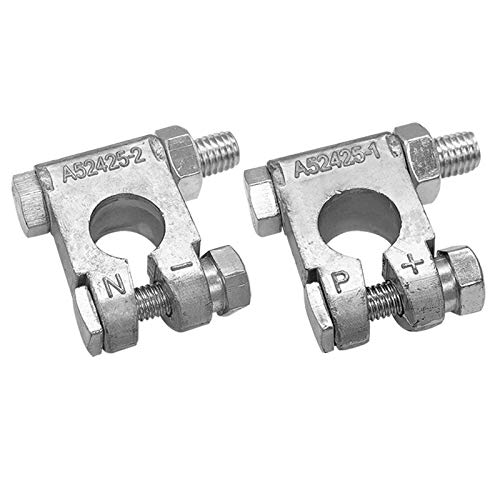 Ampper Military Spec Battery Terminal End | Check price on Amazon | |
 Ampper Military Spec Battery Terminal Top Post Kit | Check price on Amazon | |
 Ampper Brass Battery Terminal Connectors | Check price on Amazon | |
 KnuKonceptz Ultimate Battery Terminal v2 Pair | Check price on Amazon |
Key takeaways
- Shop the best battery terminal upgrade kits and clamps for cars, RVs and boats, with lead, brass and multi-cable terminals that fit standard top posts.
A battery terminal upgrade is one of the smallest jobs that makes the biggest difference under the hood. When the factory clamp is corroded, cracked, or stretched past the point where it can grip the post, the car may crank slowly, the lights may dim at idle, and the connection can work loose on a rough road. A fresh set of terminals restores a tight, clean connection between the battery and the cables, and the right kit can also give you room to add accessory wiring without stacking ring lugs on a bolt that was never meant to carry them.
The upgrade itself is straightforward for most drivers. You disconnect the old clamp, clean the post, slide the new terminal on, and tighten it down. The hard part is choosing hardware that matches your battery posts, your cable size, and the number of wires you need to land on each post. This guide covers the five terminal kits and clamp pairs that handle the most common situations, from a simple lead replacement to a brass multi-cable setup for a vehicle with a winch, an amplifier, or auxiliary lighting.
As an Amazon Associate, we earn from qualifying purchases.
Quick Answer
For most drivers, a military-style lead terminal kit is the best battery terminal upgrade, because it replaces both clamps and covers in one order and accepts extra cables on a single bolt. Brass pairs suit drivers who want stronger corrosion resistance, while a set-screw pair suits heavy-gauge cables or recessed posts. Match the post size first, then pick the material and cable capacity.
How to Choose
Start with the battery posts. Most car, truck, RV, and marine batteries use standard tapered top posts, with the positive post slightly larger than the negative post. The common sizes are a 19 mm positive post and a 17 mm negative post, and every terminal in this guide is built for that taper. Measure your posts with calipers before ordering if your battery is an unusual size, because a clamp made for a larger post will never tighten down on a smaller one, and a clamp made for a smaller post will crack if you force it over a larger one. Side-post batteries need a different part entirely, so confirm that your battery has top posts before buying any of these.
Material is the next decision. Lead terminals are the traditional choice and the closest match to the factory hardware on most vehicles. Lead is soft enough to conform to the post as the clamp tightens, which gives a broad contact area and a reliable connection. The trade-off is that lead corrodes faster in damp conditions and can deform if it is overtightened. Brass terminals resist corrosion better and hold their shape under repeated removal, which makes them a good pick for vehicles that see road salt, marine use, or frequent battery swaps.
Think about how many cables need to land on each terminal and how thick they are. A stock vehicle usually needs one cable per post, so a plain pair of clamps is enough. If you run a winch, a stereo amplifier, auxiliary lights, or a second battery connection, you need a terminal with a stud or set-screw ports that can take extra ring lugs or bare cable ends. Military-style terminals use a horizontal bolt that can stack several ring terminals, while set-screw terminals accept bare cable ends directly in separate ports for different gauges. Check the gauge printed on your existing cables, then match the terminal to the largest cable in the run. Kits that include copper lugs and adhesive-lined heat shrink make the job easier, because the lug is crimped onto the cable end and the heat shrink seals the joint against moisture.
Covers and installation round out the decision. A terminal cover keeps rain, road spray, and battery acid vapor off the connection, which slows corrosion, and the red and black colors mark the positive and negative sides so a reversed connection is less likely during a jump start.
Fastronix Top Post Military Spec Battery Terminal and Cover Kit
The Fastronix Top Post Military Spec Battery Terminal and Cover Kit is the most straightforward replacement in this guide. It swaps both factory clamps for cast lead terminals in the military style, with a set of red and black covers in the box. The kit is made in the United States, and it has been fitted to a wide range of vehicles, from side-by-sides and Jeeps to full-size vans. If your existing terminals are green with corrosion and the cable ends are cracked, this is the cleanest one-order fix.
Each terminal uses a 3/8-inch bolt that cinches the clamp and gives you a place to stack ring lugs for accessory cables. The low, flat shape sits close to the battery top rather than sticking up into the hood, which matters on vehicles with tight clearance. Lead construction means the clamp conforms to the post as it tightens, giving a broad contact area. This kit is a plain replacement, and that is its strength: no extra ports to learn, no adapters to sort out, and no heavy-gauge lugs to crimp.
Who Should Skip It
Skip this kit if you need to land heavy-gauge cable ends directly, because it has no set-screw ports and no included lugs. Drivers with side-post batteries should also look elsewhere, since this kit only fits top posts. If your battery posts are worn undersize from years of overtightening, a plain lead clamp may spin even when fully tightened.
Ampper Military Spec Battery Terminal End
The Ampper Military Spec Battery Terminal End is a lead-alloy pair for drivers who want a simple replacement with a little more hardware flexibility than a basic clamp. It includes a positive and a negative terminal, both clearly marked, and it ships with two bolt sizes so you can land a larger ring lug or a smaller one without hunting for extra hardware. The terminals are built for standard 19 mm positive and 17 mm negative top posts, which covers the vast majority of car, RV, and boat batteries.
At 9.5 ounces for the pair, this is a light kit, and the compact dimensions keep it out of the way under the hood. The lead-alloy construction gives the same conforming grip as a cast lead terminal, while the alloy adds a bit of strength against deformation. Each terminal can hold multiple battery cables, so an accessory feed can share the post with the main cable.
Who Should Skip It
Skip this pair if you need a complete installation kit with lugs and covers in the box, because the lugs are not included here. Drivers running very heavy-gauge cables should check the bolt and lug sizes against their cable ends first. If your battery uses side posts or a recessed post layout, this top-post pair will not fit.
Ampper Military Spec Battery Terminal Top Post Kit
The Ampper Military Spec Battery Terminal Top Post Kit is the all-in-one version of the Ampper pair, and it is the pick for a driver who is replacing terminals and re-terminating cables at the same time. In addition to the positive and negative lead-alloy terminals and the covers, the kit includes four copper lugs and four adhesive-lined heat shrink sleeves, so everything needed for a clean install arrives in one box. The lugs suit 2-gauge cable, a common size for main battery cables on trucks and larger vehicles.
The kit is built around the same military-style layout as the simpler Ampper pair, with a standard bolt for stacking ring lugs and clear positive and negative markings. The copper lugs are crimped onto the cable ends, then sealed with the heat shrink, which protects the joint from moisture and vibration. That matters on a vehicle that sees rough roads or marine use, where a bare crimp can corrode from the inside out. This is the kit to choose when the cable ends are as worn as the terminals, or when you are upgrading the main cables along with the clamps.
Who Should Skip It
Skip this kit if your cables are already in good shape and already terminated, because the lugs and heat shrink will go unused. Drivers with cables larger or smaller than 2 gauge should buy lugs in their own gauge rather than forcing the included ones to fit. If you only need a plain clamp swap with no cable work, the simpler Ampper pair or the Fastronix kit will install faster.
Ampper Brass Battery Terminal Connectors
The Ampper Brass Battery Terminal Connectors are a brass pair for drivers who want better corrosion resistance than lead without moving to a complex multi-port terminal. Brass holds its shape under repeated removal, so this pair suits a vehicle where the battery comes out for winter storage or where the terminals are removed for maintenance more than once a year. The positive and negative terminals are marked directly on the metal, and the threads arrive pre-formed on the terminal, which speeds up the install.
The pair fits standard tapered top posts, and the brass construction resists the green corrosion that builds up on lead terminals in damp conditions. That makes it a sensible pick for a boat, an RV that sits outdoors, or a truck that sees road salt in winter. This is a direct replacement, not a multi-cable hub, so it suits a stock electrical system or a vehicle with only one or two accessory cables.
Who Should Skip It
Skip this pair if you need to land several heavy-gauge cables, because it has no set-screw ports and no included lugs. Measure your posts before ordering, since some listings for this pair disagree on the exact post sizes it fits, and a clamp that is too large for the post will not tighten down. Drivers with side-post batteries need a different part.
KnuKonceptz Ultimate Battery Terminal v2 Pair
The KnuKonceptz Ultimate Battery Terminal v2 Pair is the premium option in this guide, built for vehicles with heavy-gauge wiring and batteries that are awkward to reach. Each terminal uses a patented reversible cross-dowel clamp that fits both recessed top-post batteries and flat-top batteries, which solves the most common fit problem with chunky aftermarket terminals. The clamp uses solid brass pins that can be replaced if they are ever damaged, so an overtightened bolt does not ruin the terminal.
Each terminal accepts one 1/0-gauge wire and one 4-gauge wire through set screws, plus ring terminal posts for extra cables, which makes this pair the best choice for a vehicle with a winch, a large amplifier, or auxiliary power distribution. The included vertical top post adapters let you keep the factory cable connection without cutting it off, which is a real advantage on a newer vehicle where the factory cable is molded into the original terminal. Color-coded insulated covers shield the connections and mark the polarity.
Who Should Skip It
Skip this pair if you only need a simple replacement on a standard battery, because the set-screw design and the adapters add cost and complexity you will not use. Drivers with a stock electrical system and one cable per post will get the same result from a lead or brass pair. If you do not have Allen wrenches on hand, note that they are needed for installation and are not included in the box.
FAQ
Do I need to replace both battery terminals at the same time?
Replacing both terminals at once is the sensible approach, because they age together and the second one is likely to fail soon after the first. A matched pair also keeps the clamping force and the corrosion behavior the same on both posts. If only one terminal is damaged and the other is clean and tight, replacing just that one is acceptable.
What size battery terminal do I need for my car?
Most cars use standard tapered top posts, with a 19 mm positive post and a 17 mm negative post, and the terminals in this guide are built for that size. Measure your posts with calipers if you are unsure, and check whether your battery has top posts or side posts before ordering. A terminal made for a larger post will spin on a smaller post, while an undersized one can crack when forced over a larger post.
Are brass battery terminals better than lead terminals?
Brass terminals resist corrosion better and hold their shape under repeated removal, which makes them a good pick for marine use, road salt, and vehicles where the battery is removed often. Lead terminals conform to the post more easily as they tighten, which gives a broad contact area and a reliable connection on a standard battery. Either material works well when it is sized correctly and kept clean.
Can I install battery terminals myself without a mechanic?
Most drivers can install battery terminals with basic hand tools, a wire brush, and a wrench that fits the clamp bolt. Disconnect the negative cable first and reconnect it last, clean the posts until the metal is bright, and tighten the clamp until the terminal cannot be twisted by hand. If the cables are corroded back into the insulation or the battery posts are damaged, a mechanic can replace the cables and check the charging system at the same time.
Final Verdict
The best battery terminal upgrade depends on how many cables you run and how awkward your battery is to reach. For most drivers, the Fastronix Top Post Military Spec Kit is the right place to begin, because it replaces both clamps and covers in one order and the 3/8-inch bolt leaves room for an accessory cable. The Ampper kits cover the middle ground, with a light lead-alloy pair for a simple swap and a full kit with copper lugs and heat shrink for drivers who are re-terminating cables. The Ampper brass pair is the pick for corrosion resistance and repeated removal, and the KnuKonceptz Ultimate v2 pair is the answer for heavy-gauge wiring and recessed posts. Measure the posts first, then clean them until the metal is bright.
Product and ASIN Reference
| Product | ASIN |
|---|---|
| Fastronix Top Post Military Spec Battery Terminal and Cover Kit | B01LLWKXV6 |
| Ampper Military Spec Battery Terminal End | B07JJKVHD1 |
| Ampper Military Spec Battery Terminal Top Post Kit | B07W61LYG7 |
| Ampper Brass Battery Terminal Connectors | B0BXXJHT6X |
| KnuKonceptz Ultimate Battery Terminal v2 Pair | B0CMGY23K2 |