Our Short List of 3

- Best for: Woodworkers who want one blade for mixed rip and crosscut work in hardwood.
- 10-inch diameter, 50 teeth, ATB combination grind
- Thin kerf design with 5/8-inch arbor
- Perma-Shield non-stick coating
- TiCo high-density carbide tips

- Best for: Cabinet builders who need chip-free crosscuts in veneered panels and hardwood trim.
- 10-inch diameter, 80 teeth, Hi-ATB tooth design
- 5/8-inch arbor
- TiCo high-density carbide tips
- Perma-Shield coating to reduce heat buildup and friction

- Best for: Owners of contractor or jobsite saws who crosscut hardwood often and need a light-feeding blade.
- 10-inch diameter, 60 teeth, ATB grind
- Thin kerf crosscutting design with 5/8-inch arbor
- Perma-Shield coating
- TiCo high-density carbide tips
All 4 Picks at a Glance
| Product | Specs | Action |
|---|---|---|
| Freud LU83R010 |
| Check price on Amazon |
| Freud LU80R010 |
| Check price on Amazon |
| Freud LU88R010 |
| Check price on Amazon |
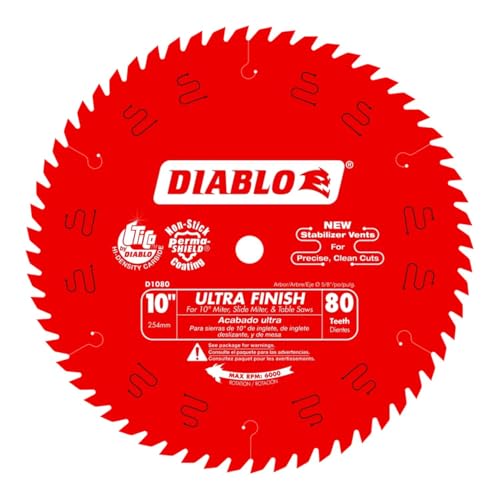 Diablo D1080X |
| Check price on Amazon |
Key takeaways
- Compare four 10-inch table saw blades for hardwood, from combination grinds to fine-finish crosscut blades, and pick the right tooth count for your saw.
A hardwood board punishes the wrong blade fast. Oak, maple, and walnut are dense enough to scorch against a dull or coarse tooth, and a rough rip edge means extra sanding or a glue joint that never quite closes. The blade also decides how hard the saw works: too many teeth on a thick rip can bog a small motor, while too few leave crosscuts ragged. Choosing well saves lumber, time, and frustration on every furniture part that follows.
This guide is written for furniture makers, cabinet builders, and weekend woodworkers who cut mostly hardwood on a 10-inch table saw and want edges that need little cleanup. It also suits owners of smaller contractor saws who need a thin kerf blade that feeds without straining the motor. Every blade below was picked from its name and listed specifications on its Amazon product page, so tooth count, grind, kerf, and arbor size come straight from the listing rather than from guesswork.
Quick Picks
As an Amazon Associate we earn from qualifying purchases.
| Product | Best for | Key spec from title |
|---|---|---|
| Freud LU83R010 | One blade for rips and crosscuts in hardwood | 10-inch 50 tooth ATB thin kerf combination |
| Freud LU80R010 | Chip-free crosscuts in veneered panels | 10-inch 80 tooth Hi-ATB plywood and melamine |
| Freud LU88R010 | Clean crosscuts on a lighter saw | 10-inch 60 tooth ATB thin kerf crosscutting |
| Diablo D1080X | Ultra-fine finish cuts in hardwood | 10-inch 80 Hi-ATB teeth, 0.098 inch kerf |
How to Choose
Match tooth count to the cut
Tooth count is the first decision, and it follows the cut rather than the wood alone. A 24 to 30 tooth rip blade clears thick hardwood fast but leaves a rough edge, while a 60 to 80 tooth blade crosscuts cleanly yet feeds slowly through a two-inch board. Combination blades in the 40 to 50 tooth range split the difference, handling both jobs well enough for a shop that changes tasks through the day. Start by listing the cuts you make most often, then pick the tooth count that serves that majority instead of the rare exception.
Check kerf against your saw’s power
Kerf is the width of material the blade removes, and it decides how much effort each cut demands from the motor. Thin kerf blades remove less wood, so a contractor or jobsite saw keeps its speed through maple and oak without bogging down. Full kerf blades cut straighter in deep stock on a cabinet saw, but they ask more of a smaller motor and can stall it in dense boards. Measure your saw honestly: a 15-amp portable saw pairs better with thin kerf, while a 3-horsepower cabinet saw handles either without complaint.
Look at grind, carbide, and coating
The tooth grind shapes the edge a blade leaves behind. Alternate top bevel teeth shear wood fibers for clean crosscuts, flat-top teeth clear chips fast on rips, and a combination grind mixes both so one blade can do each job acceptably. Carbide tips matter because hardwood dulls plain steel quickly, and a thicker carbide tip can be resharpened more times before it is spent. A non-stick coating such as Perma-Shield keeps pitch and resin from building up on the plate, which keeps the blade running cooler and truer through long sessions.
Confirm diameter, arbor, and intended use
A blade only works if it fits the saw, so diameter and arbor size come before any other specification. Most table saws in this guide take a 10-inch blade with a 5/8-inch arbor, yet some compact saws use an 8-1/4-inch blade, and fitting the wrong size is both unsafe and unusable. Read the listing title for the intended use as well: a blade built for plywood and melamine excels at crosscuts but rips slowly, while a rip blade tears veneer. Match the stated purpose to your own work before ordering.
The 5 Best Options
Freud LU83R010
- Best for: Woodworkers who want one blade for mixed rip and crosscut work in hardwood.
- 10-inch diameter, 50 teeth, ATB combination grind
- Thin kerf design with 5/8-inch arbor
- Perma-Shield non-stick coating
- TiCo high-density carbide tips
Woodworkers who want one blade for mixed rip and crosscut work in hardwood.
It will not match a dedicated 80-tooth blade for chip-free veneer crosscuts, so keep a fine-finish blade handy for show faces.
The LU83R010 earns its place as the single blade for a hardwood shop that rips and crosscuts in the same afternoon. Its 50-tooth combination grind pairs flat-top rip teeth with alternate top bevel teeth, so thick oak rips without burning and crosscuts come off clean enough for most glue joints. The thin kerf keeps feed pressure light on a contractor saw, and the Perma-Shield coating resists the pitch buildup that makes hardwood cuts wander. It is the blade to leave mounted when the next job is still unknown.
Watch out for: It will not match a dedicated 80-tooth blade for chip-free veneer crosscuts, so keep a fine-finish blade handy for show faces.
Freud LU80R010
- Best for: Cabinet builders who need chip-free crosscuts in veneered panels and hardwood trim.
- 10-inch diameter, 80 teeth, Hi-ATB tooth design
- 5/8-inch arbor
- TiCo high-density carbide tips
- Perma-Shield coating to reduce heat buildup and friction
Cabinet builders who need chip-free crosscuts in veneered panels and hardwood trim.
Eighty teeth feed slowly through thick rips, so use a rip or combination blade for heavy ripping instead of forcing this one.
The LU80R010 is the blade for hardwood work where the visible face must stay flawless, especially when veneered plywood and melamine sit beside solid stock. Its 80 Hi-ATB teeth shear fibers at a steep angle, which is what keeps veneer from chipping and leaves crosscuts in solid hardwood nearly mark-free. Freud lists it for plywood, melamine, laminates, and crosscuts in solid wood, so it covers the finishing stage of a cabinet build. The full set of teeth runs best on a saw with enough power to hold speed.
Watch out for: Eighty teeth feed slowly through thick rips, so use a rip or combination blade for heavy ripping instead of forcing this one.
Freud LU88R010
- Best for: Owners of contractor or jobsite saws who crosscut hardwood often and need a light-feeding blade.
- 10-inch diameter, 60 teeth, ATB grind
- Thin kerf crosscutting design with 5/8-inch arbor
- Perma-Shield coating
- TiCo high-density carbide tips
Owners of contractor or jobsite saws who crosscut hardwood often and need a light-feeding blade.
It is a crosscut-first blade, so long rips in thick hardwood will be slower and rougher than with a rip or combination grind.
The LU88R010 suits a lighter saw that still has to deliver clean crosscuts in hardwood. Its 60-tooth ATB grind sits between a combination blade and a fine-finish blade, giving edges smooth enough for furniture parts without the slow feed of an 80-tooth blade. The thin kerf matters most here: it lets a smaller motor hold speed through maple and oak instead of stalling halfway through the board. Perma-Shield coating keeps the plate free of pitch, which helps the blade stay true during a long run of crosscuts.
Watch out for: It is a crosscut-first blade, so long rips in thick hardwood will be slower and rougher than with a rip or combination grind.
Diablo D1080X
- Best for: Fine finish crosscuts in hardwood trim, moldings, and furniture parts.
- 10-inch diameter, 80 Hi-ATB teeth
- 0.098-inch kerf, 5/8-inch arbor
- 15-degree hook angle
- 0.071-inch plate
Fine finish crosscuts in hardwood trim, moldings, and furniture parts.
The fine tooth count makes it a poor choice for ripping thick stock, and forcing it through a heavy rip can overheat the blade.
The D1080X is the fine-finish specialist for hardwood, built for cuts where the edge itself is the finished surface. Eighty Hi-ATB teeth slice end grain cleanly, and the thin 0.098-inch kerf keeps the feed easy while the laser-cut plate stays flat and quiet. Diablo lists a 15-degree hook angle and a 6,000 maximum RPM, which fits the pace of careful crosscutting rather than fast ripping. It shines on trim, moldings, and furniture parts where sanding should be a quick pass instead of a rescue job.
Watch out for: The fine tooth count makes it a poor choice for ripping thick stock, and forcing it through a heavy rip can overheat the blade.
Which One Fits Your Situation
One blade for a mixed hardwood shop
Pick the Freud LU83R010 when a single blade must cover the whole day. Its combination grind rips thick boards without burning and crosscuts cleanly enough for most joints, so the blade can stay mounted while jobs change. The thin kerf suits contractor saws, and the coating keeps pitch from building up. It is the practical default for a shop that builds furniture from solid hardwood.
Glue-ready rips in thick hardwood
Pick the Freud LU83R010 again for ripping, or pair it with a dedicated rip blade if the saw runs long boards daily. The flat-top teeth in its combination grind clear chips fast, which keeps the edge straight and cool through oak and maple. A full kerf rip blade on a cabinet saw cuts even straighter, but the LU83R010 gives a glue-ready edge on most saws without a blade change.
Chip-free crosscuts and veneered panels
Pick the Freud LU80R010 when veneer, melamine, or a show face is on the line. Its 80 Hi-ATB teeth shear fibers instead of tearing them, leaving edges that need little sanding before finishing. Use it for cabinet panels, drawer fronts, and hardwood trim that will be seen up close, and keep a rip blade mounted for the rough breakdown work.
Fine finish work on a smaller saw
Pick the Diablo D1080X or the Freud LU88R010 when the saw is light and the finish still matters. The D1080X leaves the smoothest end grain of the group, while the LU88R010 feeds a little faster with 60 teeth. Both use a thin kerf, so a jobsite saw holds speed through hardwood instead of bogging down mid-cut.
Common Mistakes
- Buying the highest tooth count available and then using it to rip thick hardwood, which overheats the blade and burns the edge.
- Fitting a blade with the wrong arbor size or a diameter the saw guard cannot cover, which is unsafe and can damage the saw.
- Ignoring kerf: a full kerf blade on a small portable saw stalls in dense oak, while a thin kerf blade on a cabinet saw can wander in deep cuts.
- Cutting hardwood with a blade dulled by plywood and melamine work, then blaming the wood when edges come out rough.
- Skipping blade cleaning, so pitch buildup heats the plate, warps the cut, and shortens carbide life.
Frequently Asked Questions
How many teeth should a table saw blade for hardwood have?
It depends on the cut. A 40 to 50 tooth combination blade suits mixed ripping and crosscutting, a 24 to 30 tooth blade rips thick stock fastest, and a 60 to 80 tooth blade crosscuts cleanest. Most hardwood shops start with a 50-tooth combination blade, then add a fine-finish blade for visible crosscuts and trim work.
Is a thin kerf blade better for hardwood?
A thin kerf blade suits smaller saws because it removes less material and keeps the motor from bogging down in dense wood. On a powerful cabinet saw, a full kerf blade can cut straighter in deep stock. Match kerf to the saw: thin kerf for contractor and jobsite saws, either for a cabinet saw.
Can one blade rip and crosscut hardwood well?
A combination blade with 40 to 50 teeth does both jobs acceptably, mixing flat-top rip teeth with alternate top bevel crosscut teeth. It will not rip as fast as a dedicated rip blade or crosscut as cleanly as an 80-tooth finish blade. For most furniture work, the compromise is worth it because the blade stays mounted all day.
How do I keep a hardwood blade cutting cleanly?
Clean the plate regularly so pitch and resin do not build up and heat the blade, and store the blade where teeth cannot knock against metal. Replace or resharpen the blade once edges look scorched or cuts need heavy pushing. A sharp carbide blade should glide through oak with steady, light feed pressure.