Our Short List of 3
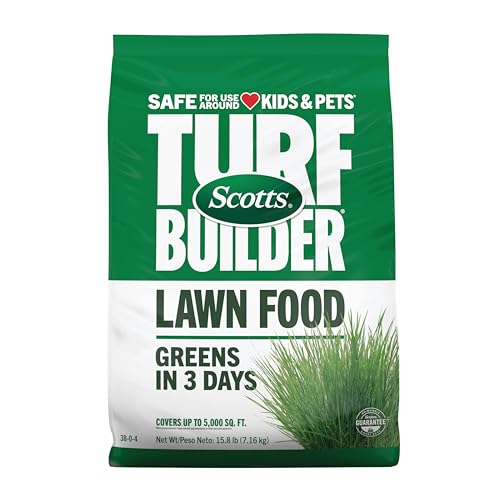
- Best for: A fast, even spring green-up on an established cool-season lawn.
- Formula: 38-0-4 granular fertilizer
- Bag weight: 15.8 lbs
- Coverage: Up to 5,000 sq ft
- Grass types: For all grass types

- Best for: Lawns that had crabgrass last summer and need feeding and prevention in one spring application.
- Item type: Halts Crabgrass Preventer with Lawn Food
- Coverage: 5,000 sq ft
- Function: Pre-emergent weed killer and lawn fertilizer
- Form: Granular

- Best for: Gentle, slow organic feeding on a lawn that needs steady recovery rather than a fast colour change.
- Formula: 6-4-0 slow-release nitrogen fertilizer
- Bag weight: 32 lb
- Organic material: At least 95 percent organic material
- Specific uses: Lawns, flowers and gardens
All 5 Picks at a Glance
| Product | Specs | Action |
|---|---|---|
| Scotts Turf Builder Lawn Food |
| Check price on Amazon |
| Scotts Turf Builder Halts Crabgrass Preventer with Lawn Food |
| Check price on Amazon |
| Milorganite All-Purpose Fertilizer |
| Check price on Amazon |
 Espoma Organic Spring Lawn Booster |
| Check price on Amazon |
 Espoma Organic Weed Preventer Plus Lawn Food |
| Check price on Amazon |
Key takeaways
- Compare five spring lawn fertilizers for Maine cool-season lawns, with timing, nitrogen type, crabgrass control and spreader guidance.
A Maine lawn wakes up slowly. Snowmelt leaves the soil cold and saturated, the grass looks pale and thin through April, and the first warm week can tempt a homeowner into feeding far too early. The real decision is not simply which bag to buy, but when the roots are ready to use it and which kind of nitrogen matches a short, cool growing season. Feed too early and nutrients sit in cold soil; feed with the wrong formula and a lawn can surge into soft top growth before its roots have caught up.
This guide is for Maine homeowners with cool-season lawns, for people repairing thin or winter-damaged turf, and for anyone choosing between a quick synthetic feed, a slow organic feed and a product that also prevents crabgrass. The five fertilizers below were chosen from their Amazon titles and listed specifications, with attention to nutrient analysis, coverage, granule form and whether the formula is made for early spring, weed prevention or steady organic feeding.
Quick Picks
As an Amazon Associate we earn from qualifying purchases.
| Product | Best for | Key spec from title |
|---|---|---|
| Scotts Turf Builder Lawn Food | Quick spring green-up on any grass type | 38-0-4 granular fertilizer, 15.8 lbs, 5,000 sq ft |
| Scotts Turf Builder Halts Crabgrass Preventer | Spring feeding plus crabgrass prevention | Halts Crabgrass Preventer with Lawn Food, 5,000 sq ft |
| Milorganite All-Purpose Fertilizer | Slow, gentle organic feeding | 6-4-0 slow-release nitrogen, 32 lb bag |
| Espoma Organic Spring Lawn Booster | Early-spring organic nitrogen with calcium | 8-0-0 natural and organic, 30 lb bag, 5,000 sq ft |
| Espoma Organic Weed Preventer Plus Lawn Food | Organic feeding plus weed-seed prevention | 100 percent corn gluten meal, 25 lb bag |
How to Choose
Time the first feeding to soil and grass growth
Maine soil stays cold long after the snow disappears, so the calendar alone is a poor guide to the first spring feeding. Wait until the grass is actively growing, the soil has drained after snowmelt, and daytime temperatures are rising steadily rather than spiking for a single warm weekend. A soil thermometer reading in the low fifties at root depth is a practical sign that cool-season grass can take up nitrogen. Feeding a dormant or waterlogged lawn wastes product and can wash nutrients toward drains and streams before the roots can use them.
Match the nitrogen type to the season
Fast-release nitrogen greens a lawn quickly, which suits a homeowner who wants visible colour before a gathering, but it can push soft, thirsty growth that struggles in a late frost. Slow-release nitrogen feeds more gradually, supports root development and reduces the risk of burning, which matters on a lawn that is still recovering from winter. Organic formulas release nutrients as soil microbes become active, so they suit a patient, long-season approach. Choose the release speed for the lawn condition, not only for how fast the colour appears.
Read the nutrient analysis before buying
The three numbers on a fertilizer bag show nitrogen, phosphate and potassium in that order, and each one does a different job. Nitrogen drives green growth, phosphate supports roots and seed establishment, and potassium helps the grass handle stress and cold. A high-nitrogen spring formula suits an established lawn that needs colour, while a starter-type formula with phosphate suits new seed or overseeding. Maine soils are often acidic and low in some nutrients, so a soil test is worth more than guessing, especially before adding phosphate year after year.
Decide whether weed prevention belongs in the bag
A combined fertilizer and pre-emergent product saves a pass across the lawn and can stop crabgrass before it germinates, which is valuable when spring arrives quickly and the window for prevention is short. The trade-off is timing: the same application that feeds the lawn also sets the barrier, so it cannot be used where new grass seed has just been sown. Homeowners who are overseeding thin patches should feed without a pre-emergent first, then deal with weeds separately. Separate products give more control, while a combined bag gives convenience.
The 5 Best Options
Scotts Turf Builder Lawn Food
- Best for: A fast, even spring green-up on an established cool-season lawn.
- Formula: 38-0-4 granular fertilizer
- Bag weight: 15.8 lbs
- Coverage: Up to 5,000 sq ft
- Grass types: For all grass types
A fast, even spring green-up on an established cool-season lawn.
Apply only at the listed rate and water it in, because a heavy dose of high-nitrogen fertilizer can burn grass, especially on a dry or stressed lawn.
Scotts Turf Builder Lawn Food is the straightforward choice for a Maine homeowner who wants a clear spring green-up across a whole lawn. The 38-0-4 granular formula is made for all grass types, so it suits the Kentucky bluegrass, perennial ryegrass and fine fescue blends common in Maine yards. One 15.8-pound bag covers up to 5,000 square feet, which makes planning simple for a typical suburban lot. Apply it with a spreader when the grass is actively growing, water it in as directed, and expect the high-nitrogen feed to push colour and density through the cool spring weeks.
Watch out for: Apply only at the listed rate and water it in, because a heavy dose of high-nitrogen fertilizer can burn grass, especially on a dry or stressed lawn.
Scotts Turf Builder Halts Crabgrass Preventer with Lawn Food
- Best for: Lawns that had crabgrass last summer and need feeding and prevention in one spring application.
- Item type: Halts Crabgrass Preventer with Lawn Food
- Coverage: 5,000 sq ft
- Function: Pre-emergent weed killer and lawn fertilizer
- Form: Granular
Lawns that had crabgrass last summer and need feeding and prevention in one spring application.
Do not use it where new grass seed has been sown, because the pre-emergent barrier also prevents desirable seed from germinating.
This Scotts product combines spring feeding with pre-emergent crabgrass control, which suits a Maine lawn where crabgrass appears once the soil warms. The 5,000-square-foot size matches a typical lot, and the single application feeds the lawn while laying down a barrier against crabgrass germination. Timing matters more here than with a plain fertilizer: apply before crabgrass seeds germinate, when the soil is warming but before the weed is visible. It is a useful pick when last summer left bare patches that crabgrass quickly filled, and when the homeowner wants one spring pass instead of two.
Watch out for: Do not use it where new grass seed has been sown, because the pre-emergent barrier also prevents desirable seed from germinating.
Milorganite All-Purpose Fertilizer
- Best for: Gentle, slow organic feeding on a lawn that needs steady recovery rather than a fast colour change.
- Formula: 6-4-0 slow-release nitrogen fertilizer
- Bag weight: 32 lb
- Organic material: At least 95 percent organic material
- Specific uses: Lawns, flowers and gardens
Gentle, slow organic feeding on a lawn that needs steady recovery rather than a fast colour change.
Green-up is slower than with a synthetic high-nitrogen feed, so allow several weeks before judging the result.
Milorganite suits a Maine homeowner who prefers a slow, forgiving organic feed that is hard to overdo. The 6-4-0 slow-release nitrogen formula is made from heat-dried microbes, contains at least 95 percent organic material, and feeds lawns, flowers and gardens from the same bag. Its gentle release supports steady growth through the cool spring, and the iron in the formula helps deepen green colour without a sudden surge. A 32-pound bag is a practical size for a home lawn, and the low burn risk makes it a good first choice for beginners and for lawns still recovering from winter damage.
Watch out for: Green-up is slower than with a synthetic high-nitrogen feed, so allow several weeks before judging the result.
Espoma Organic Spring Lawn Booster
- Best for: The first organic feeding of the season on a cool-season Maine lawn.
- Formula: 8-0-0 natural and organic lawn fertilizer
- Bag weight: 30 lb
- Coverage: Up to 5,000 sq ft
- Nitrogen: Long lasting slow-release nitrogen, enhanced with calcium
The first organic feeding of the season on a cool-season Maine lawn.
It supplies nitrogen without phosphate or potassium, so it is not a complete feed for a lawn that a soil test shows is low in those nutrients.
Espoma Organic Spring Lawn Booster is designed specifically for early spring, which makes it a natural fit for a Maine lawn coming out of dormancy. The 8-0-0 natural and organic formula supplies long-lasting slow-release nitrogen enhanced with calcium, and a 30-pound bag covers up to 5,000 square feet. It is listed for cool- and warm-season grasses, including fescue, bluegrass, ryegrass, St. Augustine and zoysia, so the fescue and bluegrass blends in Maine are covered. The calcium supports cell structure in new growth, and the absence of sludges or fillers suits homeowners who want a clean organic spring feed.
Watch out for: It supplies nitrogen without phosphate or potassium, so it is not a complete feed for a lawn that a soil test shows is low in those nutrients.
Espoma Organic Weed Preventer Plus Lawn Food
- Best for: Organic-minded households that want spring feeding and weed prevention in one early-spring application.
- Material: 100 percent corn gluten meal
- Bag weight: 25 lb
- Function: Weed preventer plus lawn food
- Application: Use in early spring, apply with a drop or broadcast spreader
Organic-minded households that want spring feeding and weed prevention in one early-spring application.
Corn gluten meal works as a pre-emergent, so do not apply it where new grass seed has just been sown.
Espoma Organic Weed Preventer Plus Lawn Food suits a homeowner who wants organic feeding and weed-seed prevention without synthetic chemicals. The formula is made from 100 percent corn gluten meal, which helps prevent weed seed establishment while providing organic nitrogen that keeps lawns a deep green colour. A 25-pound bag is applied in early spring with a drop or broadcast spreader, ahead of crabgrass and dandelion germination. It is a good match for households with children or pets that use the lawn heavily, and for anyone building an organic lawn program over several seasons rather than seeking a single quick fix.
Watch out for: Corn gluten meal works as a pre-emergent, so do not apply it where new grass seed has just been sown.
Which One Fits Your Situation
An established lawn that looks pale after winter
Choose Scotts Turf Builder Lawn Food when the lawn is established, the grass is growing, and the main goal is colour and density. The high-nitrogen granular formula greens the lawn quickly, and the 5,000-square-foot bag matches a typical Maine lot. Water it in and apply at the listed rate to avoid burning.
A lawn that crabgrass took over last summer
Choose Scotts Turf Builder Halts Crabgrass Preventer with Lawn Food when crabgrass filled bare patches last year. The combined feed and pre-emergent barrier saves a second pass and targets the weed before it germinates. Apply before the soil warms enough for crabgrass, and skip it on any area that has just been overseeded.
A thin lawn that needs gentle recovery
Choose Milorganite when the lawn is thin, winter-damaged or new to the homeowner. The slow-release 6-4-0 organic formula feeds steadily, carries a low burn risk, and suits a patient approach through the cool spring. Expect slower colour change than a synthetic feed, with steadier growth behind it. Water it in after spreading and give the microbes time to work through the cool soil.
An organic program starting in early spring
Choose Espoma Organic Spring Lawn Booster for the first organic feeding, or Espoma Organic Weed Preventer Plus Lawn Food when weed prevention is also needed. The Spring Booster adds calcium and slow-release nitrogen for early green-up, while the corn gluten meal product pairs organic feeding with pre-emergent weed control. Both suit households that prefer organic inputs and regular, seasonal applications.
Common Mistakes
- Feeding while the soil is still cold and waterlogged after snowmelt, before the grass can use the nutrients.
- Applying a pre-emergent fertilizer on freshly sown seed, which stops the new grass as well as the weeds.
- Spreading at a heavier rate than the bag directs, hoping for faster green-up, and burning the lawn instead.
- Skipping a soil test and adding phosphate every year to a Maine lawn that may not need it.
- Letting granules sit on dry grass without watering them in, which leaves fertilizer on the blades rather than in the soil.
Frequently Asked Questions
When should I fertilize my lawn in spring in Maine?
Wait until the grass is actively growing and the soil has drained after snowmelt, usually when soil temperatures at root depth reach the low fifties and daytime temperatures are rising steadily. Feeding a dormant or saturated lawn wastes product and risks runoff. A soil thermometer and a few days of steady growth are better guides than a fixed calendar date.
Can I overseed and use a crabgrass preventer in the same spring?
No, not in the same area at the same time. Pre-emergent products, including Scotts Halts and corn gluten meal, prevent seed germination, so they stop new grass seed as well as crabgrass. Overseed first and feed without a pre-emergent, or wait until the new grass is established before using a preventer. Plan the sequence before buying either product.
Is organic fertilizer better for a Maine lawn?
Organic fertilizer suits many Maine lawns because it releases nutrients gradually, supports soil microbes and carries a lower burn risk, which helps on cool, recovering turf. It greens the lawn more slowly than a synthetic high-nitrogen feed, so it suits a patient program. The better choice depends on the lawn condition, the timing and whether a soil test shows a specific nutrient shortage.
How much fertilizer do I need for my lawn?
Measure the lawn area first, then match it to the coverage printed on the bag, such as 5,000 square feet for several products in this guide. A single bag covers a typical suburban lot, while a larger or irregular lawn may need a second bag. Apply at the listed rate with a calibrated spreader, and avoid overlapping passes, which can double-feed strips of grass.