Our Short List of 3
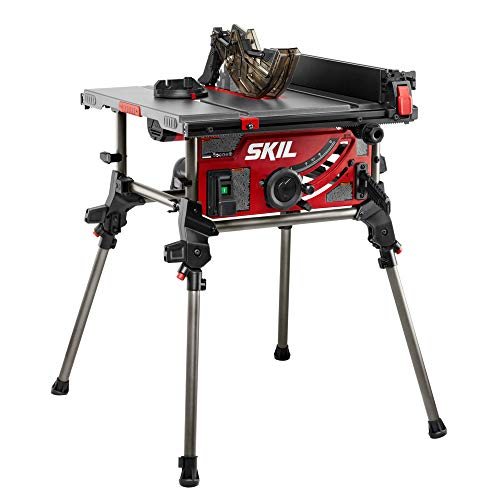
- Best for: First-time buyers who want a 10-inch saw that stores flat against a wall.
- Blade: 10 inches
- Motor: 15 amp
- Rip capacity: 25-1/2 inches right, 14 inches left
- Fence: rack and pinion

- Best for: Tight garages, apartment workshops and crews who move the saw daily.
- Blade: 8-1/4 inches
- Motor: 15 amp, 5,800 RPM
- Rip capacity: 24-1/2 inches
- Depth of cut: 2-9/16 inches at 90 degrees, 1-3/4 inches at 45 degrees
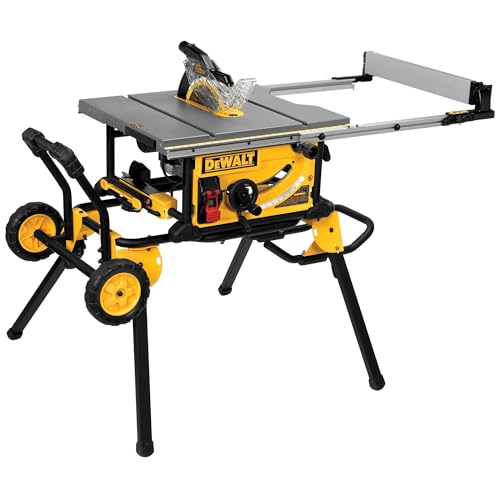
- Best for: Sheet-goods work, cabinet projects and shops that want one saw for years.
- Blade: 10 inches
- Motor: 15 amp, 4,800 RPM
- Rip capacity: 32-1/2 inches
- Depth of cut: 3-1/8 inches at 90 degrees, 2-1/4 inches at 45 degrees
All 5 Picks at a Glance
| Product | Specs | Action |
|---|---|---|
| SKIL TS6307-00 Jobsite Table Saw |
| Check price on Amazon |
| DEWALT DWE7485 Compact Table Saw |
| Check price on Amazon |
| DEWALT DWE7491RS Table Saw |
| Check price on Amazon |
 Bosch GTS15-10 Jobsite Table Saw |
| Check price on Amazon |
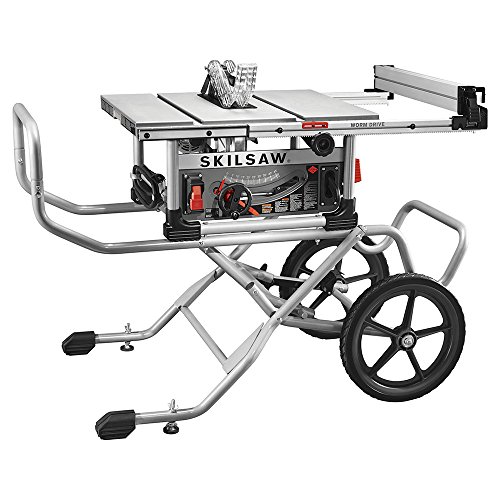 SKILSAW SPT99-11 Worm Drive Table Saw |
| Check price on Amazon |
Key takeaways
- Compare five jobsite table saws on rip capacity, blade size, cutting depth, fence and stand, from a compact 8-1/4-inch model to a worm drive saw.
A table saw is usually the biggest single tool purchase in a home shop, and the hard part is not finding a powerful one. Nearly every jobsite saw here runs a 15-amp motor, so power alone settles nothing. The real decision is how much rip capacity, cutting depth and stand you will actually use, because those three things separate a saw that swallows full sheets and thick hardwood from one that lives happily on trim, flooring and furniture parts.
This guide is for first-time buyers setting up a garage shop, renovators who carry a saw from room to room, and woodworkers who break down sheet goods every week. Every pick is a complete saw sold on Amazon, chosen from the names and specifications printed on its own listing: blade size, rip capacity, depth of cut, fence design and what arrives in the box.
Quick Picks
As an Amazon Associate we earn from qualifying purchases
| Product | Best for | Key spec from title |
|---|---|---|
| SKIL TS6307-00 Jobsite Table Saw | A first 10-inch saw on folding legs | 15 Amp, 10 Inch, Folding Stand |
| DEWALT DWE7485 Compact Table Saw | Small shops and carrying between jobs | 15 Amp, 8-1/4 Inch Compact |
| DEWALT DWE7491RS Table Saw | Sheet goods and a stand in the box | 32-1/2-Inch Rip Capacity |
| Bosch GTS15-10 Jobsite Table Saw | Fast setup and gentler starts | 32-1/8 Inch Rip Capacity |
| SKILSAW SPT99-11 Worm Drive Table Saw | Long rips in thick, dense stock | 10 Inch Worm Drive with Stand |
How to Choose
Rip Capacity and the Fence Decide Sheet Work
Rip capacity is the widest board the fence lets you cut, and it is the first number to check. Half of a 4×8 sheet is 24 inches, so a saw with 24-1/2 inches of rip just barely breaks down plywood lengthwise, while 30 to 32 inches leaves working room and space for a jig against the fence. The fence itself matters as much: rack and pinion fences move both ends together and stay parallel to the blade, which is why every saw here uses one. Clamp-style fences on older designs drift and need squaring at each setup.
Blade Size and Depth of Cut Set Your Stock Limit
A 10-inch blade is the jobsite standard because it cuts deeper and shares blades with miter saws. Depth at 90 degrees runs from 2-9/16 inches on the compact 8-1/4-inch DEWALT to 3-5/8 inches on the worm drive SKILSAW, and that gap decides whether a 4×4 post goes through in one pass or needs a flip and a second cut. Check dado capacity too if you cut grooves for shelves or drawer bottoms: some saws here accept a stack up to 13/16 inch, one stops at 1/2 inch, and the compact DEWALT is not set up for dado work at all.
Motor Numbers Look Equal, Drive Type Is Not
Every saw in this roundup lists a 15-amp motor, yet they do not pull through a long rip in white oak the same way. Blade speed ranges from 3,800 RPM on the Bosch to 5,800 RPM on the compact DEWALT, and higher speed favors clean cuts in sheet goods. The SKILSAW takes a different route: worm drive gearing trades some speed for torque, so the blade keeps moving when a direct-drive saw starts to strain. Bosch adds soft start and a convenience brake, which calm the jolt at startup and stop the blade in about three seconds.
Stand, Weight and Storage Are Part of the Saw
A jobsite saw is only portable if moving it is realistic. Weights here run from 54 pounds for the compact DEWALT to well over 90 for the rolling-stand models, and that spread decides whether one person loads the saw into a truck bed or two people do. Look at what the listing actually includes: the DEWALT DWE7491RS and the Bosch ship with wheeled stands, the two SKIL saws fold or roll on their own legs, and the compact DEWALT’s base listing is the saw alone, with the stand as a separate variation.
The 5 Best Options
SKIL TS6307-00 Jobsite Table Saw
- Best for: First-time buyers who want a 10-inch saw that stores flat against a wall.
- Blade: 10 inches
- Motor: 15 amp
- Rip capacity: 25-1/2 inches right, 14 inches left
- Fence: rack and pinion
First-time buyers who want a 10-inch saw that stores flat against a wall.
Rip capacity is the narrowest of the 10-inch saws here, so wide panels need care.
The TS6307-00 is the straightforward way into a full-size blade without stepping up to the pro tier. You still get the features that matter daily: a rack and pinion fence, 25-1/2 inches of rip to the right of the blade, and legs that fold into the saw so there is no separate stand to buy or store. It suits new woodworkers and garage shops that rip plywood and dimension lumber on weekends, and its dust port elbow helps keep a small space manageable between projects.
DEWALT DWE7485 Compact Table Saw
- Best for: Tight garages, apartment workshops and crews who move the saw daily.
- Blade: 8-1/4 inches
- Motor: 15 amp, 5,800 RPM
- Rip capacity: 24-1/2 inches
- Depth of cut: 2-9/16 inches at 90 degrees, 1-3/4 inches at 45 degrees
Tight garages, apartment workshops and crews who move the saw daily.
The base listing is the saw only, and this model does not take a dado stack.
The DWE7485 shrinks the jobsite formula down to a saw one person can carry up stairs and store on a shelf. The 8-1/4-inch blade still delivers 24-1/2 inches of rip, enough to halve a 4×8 sheet, and the 5,800 RPM motor keeps sheet goods cutting cleanly. A metal roll cage base and onboard storage for the fence, guard and wrenches suit flooring installers, trim carpenters and anyone whose shop is a parking space. The trade is depth: at 2-9/16 inches, thick stock is off the menu.
DEWALT DWE7491RS Table Saw
- Best for: Sheet-goods work, cabinet projects and shops that want one saw for years.
- Blade: 10 inches
- Motor: 15 amp, 4,800 RPM
- Rip capacity: 32-1/2 inches
- Depth of cut: 3-1/8 inches at 90 degrees, 2-1/4 inches at 45 degrees
Sheet-goods work, cabinet projects and shops that want one saw for years.
It is a two-person lift into a truck bed, and the included 24-tooth blade is a general-purpose grind.
This is the reference point the rest of the category gets measured against. The 32-1/2-inch rip capacity is the widest here alongside the Bosch, the telescoping rack and pinion fence has a flip-over support for narrow rips, and the rolling stand is in the box rather than on a second order. It also accepts a dado stack up to 13/16 inch with an optional throat plate, which the smaller saws cannot match. For a home shop that breaks down plywood weekly and builds cabinets or built-ins, this is the complete package.
Bosch GTS15-10 Jobsite Table Saw
- Best for: Frequent setup and teardown, plus buyers who value a blade brake.
- Blade: 10 inches
- Motor: 15 amp, 3,800 RPM
- Rip capacity: 32-1/8 inches right, 14-1/8 inches left
- Depth of cut: 3-9/16 inches at 90 degrees
Frequent setup and teardown, plus buyers who value a blade brake.
This listing has shown shipping windows of several weeks, so check the delivery estimate before ordering.
The GTS15-10 competes on setup speed and control rather than raw numbers. Its Gravity-Rise stand folds and rolls in one motion, soft start keeps the motor from jolting or tripping a breaker at startup, and a convenience brake stops the blade in about three seconds. Rip capacity is 32-1/8 inches, a hair behind the big DEWALT, and depth of cut is a strong 3-9/16 inches. The Smart Guard System pairs a riving knife with anti-kickback pawls and a see-through barrier. It fits contractors and serious home shops that set up and tear down often.
SKILSAW SPT99-11 Worm Drive Table Saw
- Best for: Framing, decking and remodeling work with long rips in tough material.
- Blade: 10 inches
- Motor: 15 amp Dual-Field, 5,000 RPM
- Drive: worm drive gearing
- Rip capacity: 30-1/2 inches right
Framing, decking and remodeling work with long rips in tough material.
Dado stacks stop at 1/2 inch, and rip capacity trails the two 32-inch saws.
The SPT99-11 is built around torque. Its worm drive gearing and 15-amp Dual-Field motor are aimed at framers and remodelers who rip pressure-treated lumber, LVL offcuts and dense hardwood all day without the blade bogging down. Depth of cut leads this group at 3-5/8 inches, clearing a 4×4 in one pass, and the rolling stand rides on 16-inch wheels that handle gravel and thresholds. At 94.3 pounds it is no lightweight, but for crews who treat the saw as site equipment rather than shop furniture, the trade makes sense.
Which One Fits Your Situation
Your Shop Is a Garage Corner
Pick the DEWALT DWE7485 or the SKIL TS6307-00. The DEWALT stores on a shelf at 54 pounds and still halves a sheet of plywood, while the SKIL folds its legs and leans against a wall with a bigger blade and deeper cut. Either way you keep floor space free for the car, and you give up dado work or wide rips rather than room you do not have.
You Break Down Plywood Every Week
Go with the DEWALT DWE7491RS or the Bosch GTS15-10. Both rip past 32 inches, so a half sheet moves through with margin for a straight-line jig, and both arrive with wheeled stands that make solo setup realistic. The DEWALT adds the wider dado capacity for cabinet joinery; the Bosch answers with the faster stand, soft start and a brake that stops the blade quickly between cuts.
You Rip Thick Hardwood and Framing Lumber
The SKILSAW SPT99-11 is the one built for you. Worm drive torque keeps the blade moving through dense stock that makes direct-drive saws strain, and 3-5/8 inches of cutting depth clears 4x material in a single pass. The big wheels and rolling stand suit lumber piles and uneven ground better than folding legs, as long as the 94.3 pounds is a fair trade for your crew.
This Is Your First Table Saw
Start with the SKIL TS6307-00. It covers the fundamentals properly: a 10-inch blade, a rack and pinion fence that stays parallel, enough rip for sheet goods and legs that fold away when the project ends. You learn on the same fence system the pro saws use, and the money you do not spend can go toward a good finish blade and a crosscut sled, which improve results more than a bigger motor would.
Common Mistakes
- Comparing saws by motor amps alone, when every model here is 15 amp and the real gaps are rip capacity, fence design and depth of cut.
- Buying the widest saw on the page and then finding it will not fit the corner of the garage where it has to live.
- Assuming every 10-inch saw accepts the same dado stack, when capacities here run from none to 1/2 inch to 13/16 inch.
- Ordering the compact DEWALT and missing that the base listing is the saw only, with the stand sold as a separate variation.
- Leaving the blade guard and riving knife in the box because they slow setup down, instead of learning the two-minute routine.
Frequently Asked Questions
Can an 8-1/4-inch saw really rip a full sheet of plywood?
Yes, with a helper or a support stand. The DWE7485 lists 24-1/2 inches of rip capacity, which is just over half the width of a 4×8 sheet, and its 2-9/16-inch depth is far more than sheet goods need. Where it falls short is thick solid stock, not panels, so flooring and plywood projects are well within its range.
How much rip capacity do I actually need?
For breaking down 4×8 sheets lengthwise, 24 inches is the working minimum and leaves no margin for error. Stepping up to 30 or 32 inches makes the same cut calmer and leaves room for a straight-edge jig clamped beside the fence. If most of your work is boards under 12 inches wide, capacity matters far less than fence accuracy.
Which of these saws can run a dado stack?
The DEWALT DWE7491RS accepts a stack up to 13/16 inch with an optional throat plate, the Bosch GTS15-10 also takes dado blades, and the SKILSAW SPT99-11 is limited to 1/2 inch. The compact DEWALT DWE7485 is the exception: it is not set up for dado work, so choose another saw if grooves and rabbets are part of your projects.
Is a rolling stand worth picking over folding legs?
It depends on how far the saw travels. Rolling stands with large wheels earn their keep across gravel, thresholds and lawn, and they turn setup into a one-person job. Folding legs are lighter and store flatter, which suits a saw that moves ten feet from a wall to the middle of a garage. Match the stand to the route the saw actually takes.