Our Short List of 3

- Group size: 24F
- Voltage: 12 volts
- Cold cranking amps: 710 CCA
- Capacity: 70Ah

- Group size: 24F
- Voltage: 12 volts
- Cold cranking amps: 710 CCA
- Capacity: 70Ah

- Group size: 27F
- Voltage: 12 volts
- Cold cranking amps: 830 CCA
- Capacity: 66Ah
All 3 Picks at a Glance
| Product | Specs | Action |
|---|---|---|
| 1. WEIZE Platinum AGM Group 24F — Best for Most Tundras |
| Check price on Amazon |
| 2. 1AUTODEPOT AGM Group 24F — A Same-Spec Alternative |
| Check price on Amazon |
| 3. OPTIMA YellowTop D27F — Best for Group 27F Trucks |
| Check price on Amazon |
Key takeaways
- Find the best battery for a Toyota Tundra by checking Group 24F versus 27F fitment first, then compare three AGM picks on CCA, reserve capacity and terminal layout.
As an Amazon Associate we earn from qualifying purchases.
Affiliate Disclosure: This article contains affiliate links. If you buy through a link on this page, we may earn a commission at no extra cost to you. Specifications below come from manufacturer and retailer listings, not from detailed research by this site, and you should confirm fitment for your exact truck before ordering.
A Toyota Tundra does not take one universal battery, and that single fact explains most bad battery purchases for this truck. Depending on the model year, engine and factory options, a Tundra may use a Group 24F battery as its standard fitment or the larger Group 27F battery fitted to many V8 trucks with a cold-climate or heavy-duty package. Those two sizes differ in case dimensions, in the minimum cold cranking amps the application expects, and in how much reserve capacity the tray was designed to hold. Buy the wrong group and the battery may not clamp down properly, the cables may reach the wrong posts, or the truck may get less reserve than its electrical loads need. Buy the right group and the choice becomes much simpler, because reputable batteries in the same size tend to cluster around similar performance figures.
This guide therefore starts with fitment rather than brand loyalty. First we explain how to confirm whether your truck takes a 24F or a 27F, what the letter F actually means, and how many cold cranking amps each application calls for. Then we present three picks that match those fitments: two Group 24F AGM batteries for the majority of trucks, and one Group 27F dual-purpose AGM battery for trucks built with the larger tray. Every pick is an automotive starting battery of the same type the keyword calls for. There are no marine batteries, no motorcycle batteries and no generic power cells dressed up as Tundra batteries in this list.
Quick Answer
For most Tundras, the label on your current battery will say Group 24F, and a 12-volt AGM battery in that size rated around 710 cold cranking amps is the straightforward replacement. The WEIZE Platinum 24F and the 1AUTODEPOT 24F below both meet that description and both clear the roughly 585 CCA minimum that fitment guides list for standard 24F Tundra applications. If your label says 27F instead, stay with that larger size: the OPTIMA YellowTop D27F is the dual-purpose option covered here, rated well above the roughly 710 CCA floor that guides associate with the 27F applications. Whichever size your truck uses, match the group size exactly, keep the reversed terminal layout of the F designation, and do not substitute a plain Group 24 or Group 27 battery whose posts sit on the wrong side.
How We Chose These Batteries
Each pick had to pass the same checks. First, it had to be a genuine Group 24F or Group 27F automotive battery, because those are the sizes Tundra fitment guides actually list for this truck. Second, its cold cranking amp rating had to meet or exceed the factory minimum for its size, since a full-size truck turning over a large V6 or V8 on a cold morning has no use for an underrated battery. Third, reserve capacity and amp-hour capacity were compared, because Tundra owners routinely run lights, compressors, trailer electrics, winches and camping gear that draw on reserve rather than cranking power. Fourth, the battery had to be a sealed, maintenance-free design suited to a working truck, which in practice meant AGM construction for every pick here. Finally, each product needed a traceable manufacturer or retailer listing with published specifications. We have not installed or bench-tested these batteries ourselves, and no claim in this guide should be read as a first-hand test result.
The Three Picks in Detail
1. WEIZE Platinum AGM Group 24F — Best for Most Tundras
- Group size: 24F
- Voltage: 12 volts
- Cold cranking amps: 710 CCA
- Capacity: 70Ah
For the majority of Tundras — the trucks whose factory fitment is Group 24F — this WEIZE Platinum is the most direct pick in the guide. Its 710 CCA rating clears the roughly 585 CCA minimum listed for 24F Tundra applications by a comfortable margin, and that headroom matters on the mornings that actually kill batteries: the first cold start after the truck has sat all weekend, with thick oil, a large engine to turn and every electrical system waking up at once. A battery that only just meets the minimum when new will fall below it as it ages, so starting with genuine headroom is a practical decision rather than a luxury.
The 120-minute reserve capacity and 70Ah rating deserve equal attention. Reserve capacity describes how long the battery can keep essential loads running if the alternator stops doing its job, and it is also a useful proxy for how gracefully the battery handles accessory use with the engine off. Tundra owners power scene lights at a campsite, run a portable compressor after airing down, and keep trailer electrics alive at rest stops. Those are reserve jobs, not cranking jobs, and this battery carries a solid reserve figure for its case size. The AGM construction adds the qualities a truck battery needs most: it is sealed against spills, it tolerates vibration better than a conventional flooded battery, and it asks for no watering or routine maintenance once installed.
Choose this battery if the label on your old battery says 24F. Do not choose it as a substitute for a 27F truck without reading the fitment section below, because fitting a smaller case into a larger tray creates hold-down and reserve compromises that are easy to avoid by buying the correct size in the first place.
2. 1AUTODEPOT AGM Group 24F — A Same-Spec Alternative
- Group size: 24F
- Voltage: 12 volts
- Cold cranking amps: 710 CCA
- Capacity: 70Ah
The 1AUTODEPOT entry matches the WEIZE on the numbers that decide a Tundra fit: a Group 24F case, 12 volts, about 70Ah of capacity and 710 CCA, again comfortably above the minimum that guides list for the standard Tundra application. It is an AGM battery, so it keeps the sealed, maintenance-free and vibration-resistant character that makes this chemistry the sensible default for a full-size pickup, and its published operating range is written for the temperature extremes a truck battery sees between a hot engine bay in summer and a frozen start in winter.
Why include two 24F AGM batteries with near-identical headline specifications? Because with commodity truck batteries, the honest answer is that availability, seller reliability and the exact listing in front of you on the day you buy matter almost as much as small specification differences. Having a second option in the correct group size, with the correct terminal layout and an adequate cranking rating, is more useful than padding this guide with a battery in a size your Tundra does not use. Compare the two listings when you are ready to buy, run your year and engine through the fitment checker on the listing, and confirm the positive terminal position matches your truck before you commit. The physical checks after installation are the same either way: the positive post on the correct side, cables reaching without strain, the hold-down clamping the case firmly, and no contact between terminals, cables and the underside of the hood.
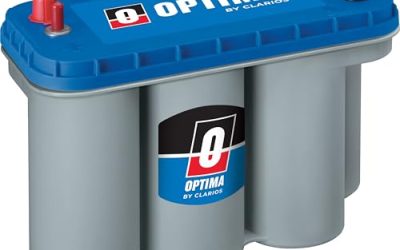
3. OPTIMA YellowTop D27F — Best for Group 27F Trucks
- Group size: 27F
- Voltage: 12 volts
- Cold cranking amps: 830 CCA
- Capacity: 66Ah
If the label on your current battery says 27F, your truck has the larger tray and, in the V8 applications the fitment guides describe, a higher factory expectation of roughly 710 CCA. The OPTIMA YellowTop D27F is built for exactly that application. Manufacturer data rates it at 830 cold cranking amps, with 66Ah of capacity and 140 minutes of reserve capacity, in a case measuring roughly 12.16 by 6.76 by 8.61 inches and weighing about 53 pounds. That is a stronger cranking figure and a longer reserve than either 24F pick above, which is the point of the larger case.
What sets the YellowTop apart is its dual-purpose design. OPTIMA builds this line with its SpiralCell construction, winding the lead plates rather than stacking them flat, and positions the battery for vehicles that must both start an engine every day and run real electrical loads with the engine off. Winches, auxiliary lighting, upgraded audio and a fridge on an overland build are the classic Tundra use cases for a battery like this, and a pure starting battery tolerates that kind of repeated deep draw poorly. Choose the YellowTop if your 27F truck carries accessories that work while parked, or if it sits for stretches and then needs to start reliably. If your truck is a standard 24F fitment, this battery is not a drop-in upgrade, because the larger case will not sit correctly in the smaller tray.
Group 24F Versus 27F: Getting the Fitment Right
Start with the label on the battery already in your truck. It shows the group size, the cranking rating the truck was built around and the terminal positions, and it settles arguments that online guides cannot, because published sources genuinely disagree for some model years. Broadly, guides list Group 24F as the standard fitment across much of the 2000 to 2014 range and for the newest generation, with a minimum rating around 585 CCA. They list Group 27F for various 2002 to 2006 and 2008 to 2013 V8 trucks, typically where a cold-climate package or optional heavy-duty battery was fitted, with a minimum around 710 CCA, and some maker guides describe later V8 trucks as 27F applications as well. Your owner’s manual is the second source. The label and the manual together outrank any general chart, including this one.
The F in both sizes is not decoration. It marks a reversed terminal arrangement compared with the plain group of the same number, so the positive post sits where the Tundra’s cables expect it. A Group 24 battery can match the 24F on every performance figure and still leave cables stretched across the case or, in the worst case, connected with reversed polarity. The same warning applies to a plain Group 27 offered as a substitute for a 27F. Check the terminal layout on any listing as carefully as you check the cranking amps.
Can a 27F truck run a 24F battery? Physically, the smaller case can often be clamped or shimmed into the larger tray, and a 710 CCA 24F meets the 27F application’s cranking floor on paper. But you give up reserve capacity, the hold-down may not secure the smaller case properly, and a heavy battery shifting under braking or off-road is a genuine hazard. Treat that swap as a temporary compromise at most, never as the plan, and never downsize a truck that works hard for a living.
Chemistry, Charging and Care
All three picks here are AGM batteries, and that choice is deliberate. AGM construction seals the electrolyte in glass mat, which makes the battery spill-resistant, maintenance-free and better able to handle the vibration of a truck that tows, hauls or leaves the pavement. If your Tundra came with a flooded battery, upgrading to an AGM in the same group size is a common and generally acceptable move. If it came with an AGM, do not step down to a flooded battery to save money, because the charging profile and durability expectations of the truck were set around the better battery.
Care is mostly about charging discipline. If you bench-charge or maintain the battery, use a charger with an AGM profile rather than an old flooded-only unit. Avoid repeated deep discharges where you can: running accessories until the battery is flat, again and again, shortens the life of any starting battery, and trucks that genuinely need that duty cycle are the ones that benefit from a dual-purpose design like the YellowTop above. Keep terminals clean and tight, keep the hold-down snug, and judge an ageing battery by symptoms and a proper load test rather than by age alone.
Frequently Asked Questions
What size battery does a Toyota Tundra take? Most take Group 24F. Many V8 trucks with cold-climate or heavy-duty packages take the larger Group 27F. Check the label on your current battery or your owner’s manual, because guides disagree for some years and the label is the deciding evidence.
How many cold cranking amps does a Tundra need? Fitment guides list a minimum of about 585 CCA for the 24F applications and about 710 CCA for the 27F applications. Every pick in this guide meets or exceeds the relevant figure, and exceeding it modestly is fine, because the truck only draws what the starter needs.
Can I replace a flooded Tundra battery with an AGM? Generally yes, in the same group size, and it is a popular upgrade for trucks with heavy accessory loads. Replacing a factory AGM with a flooded battery is the direction to avoid.
Will a Group 24 fit instead of a 24F? It may sit in the tray, but its terminals are reversed compared with the 24F, so the cables may not reach safely or may connect with reversed polarity. Buy the F version your truck specifies.
How long should a Tundra battery last? It depends on climate and use. Heat, deep discharges and short-trip driving all shorten service life, while gentle use in a mild climate extends it. Slow cranking, dimming under load and a failed load test are better signals than the calendar.
Verdict
For most Tundra owners the job is simple: confirm Group 24F on the old battery’s label, then choose a 710 CCA AGM in that size — the WEIZE Platinum for a direct replacement, or the 1AUTODEPOT as a same-specification alternative when the first listing does not suit. If your label says 27F, stay with the larger size and pick the OPTIMA YellowTop D27F, whose dual-purpose design and longer reserve suit trucks that run accessories with the engine off. The group size and terminal layout decide whether a battery belongs in your truck at all; everything else is refinement.