Our Short List of 3
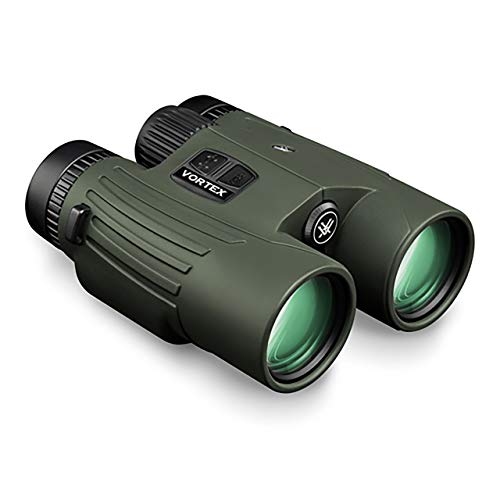
- Best for: Western rifle hunters and open-country glassing where long deer readings matter most.
- Magnification and objective: 10×42
- Range, reflective targets: 5 to 5,000 yards
- Range, trees: up to 2,400 yards
- Range, deer: up to 1,600 yards
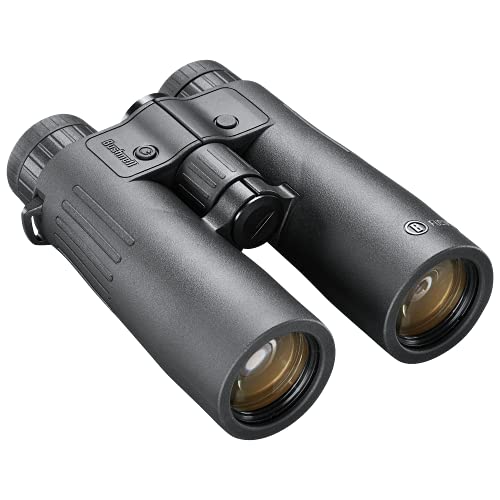
- Best for: Whitetail hunters in timber and stands who need a display that reads clearly at dawn and dusk.
- Magnification and objective: 10×42
- Model: FX1042AD
- Range, reflective targets: up to 1,760 yards
- Range, trees: up to 900 yards
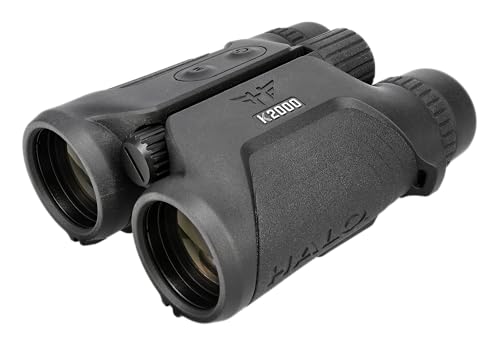
- Best for: Deer hunters who want a true horizontal reading and a scan mode without ballistic menus.
- Magnification and objective: 10×42
- Angle compensation: Angle Intelligence true horizontal distance
- Ranging mode: Scan mode for moving targets
- Chassis: magnesium
All 3 Picks at a Glance
| Product | Specs | Action |
|---|---|---|
| Vortex Fury HD 5000 10×42 |
| Check price on Amazon |
| Bushnell Fusion X 10×42 |
| Check price on Amazon |
| Halo Optics K2000 10×42 |
| Check price on Amazon |
Key takeaways
- Compare four 10x42 rangefinding binoculars on laser reach, angle compensation, glass and weight, with fit notes for rifle, bow and timber hunting.
A bino rangefinder combo folds two tools into one housing, and the real decision is not whether that sounds convenient. It is whether the laser reaches far enough on the animals you actually hunt, whether the angle compensation matches your terrain, and whether the glass stays bright enough at dawn to justify carrying a heavier unit than a plain binocular. Reflective range figures headline every box, yet deer range, display readability, and weight decide how the optic hunts.
This guide is for rifle hunters working open country, bowhunters shooting from stands and steep slopes, and timber hunters who range short distances in dim light. The four picks below are all 10×42 laser rangefinding binoculars chosen from their Amazon titles and published figures, covering long reach, ballistic help, an auto-adjusting display, and a simpler angle-only layout.
Quick Picks
As an Amazon Associate we earn from qualifying purchases.
| Product | Best for | Key spec from title |
|---|---|---|
| Vortex Fury HD 5000 10×42 | Long reach in open country | 5000 yd max reflective range |
| Leupold BX-4 Range HD TBR/W 10×42 | Ballistic range readings | TBR/W wind and angle compensation |
| Bushnell Fusion X 10×42 | Readable display in mixed light | ActivSync auto-adjusting display |
| Halo Optics K2000 10×42 | Simple angle-compensated ranging | Angle Intelligence horizontal distance |
How to Choose
Judge reach by the deer figure, not the headline figure
Every rangefinding binocular advertises its longest number first, and that number almost always describes a reflective target such as a sign, a rock face, or a metal roof. Animals absorb and scatter laser energy, so the deer or game figure sits far below the headline. A unit listed at 5,000 yards on reflective targets may publish 1,600 yards on deer, and a one-mile unit may publish 700. Work backward from the longest shot your hunting honestly involves, add margin for poor light and rain, and pick the model whose game figure clears that distance without strain.
Match the angle mode to your ground
Angle compensation converts the line-of-sight reading into the horizontal distance your hold or pin gap should use, and it matters most where shots tilt: mountain slopes, canyon rims, and stands set high in a tree. Simpler systems offer one compensated mode plus a line-of-sight mode. Fuller systems add ballistic groups that fold in bullet drop, and a dedicated bow mode tuned for short ranges and steep angles. Flat-ground hunters can ignore most of this menu. Anyone hunting broken country should treat a proper bow or rifle angle mode as a requirement, not an extra.
Weigh glass quality against the electronics
You will spend nearly all of your time looking through a combo unit and only seconds ranging with it, so the binocular half deserves as much scrutiny as the laser half. ED or HD glass, phase-corrected prisms, and full multi-coating keep edges sharp and colors honest in low light, while plainer BK-7 prisms save money and lose some dawn brightness. Field of view matters for finding animals in timber: a wider view near 330 feet at 1,000 yards scans cover faster than a narrow one. Check eye relief too if you wear glasses, since short relief crops the view.
Count weight, sealing, and battery habits
A rangefinding binocular carries a laser, a display, and a battery inside a viewing body, so it outweighs a plain 10×42 by a wide margin; the picks here run from about 32 to 39 ounces. That load rides fine in a chest harness and grows noticeable on a neck strap during long climbs. Sealed, nitrogen-filled housings with an IPX7 water resistance level shrug off rain and dunking mishaps. All four picks run on a single CR2 cell, and cold weather shortens cell life, so a spare in the harness pocket is cheap insurance.
The 4 Best Options
Four models, four different answers to the same problem. One reaches farthest, one computes the fullest shooting solution, one keeps its display readable against any background, and one strips the idea back to angle compensation in a magnesium shell.
Vortex Fury HD 5000 10×42
- Best for: Western rifle hunters and open-country glassing where long deer readings matter most.
- Magnification and objective: 10×42
- Range, reflective targets: 5 to 5,000 yards
- Range, trees: up to 2,400 yards
- Range, deer: up to 1,600 yards
Western rifle hunters and open-country glassing where long deer readings matter most.
The ballistic AB variant is a separate listing with a similar name, so confirm the page shows the plain Fury HD 5000 before ordering.
Open-country hunters who glass basins and range across canyons get the longest reach in this group from the Fury HD 5000. Its published figures run to 5,000 yards on reflective targets and 1,600 yards on deer, which covers any sensible rifle shot with room to spare. The HCD mode shows the angle-compensated distance most rifle and bow shooters need, while LOS mode serves anyone running their own ballistic math. Best and Last target modes help pull a reading from an animal standing in front of brush or beyond it, and the red OLED display stays legible at first light.
Watch out for: The ballistic AB variant is a separate listing with a similar name, so confirm the page shows the plain Fury HD 5000 before ordering.
Leupold BX-4 Range HD TBR/W 10×42
Shooters who want the binocular to do more of the shooting math land on the BX-4 Range HD. Its TBR/W system builds angle and wind into the displayed range using ballistic groups matched to common loads, and a bow mode handles the short, steep shots that treestand and mountain bowhunters face. The laser reaches 2,600 yards on reflective targets, 1,600 on trees, and 1,100 on deer, with a 12-yard minimum that suits close archery work. Leupold’s Elite Optical System and ED glass give it the strongest viewing credentials here, and the red OLED readout keeps numbers crisp against dark timber.
Specs
- Magnification and objective: 10×42
- Model: 182883, Shadow Gray
- Range, reflective targets: up to 2,600 yards
- Range, trees: up to 1,600 yards
- Range, deer: up to 1,100 yards
- Minimum range: 12 yards
- Angle compensation: TBR/W with ballistic groups, plus Bow mode
- Display: red OLED
- Eye relief: 17 mm
- Field of view: 334 feet at 1,000 yards
- Weight: 39 oz
- Battery: 1 CR2, around 3,000 actuations
Best for: Rifle and bow hunters who want angle, wind, and drop folded into one displayed number.
Watch out for: At 39 ounces it is the heaviest pick here, and the rangefinding electronics carry a shorter guarantee window than the binocular itself.
Bushnell Fusion X 10×42
- Best for: Whitetail hunters in timber and stands who need a display that reads clearly at dawn and dusk.
- Magnification and objective: 10×42
- Model: FX1042AD
- Range, reflective targets: up to 1,760 yards
- Range, trees: up to 900 yards
Whitetail hunters in timber and stands who need a display that reads clearly at dawn and dusk.
The 700-yard deer figure is the shortest reach here, and BK-7 prisms give up some low-light brightness to ED glass rivals.
Timber and treestand hunters who range modest distances in shifting light get the most readable display in this group from the Fusion X. Its ActivSync readout switches between black and red as the background changes, so yardage stays visible against bright sky, pale grass, and dark woods alike. The laser covers a full mile on reflective targets, 900 yards on trees, and 700 yards on deer, which fits eastern and midwestern hunting where shots stay short. ARC modes for regular, bow, and rifle use include ballistic groups, and Scan, Bullseye, and Brush target modes sort animals from the cover around them.
Watch out for: The 700-yard deer figure is the shortest reach here, and BK-7 prisms give up some low-light brightness to ED glass rivals.
Halo Optics K2000 10×42
- Best for: Deer hunters who want a true horizontal reading and a scan mode without ballistic menus.
- Magnification and objective: 10×42
- Angle compensation: Angle Intelligence true horizontal distance
- Ranging mode: Scan mode for moving targets
- Chassis: magnesium
Deer hunters who want a true horizontal reading and a scan mode without ballistic menus.
The listing publishes fewer figures than its rivals, with no ballistic groups, so confirm the seller and the live offer on the page before ordering.
Hunters who want angle compensation without a deep menu system get the simplest layout in this group from the K2000. Its Angle Intelligence mode calculates the true horizontal distance to targets at any elevation, which covers the treestand and hillside shots most deer hunters actually take. A scan mode keeps readings updating as an animal moves through openings, useful when a buck crosses lanes between trees. The magnesium chassis keeps the housing rigid while the textured, no-slip exterior holds grip with gloves on. IPX7 sealing and fogproof construction suit wet mornings, and the 10×42 format matches the viewing size hunters already know.
Watch out for: The listing publishes fewer figures than its rivals, with no ballistic groups, so confirm the seller and the live offer on the page before ordering.
Which One Fits Your Situation
Open-country mule deer and elk
Pick the Vortex Fury HD 5000. Basin hunting asks for deer readings well past 1,000 yards when you are deciding whether a stalk is worth the walk, and its 1,600-yard deer figure is the only one here with real margin. The Last target mode also helps when an animal stands behind grass or light brush, returning the far reading instead of the near clutter.
Steep ground and high stands with a bow
Pick the Leupold BX-4 Range HD. Bow shots from elevation live or die on the compensated number, and its bow mode plus a 12-yard minimum range cover the close, steep angles that stands produce. The TBR/W rifle groups then carry the same unit into rifle season, so one optic serves both tags without a settings overhaul between hunts.
Timber, food plots, and short shots
Pick the Bushnell Fusion X. Eastern cover rarely offers a shot past its 700-yard deer figure, and the ActivSync display solves the problem timber actually creates: a readout that washes out against bright sky or vanishes against dark trunks. Brush mode helps separate a deer from the saplings in front of it, which is the ranging failure that costs shots in thick woods.
One optic for the range and the season
Pick the Halo Optics K2000. Known-distance practice and deer hunting share the same core need: a fast horizontal reading without menu diving. Scan mode tracks a moving animal or a swinging target, the magnesium body tolerates truck-cab and range-bag life, and the simple control set means a borrowed unit needs no tutorial before it goes to the stand.
Common Mistakes
- Shopping by the reflective range figure alone, then finding the deer figure falls short of your longest real shot.
- Ignoring minimum range on a bow setup; a unit that stops reading at 12 yards behaves differently from one that reads closer in.
- Leaving the unit in line-of-sight mode on sloped ground, which feeds your hold the wrong distance on every angled shot.
- Ordering the wrong variant, since ballistic and non-ballistic versions of the same model sit on separate listings with near-identical names.
- Heading out with one aging CR2 cell and no spare, because cold mornings drain rangefinding electronics faster than the viewing side suggests.
Frequently Asked Questions
Can one combo unit fully replace a binocular and a handheld rangefinder?
For most hunting, yes. The four picks here view like ordinary 10×42 binoculars and range at the press of a button, so the find-it, range-it sequence happens without lowering the glass. You give up the tiny pocket size of a handheld unit and accept more weight, which is why the trade suits hunters who glass often and range at known moments.
What does angle compensation change on a steep shot?
It converts the slanted line-of-sight distance into the horizontal distance gravity actually acts over. A deer ranged at 300 yards down a steep slope may call for a hold closer to 260 yards, and an uncompensated reading quietly builds in a high miss. Modes named HCD, ARC, Angle Intelligence, and TBR/W all perform this conversion, with the fuller systems adding drop and wind on top.
How far will these units range a deer under field conditions?
Published deer figures run 1,600 yards for the Vortex, 1,100 for the Leupold, and 700 for the Bushnell, and those numbers assume a steady hold and a clear line to the animal. Rain, fog, intervening brush, and a dark animal against dark cover all shorten real readings, so treat the printed figure as a ceiling and expect dependable game readings inside it on most days.
How should a combo unit be stored between seasons?
Take the CR2 cell out before long storage so a tired battery cannot leak into the electronics bay, then keep the unit in its harness or a padded case somewhere dry and temperate. Leave the lens covers on, and give the glass a gentle wipe before the case closes. A fresh cell at the opener restores full ranging speed and display brightness.