Key takeaways
- Find the best memory cards for photographers, from fast UHS-II cards for bursts and 8K video to reliable everyday cards for travel and portraits.
A slow memory card is the quiet bottleneck in a camera bag. The camera body can be fast, the lens can be sharp, and the light can be perfect, yet a card that cannot keep up will make the camera pause during a burst, cut a video clip short, or take forever to clear its buffer. The result is missed frames at the exact moment a subject moves, turns, or takes flight.
Choosing a card is not about chasing the biggest number on the label. It is about matching the card to the way you shoot: the resolution of your files, the length of your bursts, the video formats you record, and the conditions you work in. The five cards below cover the full range, from a dependable everyday card to a rugged professional card built for heavy bursts and high-bitrate video.
As an Amazon Associate, we earn from qualifying purchases.
Quick answer
The SanDisk Extreme PRO SDXC UHS-I 128GB is the best all-round pick for most photographers, with fast reads and solid sustained writes at a sensible capacity. For demanding bursts and 8K video, the Sony SF-G Tough and Lexar Professional 2000x offer UHS-II speed, while the Kingston Canvas React Plus gives V90 performance for less. The SanDisk Extreme is the best value card for travel and everyday shooting.
SanDisk Extreme PRO SDXC UHS-I 128GB
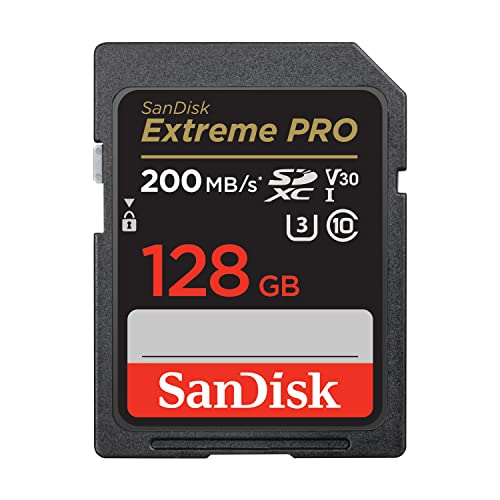
The SanDisk Extreme PRO SDXC UHS-I 128GB is the card most photographers should start with. It uses the UHS-I bus, which every modern camera supports, and it is tuned for the two things that matter most in daily shooting: quick buffer clearing and fast file transfers to a computer. Read speeds reach up to 200 MB/s with the brand’s QuickFlow technology, and shot speeds reach up to 90 MB/s, which is enough to keep up with long bursts of RAW files on most mirrorless and DSLR bodies.
The card carries U3 and V30 speed class marks, so it holds a steady minimum write speed for 4K video recording without dropping frames. The 128GB capacity holds thousands of RAW images or a full day of 4K clips, which suits wedding photographers, travel shooters, and anyone who would rather carry one card than a pocket full of small ones.
Durability is part of the package. The card is built to resist shock, temperature extremes, water, and X-rays, which matters when a card lives in a pocket, a bag, or a camera that travels through airports and bad weather. This is the card to buy when you want one reliable card that does almost everything well.
Lexar Professional 2000x SDXC UHS-II 128GB

The Lexar Professional 2000x SDXC UHS-II 128GB is built for photographers who push their cameras hard. It runs on the UHS-II bus, with a second row of contacts that doubles the available bandwidth, and it reaches read speeds of up to 300 MB/s with write speeds of up to 260 MB/s. That speed shows up where it counts: bursts clear faster, the camera returns to ready sooner, and long sequences of RAW frames do not stall the shutter.
The V90 video speed class mark is the key detail for video shooters. It guarantees a minimum sustained write speed of 90 MB/s, which covers high-bitrate 4K and 8K recording on cameras that demand it. Photographers who record long interviews, events, or wildlife clips will notice the difference most, because a card that cannot sustain its write speed will stop a recording mid-clip.
The card is a natural fit for a second card slot in a dual-slot body, where it can serve as the overflow or backup card during a long shoot. At 128GB it holds a generous number of high-resolution RAW files, and its read speed makes the end-of-day transfer to a computer noticeably quicker than a UHS-I card. One practical note: a UHS-II card only reaches its full speed in a camera and a card reader that both support UHS-II. In older bodies the card still works, but it falls back to UHS-I speeds.
Sony SF-G Tough Series SDXC UHS-II 128GB

The Sony SF-G Tough Series SDXC UHS-II 128GB is the card for photographers who work in rough conditions and refuse to baby their gear. Its one-piece molded construction has no ribs and no write-protect switch, the two parts of a standard SD card most likely to snap off, and it bends far less than a regular card under pressure. It is also waterproof, dustproof, and drop-proof to five meters, which makes it a natural choice for adventure, landscape, and outdoor event work.
Speed matches the toughness. The card reads at up to 300 MB/s and writes at up to 299 MB/s, with a V90 mark for sustained video writes. That combination handles long RAW bursts and 8K video on flagship bodies without hesitation, and it keeps the camera ready for the next sequence while other cards are still clearing their buffers.
The trade-off is the size of the investment. This is a premium card, and photographers who shoot mostly in a studio or on calm days may not need its armor. But for anyone who has ever cracked a card, lost a shoot to a bent card, or worked in rain, dust, and cold, the Tough series is the most confidence-inspiring card in this roundup.
Kingston Canvas React Plus SDXC UHS-II 128GB

The Kingston Canvas React Plus SDXC UHS-II 128GB brings V90 speed to photographers who want professional performance without the premium badge. It reads at up to 300 MB/s and writes at up to 260 MB/s, with a V90 mark that covers high-bitrate 4K and 8K video. In practical terms, it keeps up with fast bursts on modern mirrorless bodies and sustains long video takes without dropping frames.
The card is part of Kingston’s Canvas line, which is designed around creative work rather than generic storage. It is built to handle the file sizes that come with high-resolution sensors, and its UHS-II interface makes it a strong match for dual-slot cameras where the second slot often holds the backup copy of a shoot. One of its quiet strengths is consistency: the V90 mark is about sustained performance, not just peak numbers, so the card holds its speed through a long burst or a long clip rather than slowing down halfway through.
SanDisk Extreme SDXC UHS-I 128GB

The SanDisk Extreme SDXC UHS-I 128GB is the value pick in this roundup, and it is the card to buy when the budget matters as much as the speed. It reads at up to 150 MB/s and shoots at up to 70 MB/s, with U3 and V30 marks that cover 4K video recording and steady burst shooting on most cameras.
That performance is more than enough for travel photography, portraits, family events, and everyday shooting. The card handles high-resolution stills without fuss, and its V30 mark means it can record 4K video without stutter. Photographers stepping up from the card that came in the box will notice faster transfers and fewer buffer delays right away.
Like its PRO sibling, the card is built to resist shock, temperature extremes, water, and X-rays, so it survives the inside of a travel bag and the odd drop onto concrete. The 128GB capacity is a practical size for a day of shooting, and it is easy to carry two of these as a main and backup pair. This card is not the right choice for 8K video or for very long bursts on a flagship body, where a UHS-II card earns its keep.
How to choose
Start with your camera. Check whether it has a UHS-II slot, because a UHS-II card only reaches full speed in a UHS-II slot and reader. If your camera is UHS-I only, a fast UHS-I card is the better buy, and the money saved can go toward a second card or a larger capacity.
Next, match the speed class to your video. V30 covers 4K recording on most cameras, while V60 and V90 are needed for higher bitrates and 8K. For stills, look at write speed rather than read speed, because write speed is what clears the buffer during a burst.
Capacity is a trade-off between convenience and safety. A 128GB card holds a full day of shooting for most photographers, while larger cards reduce swapping but put more images on a single card. Finally, think about durability and recovery. Cards that resist water, shock, and temperature extremes are worth the extra cost for outdoor work, and bundled recovery software is a useful backup when a file is deleted by mistake.
Who should skip
Photographers who shoot only JPEGs on a basic camera do not need a V90 UHS-II card. A fast UHS-I card will feel identical in that setup, and the money is better spent on a spare battery or a second card. Video shooters who record only short clips in Full HD can also skip the premium cards, since a V30 card handles that workload easily.
Anyone whose camera has a single UHS-I slot should skip UHS-II cards unless they plan to upgrade the body soon. The card will work, but it will run at UHS-I speeds, so the extra cost buys nothing today. Photographers on a tight budget who need several cards for a long trip should skip the toughest premium card and buy two value cards instead. Redundancy beats a single expensive card when a shoot cannot be repeated.
Frequently Asked Questions
Do I need a UHS-II card for photography?
It depends on your camera and your shooting style. UHS-II cards clear the buffer faster during long bursts and sustain high-bitrate video, so they help on modern mirrorless bodies. For general stills work on a UHS-I camera, a fast UHS-I card performs just as well.
What does V30, V60, and V90 mean?
These are video speed class marks that state the minimum sustained write speed a card can hold: 30, 60, or 90 megabytes per second. V30 covers most 4K recording, V60 suits higher bitrates, and V90 is needed for 8K and the most demanding video formats.
Is 128GB enough for a day of shooting?
For most photographers, yes. A 128GB card holds thousands of RAW files or several hours of 4K video. Video shooters recording long 8K takes, and photographers on multi-day trips without a laptop, may want a larger card or a second card in the bag.
How do I keep my memory cards reliable?
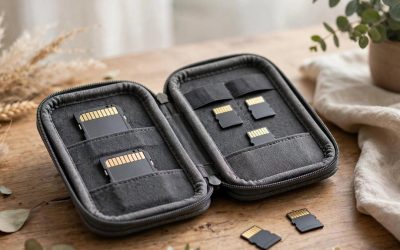
Format the card in the camera before each shoot, never remove it while the camera is writing, and store spares in a hard case away from heat and moisture. Replace any card that shows read errors, and keep a backup copy of important files on a separate drive as soon as possible.
Final verdict
The SanDisk Extreme PRO is the best all-round memory card for photographers, with the speed and reliability most cameras need at a sensible capacity. Photographers who shoot fast bursts or 8K video should step up to the Sony SF-G Tough, the Lexar Professional 2000x, or the Kingston Canvas React Plus. The SanDisk Extreme is the best value pick for travel, portraits, and everyday shooting. Match the card to your camera and your video needs, carry a spare, and format it in the camera before every shoot.